
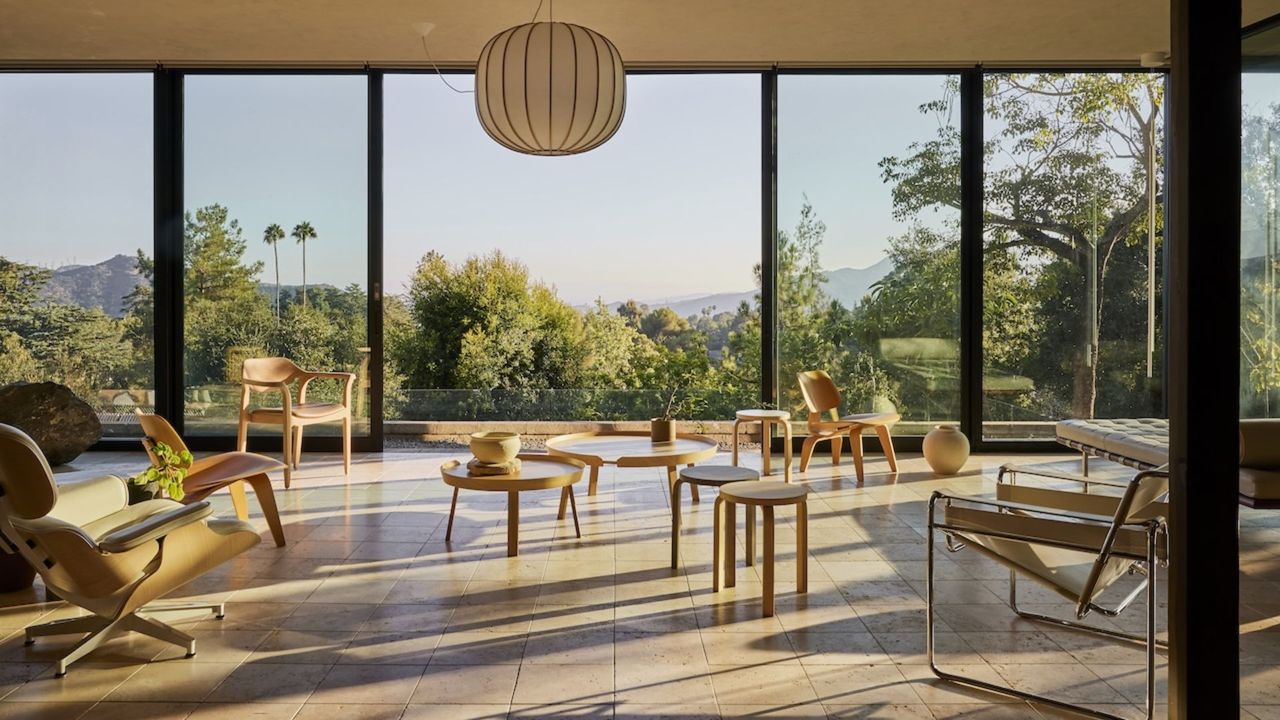
As someone lucky enough to grow up in a home with wide clerestory windows in an already bright living room, I've always been enchanted by the beauty of manipulated light. However, it was this video of artist Aubrey Borschke capturing the sun that finally led me to explore the concept of dappling light. And what I found was the dreamy Japanese word 'komorebi'.
Roughly translating to 'sunshine leaking through trees', this concept speaks to the interplay of light and leaves to lend that dimpled effect that romanticizes any surface. And since Japanese design ideas tend to be some of the most simplistic yet nuanced ways to envelope a space in calm, it got me thinking about how we can bring this effect into the fold.

Turns out, there are a couple of neat ways to use your home as a canvas for these shadowy bursts of light. And I have a feeling, after this, you won't ever want a home bereft of komorebi.
What Is Komorebi?
"Komorebi is a Japanese word that describes sunlight filtering through the leaves of trees," says Joel Wong, interior designer and co-founder at OWIU Design. "Deeply rooted in Japanese culture and literature, it reflects an appreciation for impermanence, seasonality, and the quiet beauty found in everyday moments."
If you've ever found yourself drifting off in thought while catching the light with your hands, dozing off under a canopy dappling sunshine into patterns on your skin, or taking in the pockets of light that bounce across your home, then you've experienced the beauty of komorebi.
How to Bring Komorebi Into Your Interior Design
Your home is no doubt already painted with splotches of sunlight. But the idea of introducing komorebi into your home's design is about amplifying the effect for a more intentional accessory to your visual story.
And while Japanese style decor will certainly weave the tale together, these are some ways to play up komorebi in your living spaces.
1. Allow Nature to Shape Light
"Rather than treating landscaping as separate from the architecture, position trees and planting close to the home," says Joel. "This way, the light becomes filtered naturally through branches and leaves before entering the space."
If you live in an apartment, you can mimic this look by styling light-friendly structural houseplants in front of windows. It will feather the incoming sunshine and cast textural shadows.

Standing tall at around 180 cm, this gorgeous kentia palm will play with light beautifully. And if you're keen on something smaller, how about this Mini Dracaena?
2. Create Layered Thresholds
"Elements such as screens, overhangs, sheer fabrics, and covered transitional spaces soften direct sunlight and create a more atmospheric relationship between interior and exterior spaces," says Joel.
So, consider decorating with sheer window treatments for soft reflections of komorebi. And you can always take this concept to the next level by playing with patterned lacey fabrics and colored treatments, too.

Japanese Noren curtains like this lightweight fabric are perfect for big windows with plenty of light to color.
3. Design for Changing Light
"Dappled light is never static," he notes. "Openings and spaces should be designed to capture shifting shadows and changing light conditions over time, allowing the home to feel more connected to nature and seasonality."
Consider using the Japanese principle of 'Ma' to embrace negative space and, in turn, allow for komorebi to take on a more important role in the storytelling of your design.

If you have some shorter windows, these curtains from Anthropologie are a lovely touch.

Something simple like this bubbled glass piece can reflect rainbowed spots of light into your room.

I'd love to see this softly twisted glass vase manipulate the light into distorted shadows.
Another endearing concept rooted in Japanese design is this champagne cork housewarming ritual. And if you're keen to take inspiration al fresco, the concept of hanami is worth learning about for spring.
In the meantime, subscribe to the Livingetc newsletter for more ways to make your house feel like a warm hug of a home.