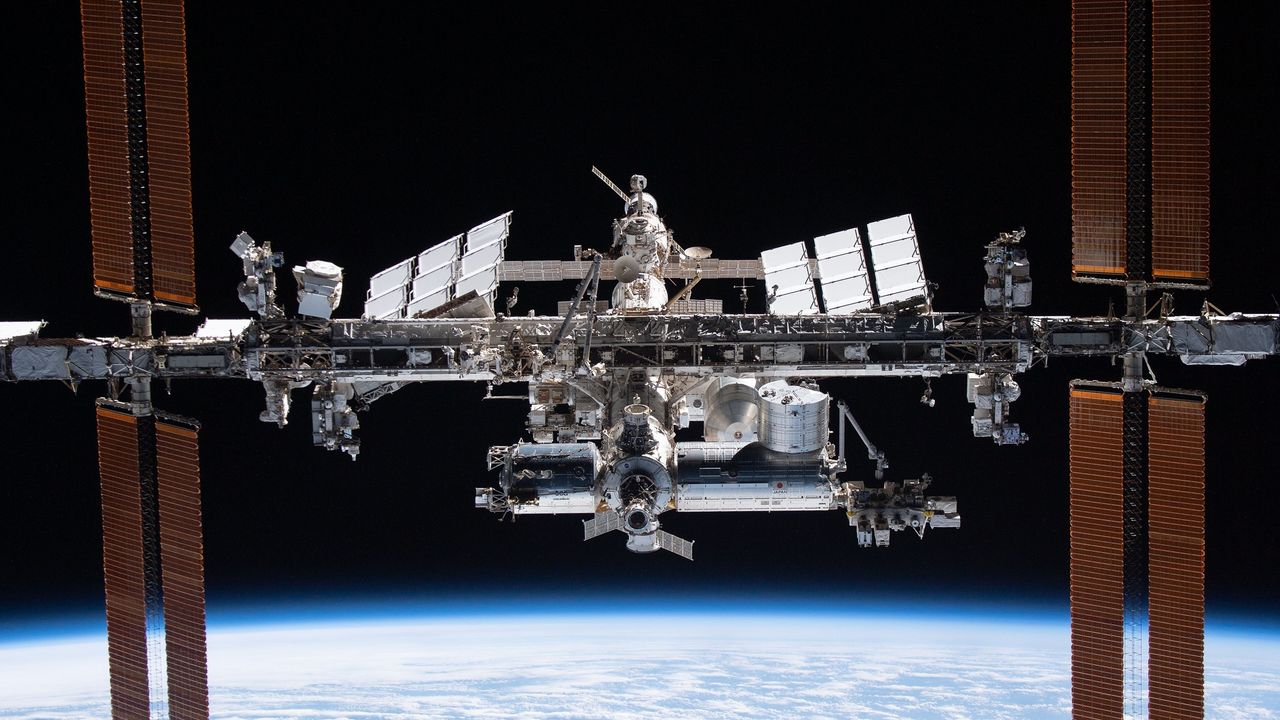
When the International Space Station plunges to its fiery doom in 2030, its loss to science will be incalculable, even if it remains an open question as to whether its successes matched humanity's ambitions for it.
By the time that the International Space Station (ISS) is safely and deliberately de-orbited over the Pacific Ocean, the station will have been permanently crewed for 30 years — it has had visitors ever since the first Expedition 1 mission (consisting of one astronaut and two cosmonauts) first docked with the fledgling, half-built station on November 2, 2000. Yet as we begin to near the end of the ISS's time in low Earth orbit, we are beginning to think ever more about the station's true legacy, whether it achieved what it set out to achieve, and what we will lose when it is finally gone.