
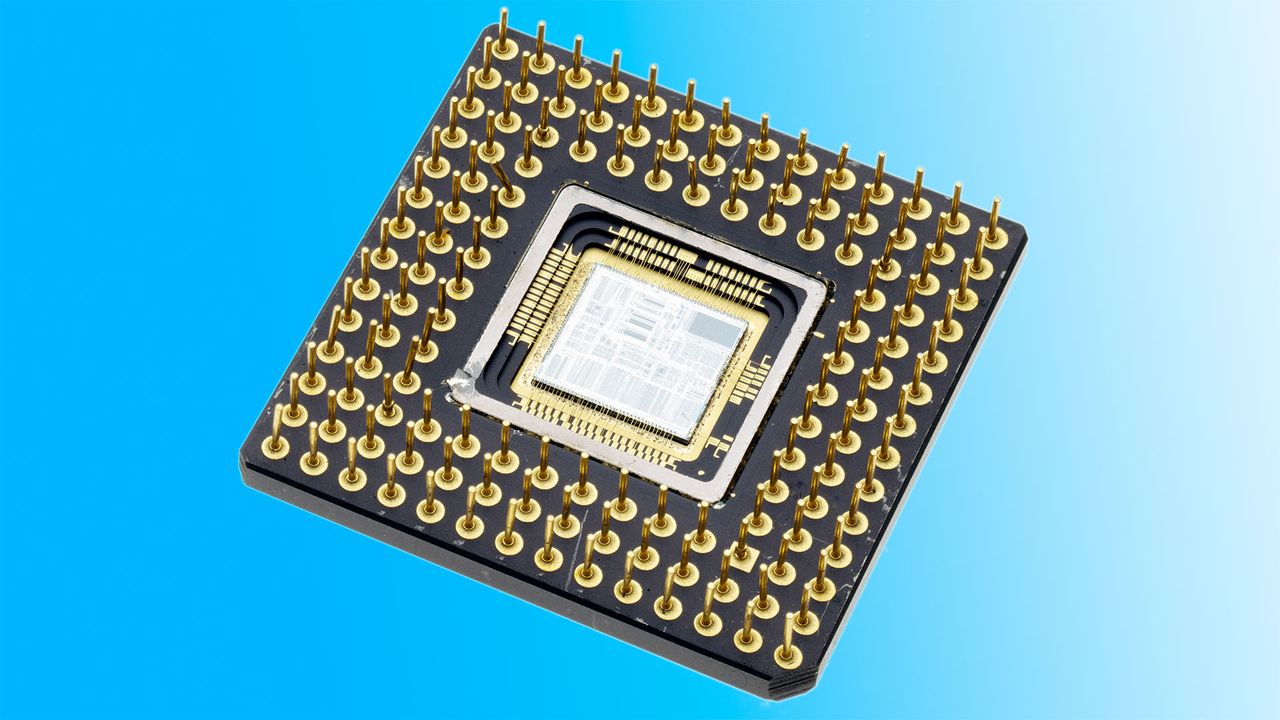
Intel’s 80386 turned 40 this week. Introduced in October 1985, the third-generation x86 processor — better known as the i386 — was the first 32-bit chip in Intel’s PC line, the origin point for the IA-32 instruction set, and the architectural turning point that transformed personal computing.
The i386 shipped with 275,000 transistors and ran at up to 16 MHz at launch. Internally, it brought 32-bit general-purpose registers, a flat memory model, and support for up to 4GB of address space, but the bigger change was to the system architecture. Protected mode, virtual 8086 mode, and hardware paging laid the groundwork for real multitasking and virtual memory on x86. Microsoft’s early i386 development kits included demos showing multiple DOS sessions running in parallel, each in its own paged VM. That became a core feature of Windows 3.0 in 1990, under the name “386 Enhanced Mode.”