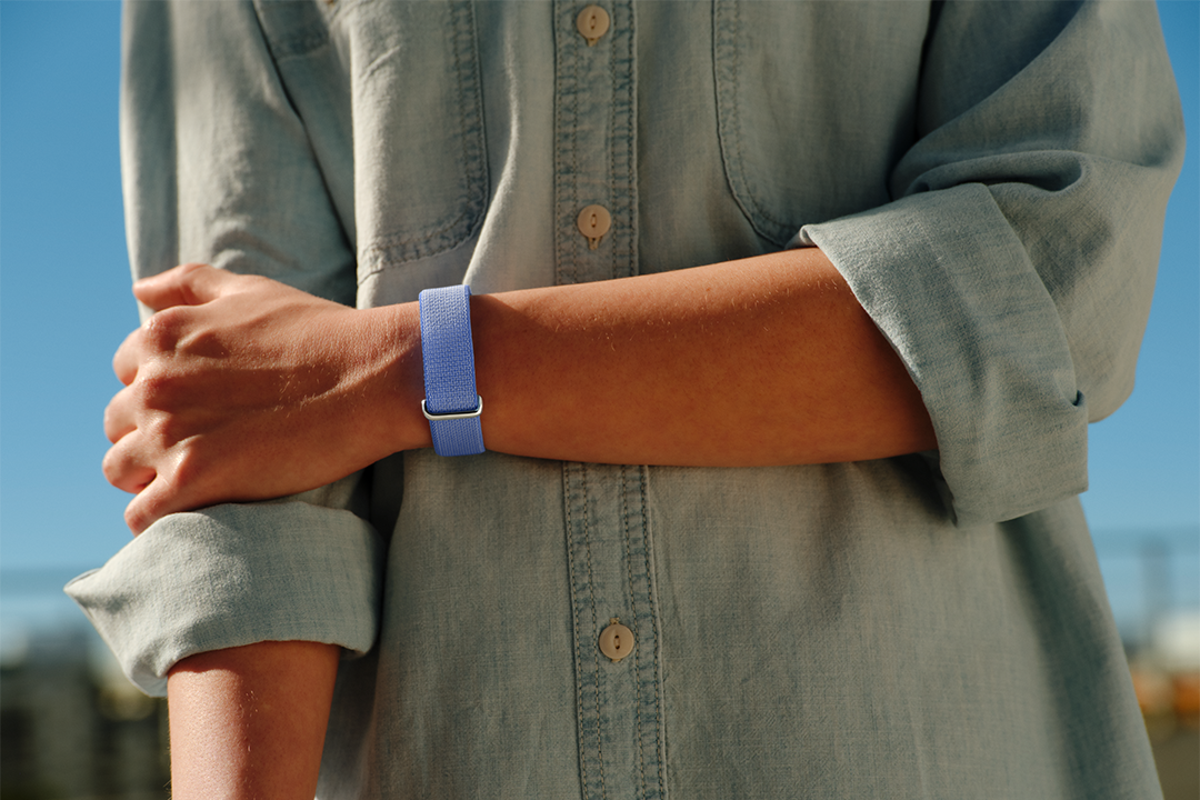
In what may be the biggest challenge to Whoop’s dominance since the company first released its wearable in 2015, Google has just launched the Fitbit Air – an £85, screen-free wearable that doesn’t require a subscription to work.
The fitness tracker was first teased in early April by NBA legend and Google’s performance advisor Stephen Curry. It’s the first new Fitbit tracker in almost three years. The Fitbit Air boasts a smaller, lighter design and focuses on passive, round-the-clock health tracking and recovery, rather than trying to replace a smartwatch.

Intended to be worn day and night, the Fitbit Air monitors everything from heart rate and sleep to recovery metrics like blood oxygen, skin temperature and heart rate variability, with all data being fed into Google’s newly revamped Fitbit app, rebranded as Google Health.
The new health platform now features a super-smart AI coach that creates tailored fitness plans that adapt to your real-time performance data. I’ve spoken to Rishi Chandra, Google’s general manager of health and home to find out more. Here’s everything you need to know about the Fitbit Air, plus when you can get your wrists on the new fitness tracker.
Read more: These are the best smartwatches in 2026
Fitbit Air design

The Fitbit Air is the first Fitbit-branded device that Google has released in nearly three years. A slim, screen-free wearable, it’s the closest thing Google’s made to a Whoop than ever before. It can track all the metrics I’ve come to expect from a fitness tracker, including 24/7 heart rate tracking, sleep stages, heart rate variability, blood oxygen, skin temperature, respiratory rate and VO2 max.
It has an intentionally minimalist design, with no buttons. The smallest Fitbit ever made, it’s 25 per cent smaller than the Fitbit Luxe with a tiny pebble-like shape. The tracker itself weighs just 5.2g (12g with the band) and is just 8.3mm thick.

Deliberately pared-back, Chandra says that many people still find wearables too complicated, too bulky to sleep in, or just too expensive. The Fitbit Air is meant to remove those barriers. “We wanted something incredibly simple and incredibly light that you didn't even know you had it on your arm,” he explains. “We think this is the most comfortable tracker and the lightest tracker and the smallest tracker,”
The Fitbit Air can be used with a range of interchangeable bands, including a textile performance loop with a micro-adjustable fit, a sweatproof silicone band for workouts and a more premium modern band that doubles up as a bracelet. Band colours include obsidian, fog, lavender and berry.
Fitbit Air features

As well as the metrics above, the Fitbit Air can alert you of irregular heart rhythm notifications to flag potential signs of AFib. You can see your cardio load and a daily readiness score inside the app, so you know when you need to take it easy and when you can go hard at the gym. You, of course, can track steps, distance and activity, with the Fitbit Air automatically detecting workouts as well.
The Fitbit Air can also track your sleep stages and breathing regularity, giving you an overall sleep score. What’s really neat is that it also features haptics, with a smart wake alarm that can vibrate you awake gently at the most optimal time in your sleep schedule. That’s something the Whoop can’t do.
Most of the new features are powered by Google’s new Google Health app, though it’s currently unclear which features will be locked behind the Google Health Premium subscription – we know that the AI coach will be a premium-only feature.

The Gemini-powered Health Coach is the centrepiece of the Google Health app. It turns your metrics into personalised guidance. The coach pulls together your fitness data, sleep and health information into one place in order to give you tailored recommendations that can adapt as it learns. It can also suggest workouts, highlight trends and help you with your recovery, making all your data feel less overwhelming and more personal.
Google Health can pull together data from your Fitbit Air and other devices, other apps and, in the US, your medical records, giving the coach more to work with. Google says it hopes to expand the medical records feature to more countries, including the UK, in the future. The more context it has, the more relevant its recommendations become. You can also log meals and track your menstrual cycle.
While plenty of wearables have AI coaches now, from Whoop to Oura, the Google Health coach sounds different. “We built our app with the coach at the core of the entire experience,” says Chandra. “My personal opinion is, when you experience our coach, you’ll see a very, very different experience than you'll see with other competitors out there.”

More importantly, the Fitbit Air doesn’t require a subscription to work. You still get access to your metrics, including your sleep, HRV and activity tracking for free, but the coaching experience is locked behind Google Health Premium. You get three months free when you buy a Fitbit Air.
Although it doesn’t last as long as the Whoop, with a 7-day battery life, I like that it can be charged magnetically. Google says it can go from 0 to 100 in 90 minutes.
Fitbit Air release date and price

The Fitbit Air is available to pre-order now and costs £84.99. It will launch on 26 May.
Google hasn’t confirmed UK pricing for Google Health Premium just yet, but it’s expected to be similarly priced to Fitbit Premium, which currently costs £7.99 a month or £79.99 a year.