
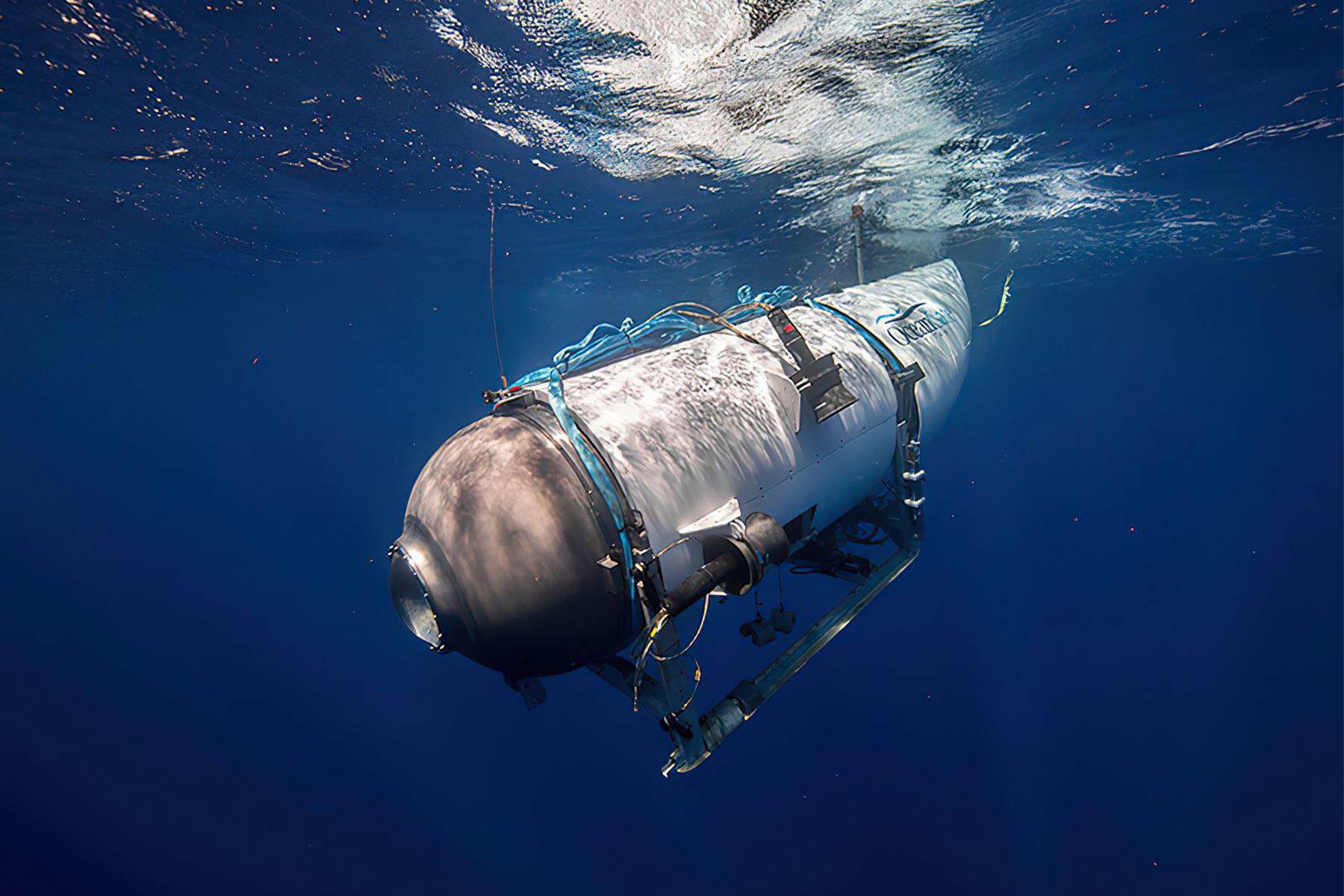
On Sunday, June 18, a tourist submersible carrying five people to the wreckage of the Titanic disappeared in the North Atlantic. Five days later, a costly search—involving ships, planes, sonar, and a remotely operated vehicle (ROV)—revealed that the Titan had imploded, scattering debris on the ocean floor and killing everyone on board. The media’s focus centred on OceanGate Expeditions and its overly confident CEO, Stockton Rush, whose obsession with building a SpaceX for the ocean led to flouting of industry standards and regulations and a submersible built with off-the-shelf parts, including a now-notorious video game controller. However, a curious Newfoundland connection evaded scrutiny.
In the months leading up to the accident, the Memorial University of Newfoundland’s Marine Institute, based in the provincial capital of St. John’s, announced in the MUN Gazette, the university’s official news site, that it had partnered with OceanGate to provide it access to its facilities and students. “Our partnership with OceanGate expands the opportunities for our students to participate in ocean exploration and gain hands-on experience by supporting the pre-departure preparation and through on-shore and sea-based work-terms,” Angie Clarke, associate vice-president of academic and student affairs at the Marine Institute, is quoted in the announcement. “These expeditions provide students with insight into both history and their own futures in the ocean technology field as they support the dive teams and OceanGate’s use of deep-sea technology.” An MUN student was working on board Titan’s mother ship, the Polar Prince, when radio contact with the submersible was lost and it imploded. How could Canada’s premier ocean-technology institute, staffed by engineers and technicians trained in the exact fields where OceanGate had failed so prodigiously, miss the warning signs?














