- The Chevrolet Silverado EV has one of the biggest battery packs fitted to an EV.
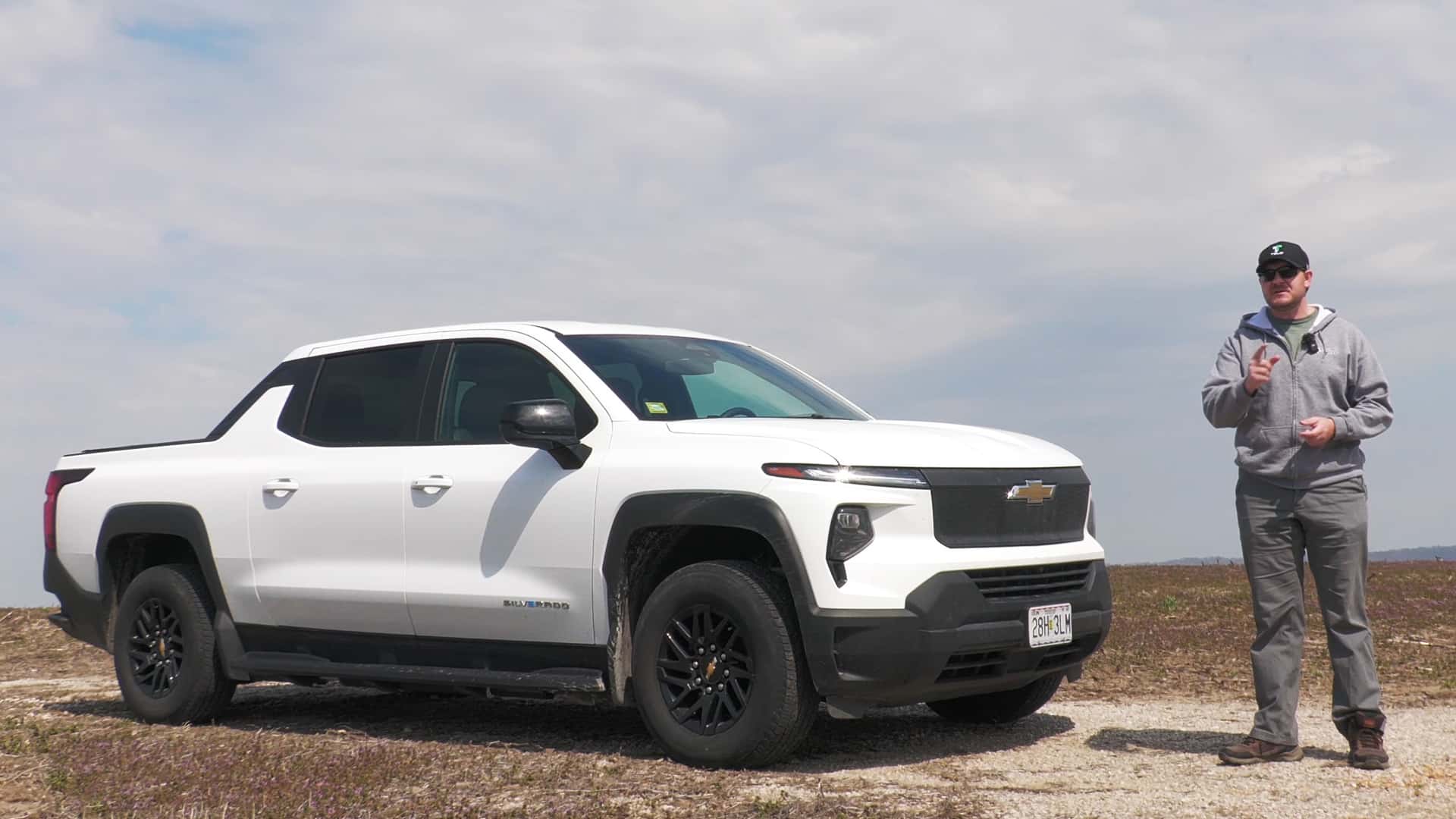
- One YouTuber bought a Silverado EV for towing, and says it’s the best truck for the job by far.
- However, he’s now trying to get rid of it, after several frustrating experiences.
After one year of ownership and no fewer than six dealer visits for multiple issues, YouTuber Robert Dunn of Aging Wheels fame has had enough of his Chevrolet Silverado EV.
There’s a lot to unpack about the huge Silverado EV, and just about everything about it gets high marks from the owner, which begs the question: Why is he trying to get rid of it? In short, it’s because of the lackluster service experience and the huge insurance bills.
First, let’s get the good stuff out of the way. Dunn, who made a name for himself after publishing lighthearted but pretty in-depth videos about everything from old Trabants to quirky Coda EVs, says that the Silverado EV with the Max Range battery is the best tow vehicle out there.

The American-made electric truck packs a little over 200 kilowatt-hours of energy, which is plenty for long tow trips, with an EPA-estimated range of 478 miles on the newest model. It can charge decently fast, it’s comfortable, and its high-powered electric motors make light work of long descents while carrying a big load on a trailer–the hydraulic brakes rarely get used, so they obviously don’t overheat, and you also get free energy that goes back in the battery.
All this being said, there were multiple issues with the truck, all of which were resolved. Three service visits were for things like a dim LED daytime running light and a wiring harness that was broken from the factory. Some software problems also made their presence felt, but after several updates, the car is now working the way it should have from the beginning.
The other three service visits were for the same issue, and they kept the car off the road for almost three months, during which time the service technicians gave up, and the Silverado EV eventually fixed itself.
The issue came up during a huge road trip, where Dunn’s Silverado EV refused to charge as fast as it could at DC fast chargers. Things are about to get a little complicated, but bear with me because it’s important for the whole story. To keep costs down but still stuff a gigantic battery that can take in over 300 kW from a DC fast charger, General Motors employs a neat little trick in its biggest electric trucks.

In the Silverado EV’s case, the Max Range version has a 24-module battery that’s split into two. Almost all the time, the two parts of the battery packs are wired in parallel, which keeps the nominal voltage at 345 volts. That’s great for keeping costs down because GM likely didn’t have to engineer expensive motors that work with higher voltages, but it’s horrible when you need to spend over an hour to top up the battery.
However, GM’s solution is to flip a switch that wires the two battery arrays in parallel when using an 800-volt charger, raising the pack’s nominal voltage to 691V and cutting recharge times in half.
In Dunn’s case, his Silverado EV refused to go into parallel mode, which added about five hours to his road trip and prompted him to start a buyback case with Chevrolet because his local dealership didn’t know what to do with the car.
After the first service visit, the technician wiped the error codes and called it a day, but that didn’t fix the problem. During the second service visit, where the car stayed at the dealer for almost two months, a little more effort was put into the job, and the car finally worked again.
However, it only lasted one week before reverting to slow-charging mode. So the car went back to the dealership again, where it stayed for yet another month. Only this time, the service technicians gave up, saying that they didn’t know what to do with the car.
Here’s the kicker: the car fixed itself, and because there wasn’t anything else wrong with the truck, Chevrolet denied his buyback claim.
According to the YouTuber, the underlying issue here is that the car’s electronic brain doesn’t set a fault code when the battery refuses to go into series mode, so service technicians–some of whom might not have the necessary training for EV work–don’t have a baseline to work with.
The car works perfectly fine now, as if there was nothing wrong with it to begin with, and the owner doesn’t have anything bad to say about the service technicians. But after months of back-and-forth and huge insurance bills, the truck now needs to go.