
Get all your news in one place.
100's of premium titles.
One app.
Start reading
InsideEVs
InsideEVs
Technology
Suvrat Kothari

The Cadillac Optiq Is Getting A China-Developed EV Platform (Update)

  • General Motors will begin using a high-tech electric vehicle platform developed in China for the Cadillac Optiq.
  • The automaker hasn't said which markets this will be available in, but the U.S. remains unlikely.
  • Chinese hardware and software face heavy restrictions in the U.S.

Update: This article has been updated with a comment from General Motors.

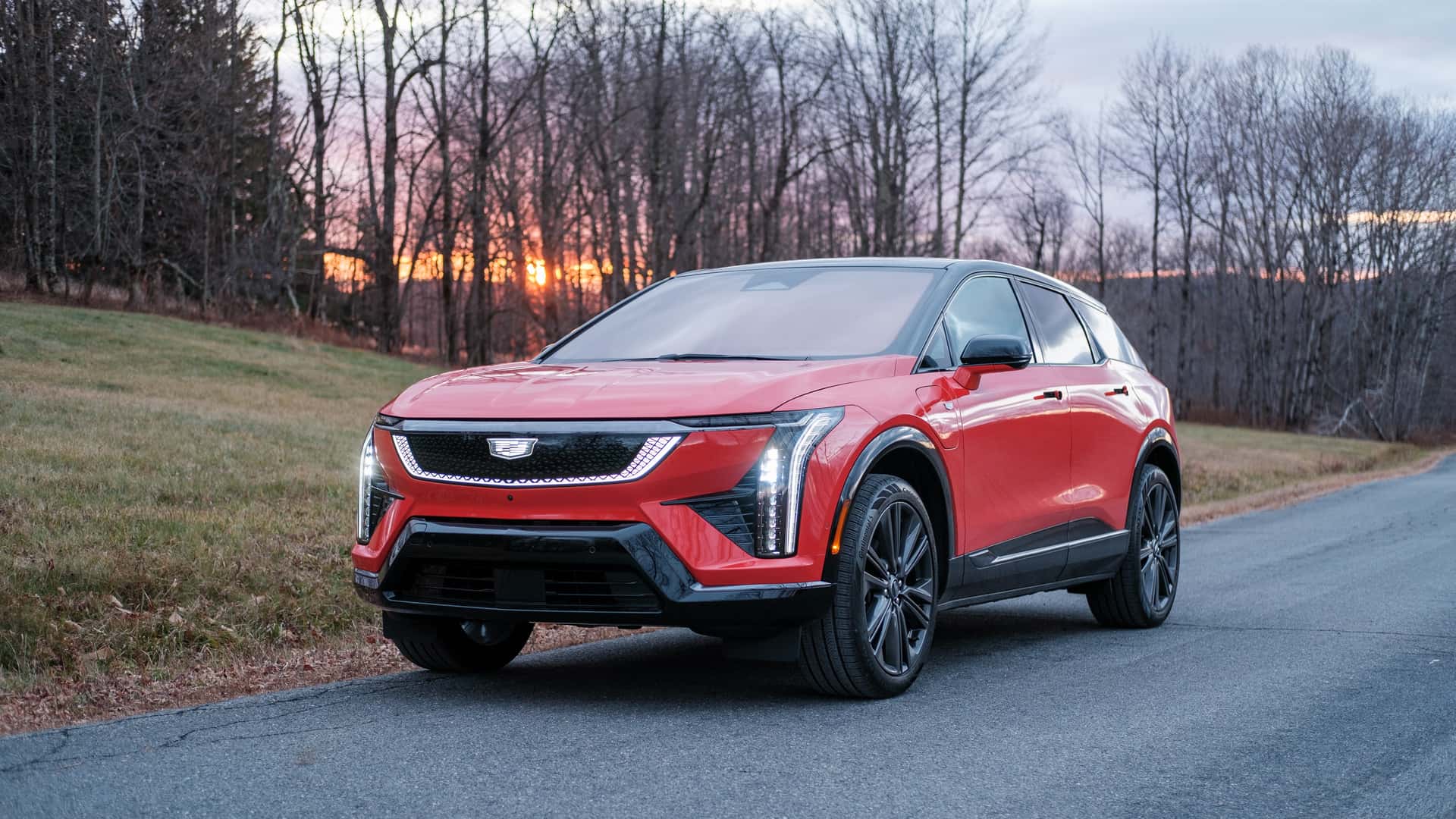
The next version of the Cadillac Optiq will swap General Motors’ U.S.-designed electric vehicle architecture for a platform developed through a joint venture in China, Reuters reported on Wednesday, citing a person familiar with the plans.

While this platform is unlikely to make its way to the U.S. due to restrictions on Chinese hardware and software, it’s a sign of Western automakers increasingly tapping advanced Chinese technology to stay relevant in the global EV market. The Reuters story did not specify where the Optiq using Chinese EV technology would be sold.

GM has two long-standing joint ventures in China, one with the state-owned SAIC Corporation and another with SAIC and Wuling. Per the report, the Optiq will get the Xiao Yao platform developed at the SAIC-GM’s Pan Asia Technical Automotive Center (PATAC) in Shanghai.

Update: Here's what a GM spokesperson in the U.S. told InsideEVs about the new platform: "The Xiao Yao architecture is a China-tailored platform developed by PATAC that combines GM’s global expertise with strong local capabilities. It integrates propulsion, chassis, intelligent driving and smart-cabin technologies. The reporting about the Optiq is speculative."

Gallery: 2026 InsideEVs Breakthrough Awards Editor's Choice: Cadillac Optiq

Multiple Buick models like the Electra L7 and the E7 already use the 900-volt-capable Xiao Yao platform, and it’s easy to see why GM prefers that over its Ultium platform that underpins most of its EVs in the U.S.

For starters, the American-developed Ultium platform has been a flop in China, with sluggish sales of the Buick Electra E5 and E4. They were competing with far more advanced locally-developed EVs from the likes of Nio, BYD, and Xpeng. GM’s answer to that was to develop a platform in China, for China, to compete with burgeoning startups.

Last year, SAIC-GM announced Xiao Yao as a truly software-defined vehicle platform with plenty of flexibility baked in. It supports EVs, plug-in hybrids, and extended-range vehicles and can be adapted for nearly all body types, including MPVs, sedans, and SUVs. It also supports front-, rear- and all-wheel-drive configurations. There's also heavy focus on advanced cockpits, efficiency and high-speed charging.

In other words, it’s possible that the next-generation Optiq sold overseas might feature blistering charging speeds, cutting edge batteries, and advanced cockpits that would make its U.S. counterpart look ancient.

The automaker also sells the Optiq and Lyriq in Europe, where there’s now an influx of Chinese EVs. While it’s unclear which markets the updated Optiq will sell in, it makes perfect sense to ditch the Ultium platform and update it with more advanced Chinese tech to keep it competitive where that's possible.

GM also isn’t the only Western automaker leaning on Chinese tech for EVs sold elsewhere. Renault also developed the latest Twingo E-Tech at its R&D center in Shanghai while Audi and Hyundai are also planning to make China their next big R&D hubs.

Contact the author: suvrat.kothari@insideevs.com

Sign up to read this article
Read news from 100's of titles, curated specifically for you.
Already a member? Sign in here
Related Stories
Top stories on inkl right now
One subscription that gives you access to news from hundreds of sites
Already a member? Sign in here
Our Picks
Fourteen days free
Download the app
One app. One membership.
100+ trusted global sources.