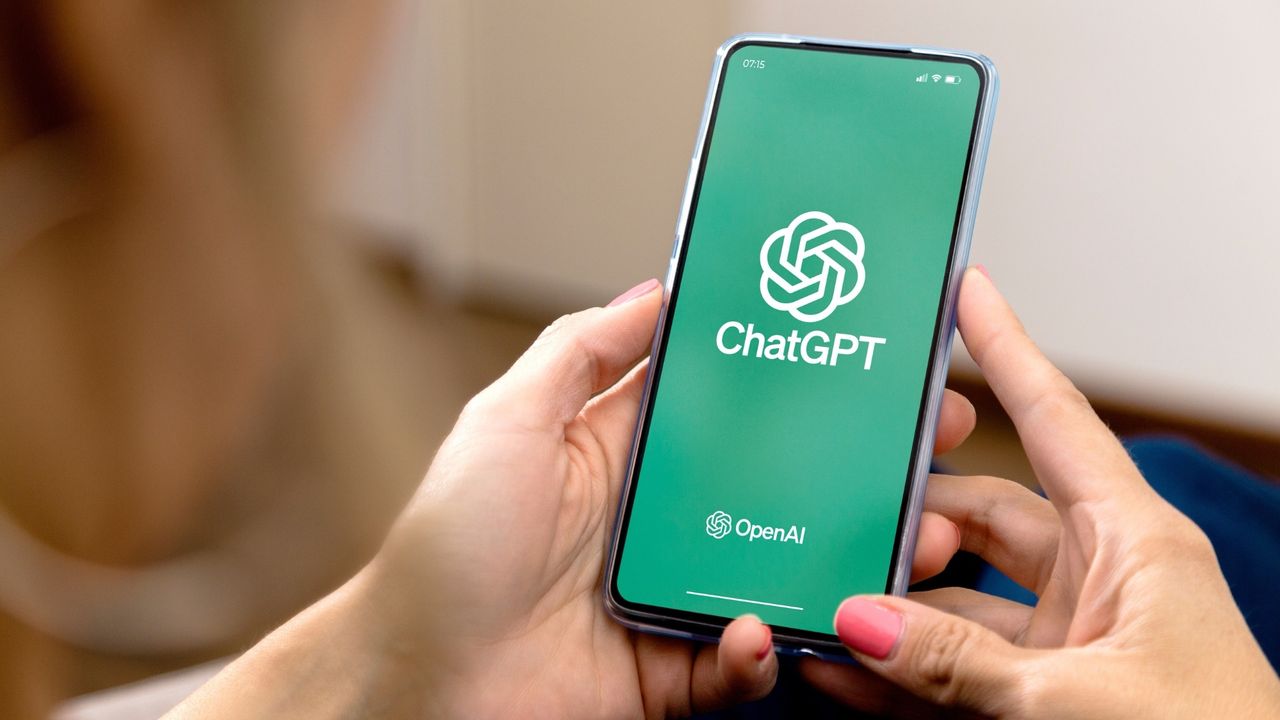
A new leak reported by Crypto Briefing suggests OpenAI is working on a bidirectional voice model that could make conversations with ChatGPT feel much more natural.
Instead of waiting for you to finish speaking before responding, the AI would reportedly be able to listen while it's talking — allowing for interruptions and a flow that mimics real conversation between two people.
On paper, that sounds like a nice upgrade, but I think highlights a growing trend towards something much bigger.
AI speaking is upon us
For the past few years, we've been talking about how AI is changing the way we write. I've felt it in my own work. I studied writing long before AI existed and today it feels like I've had to learn the craft all over again. My sentences are shorter. I cut clever turns of phrase to literally avoid sounding like AI. I second-guess punctuation I used to love. Not because my taste changed, but because writing for an internet increasingly filtered through AI rewards a different style.
I've accepted that. What worries me now isn't just AI changing how we write, but how we speak.
If leaks like this become reality — and I suspect they will — we're heading toward a future where interacting with AI won't require a keyboard at all. All we'll have to do is talk. Whether we're chatting through a pair of the best smart glasses or with ChatGPT in our cars, the screen will soon become optional.
And while that sounds incredibly convenient. It also raises a question I can't stop thinking about: if we stop typing, do we eventually stop reading?
What happens when info is heard instead of read
When information is spoken instead of written, when AI summarizes every article, explains every concept and answers every question conversationally, do we lose the habit of wrestling with difficult text ourselves?
I don't think books disappear. But I do wonder if reading becomes more like handwriting or cursive, which is a valuable skill that fewer people practice because technology offers an easier alternative. And while calculators didn't eliminate math, and GPS didn't make maps disappear, they did change what people practiced every day, and the skills that atrophied were the ones technology made optional.
Reading is different because it isn't just about absorbing information. It's how we build vocabulary, strengthen attention spans, develop empathy and learn to think through complex ideas over long stretches of time. Those are cognitive muscles that grow through practice, and they weaken without it.
Ironically, AI may also be one of the best tools we've ever had for preserving those skills. Imagine an assistant that helps you work through a difficult chapter, quizzes you on what you've read or recommends books based on your favorite authors.
What makes this leak different is that it isn't happening in isolation
What makes this leak different is that it isn't happening in isolation. Over the past year, nearly every major AI company has been racing toward a screenless AI.
OpenAI has made ChatGPT Voice feel increasingly conversational while Google is weaving Gemini into Android, earbuds and smart glasses. Meta is betting heavily on AI-powered Ray-Ban glasses that can see what you see and answer questions in real time. Apple is slowly repositioning Siri as a more capable AI assistant that lives across your devices.
What I'm seeing is that we are moving away from an on-screen chatbot to a world where AI becomes almost ambeint. If AI can listen while it's speaking, understand interruptions and respond naturally without awkward pauses, it removes one of the biggest barriers between humans and machines. The conversation starts to feel... normal.
Final thoughts
Once talking becomes easier than typing, most people will choose talking. And that's the future I keep coming back to when I think about AI. While the technology is remarkable, it's different and ultimately changing how we interact with AI — even more human-like.
And while every technological shift changes not only what we can do, but what we choose to practice, if voice becomes our primary interface with AI, then reading and writing may quietly become secondary skills for many people.
That possibility fascinates me as much as it worries me.
Follow Amanda Caswell and stay ahead of the AI curve