
Get all your news in one place.
100's of premium titles.
One app.
Start reading
Livingetc
Livingetc
Hayley Spencer

The Back Height of Your Sofa Really, Really Matters — For Ergonomics, Yes, but Also in How 'Old' Your Living Room Looks

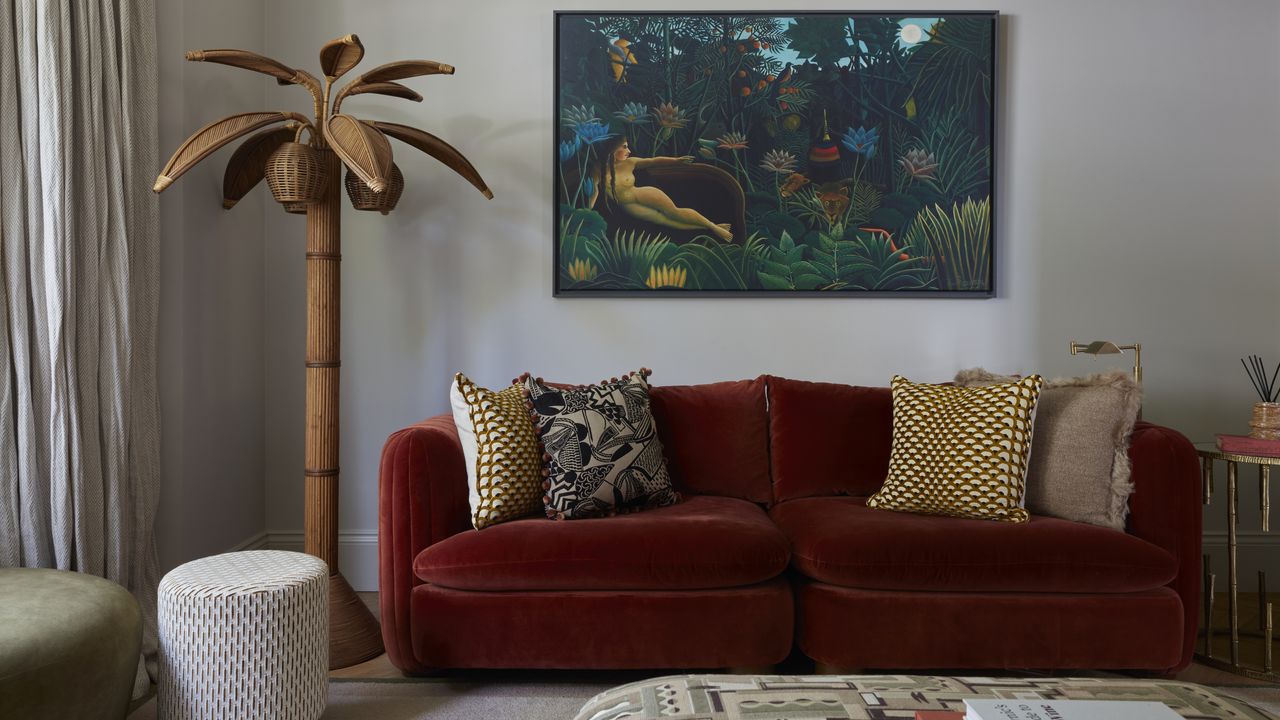
Run For The Hills designed living room with custom rust colored sofa and nature print above.

Your sofa is one of the most major investments you're likely to make when furnishing your home, and it should succeed in both anchoring your space and matching the tone for the scheme of your room. Though importantly, it should have longevity; it needs to stand the test of time, not just in comfort and quality but visually too.

Of course, there are ways to update the look of your couch: you can reupholster a long-loved style, or mix up the color of cushions and throws to reinvent the aesthetic — but the silhouette is the one thing you can't change. And 2026's biggest sofa trends seem to confirm something: the back height is important. Whether it's embellished, armless, or sculptural, most of this year's most popular styles have a low profile.

So is a low-back sofa integral to making your living room look current? And will a high-profile instantly date your home? We asked some of our favorite interior and sofa designers to weigh in. (Plus, they share how to decide on the right sofa profile for your room, and the styling tricks you can steal to ensure your scheme feels contemporary.)

Is Your Sofa's Height Dating Your Room?

Low profile sofas makes schemes feels instantly less formal and more laid-back. (Image credit: Kate Martin. Design: Studio Morey)

The answer to this question can depend on your personal aesthetic. Before you rule out a high-back sofa entirely, or consider replacing your existing one, ask yourself what 'mood' you want to create.

“High-back sofas tend to lend themselves more naturally to a traditional sitting room," says Zoe Bailey, associate director at MoreySmith. "They can create a sense of formality and enclosure."

Natasha Lyon, founder of design studio Appreciation Project, agrees. "While I don't think a high-back sofa would necessarily date a room (if it were in a desirable fabric choice), it is definitely a 'proper' look, as it's designed to make you sit up straight. I think a lower-backed sofa is a lot more relaxed in spirit."

So if your home's vibe is laid-back or modern, then yes, says Zoe, a low-profile sofa will lend itself better to the overall look. "They feel much more suited to the open, informal way we live in our homes today,” she adds.

Does the Size of Your Room Matter?

A low-back sofa fits perfectly in this awkwardly shaped room in the eaves. (Image credit: Chris Snook. Design: Apprecation Project)

Zoe of StudioMorey thinks low-back sofas create a "comfortable yet contemporary feel," no matter the room, and uses them wherever possible, whatever the footprint.

One of the style's biggest benefits is the fact that they make a space feel fluid and open, she says. "Particularly when you have the space to position the sofa away from the walls rather than around the perimeter of a room."

Though by virtue of their height, they lend themselves to compact spaces, too. Take the room by Appreciation Project pictured above, which features a King Living modular sofa bed. "It was perfect for getting up tight hallways," says Natasha. "Plus, as it's modular, we could create it to fit perfectly around the eaves and sloping ceiling of this top-floor room and make it look made to measure."

This modular sofa has a low back and armrests that fold down to easily switch between reclining and sitting upright.

A low profile sofa keeps sightlines open below cornicing and artwork. (Image credit: Olly Hunter. Design: The House Upstairs)

A low sofa is a more versatile choice than a high-back due to how it fits around the architecture of a room, notes Jodie Hazlewood of The House Upstairs, a handmade furniture brand. "A low sofa keeps sightlines open below cornicing and windows, so a room with those features doesn't feel visually cut in half, and more wall and floor stay visible, which makes a space feel larger," she adds.

This also applies to the choice of artwork and carpentry, which can be larger in scale without grappling for wall space with the sofa.

Annie Harrison, founder of Fare Inc., agrees: "A low-back sofa lets the architecture lead," she says. "They're versatile to live with, as a lower back means the sofa can float in the middle of a room or divide a space without blocking sightlines or natural light. They also tend to suit modular, low-slung spaces better, since a tall back can make a room with low ceilings or beams feel more cramped than cozy."

How you use your sofa will help you decide which silhouette will work best — the rake, filling, and materials need to be just right. (Image credit: Philip Durrant. Design: Run For The Hills)

If you're ready to invest in a new sofa and want it to last for years to come, Jodie stresses the importance of paying close attention to the details that give it its structure, as well as the materials. "Choose one with a fixed back as it holds its shape without needing daily plumping," the sofa designer explains. "Covered feet stand up to everyday use rather than needing constant cleaning."

As well as durability and choosing the right sofa color for your scheme, consider your lounging style. If you like to lie down on the sofa, choose padded arms. If you have kids, deep, well-filled cushions that hold their shape are important for surviving all the climbing.

Another important factor, according to Run For The Hills co-founder and interior designer Anna Burles, is the rake (the angle of the backrest). "If it’s too upright or firm, it feels odd," she says. "When choosing sofas or making them bespoke for our projects, they need just enough give to be comfortable and just enough back height support that you'd happily kick back and watch a movie."

If you want an even cozier feel, consider adding a matching ottoman, footstool, or pouffe that'll allow you to sink in. "It's the ideal comfort if you want to indulge, take the weight off and relax," says Natasha.

Loaf's modular sofa has padded arms and cushions which bounce back easily, making it a seriously comfy investment buy. There's also a matching footstool available.

The height of your coffee table and lighting is important for adding scale and texture to a room with a low-profile sofa. (Image credit: Helen Cathcart. Design: Fare Inc.)

If you're plumping for a low-back sofa, the size and position of the finishing touches and the furniture you surround it with need to be carefully chosen.

As Annie of Fare Inc. explains: "Low sofas need a bit of help holding their own, so scale and texture become key. Go big with the coffee table. Consider a chunky black marble block that anchors the low seating, and use lighting to reintroduce height into the room, a sculptural pendant or a tall floor lamp doing the job the sofa back would otherwise have done."

As for soft furnishings, comforting touches are key on a long or modular low sofa, says Natasha. "A cozy, textured throw is a must, alongside a few carefully chosen cushions. We often introduce velvet or a geometric pattern to add interest and break up the expanse of fabric of a plain sofa, while still keeping the overall look relaxed and considered," she suggests.

With its stone base, this sculptural floor lamp will ground your scheme and add height. The curved profile will protrude elegantly over the end of your low-back sofa.

For more styling advice and design ideas, sign up to the Livingetc newsletter for inspiration straight to your inbox.

Sign up to read this article
Read news from 100's of titles, curated specifically for you.
Already a member? Sign in here
Related Stories
Top stories on inkl right now
One subscription that gives you access to news from hundreds of sites
Already a member? Sign in here
Our Picks
Fourteen days free
Download the app
One app. One membership.
100+ trusted global sources.