
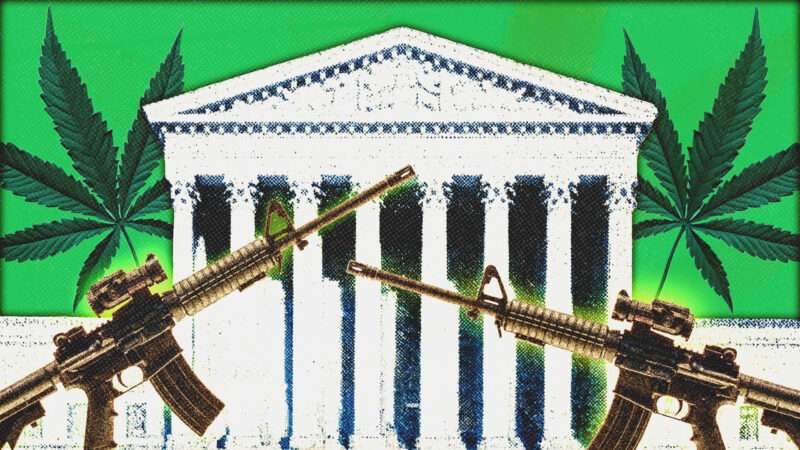
Over the course of 12 days last month, the Supreme Court upheld the gun rights of cannabis consumers, rejected Hawaii's default rule against firearms on private property open to the public, and agreed to address the constitutionality of "assault weapon" bans. That flurry of Second Amendment activity underlines the point that supposedly sensible gun regulations are not necessarily consistent with the right to arms as it was historically understood.
When Congress enacted the Gun Control Act in 1968, legislators took it for granted that an "unlawful user" of marijuana, depressants, stimulants, or narcotics should not be allowed to own a gun. They reaffirmed that judgment in 1986, changing the wording to encompass unlawful users of "any controlled substance."













