The United States has approved plans for what could become one of the most unusual space projects ever attempted — a satellite carrying a giant mirror designed to reflect sunlight back to Earth after dark.
Get breaking news anytime, anywhere. Download the TOI app now!

The US Federal Communications Commission (FCC) has granted California-based start-up Reflect Orbital permission to launch its first demonstration satellite, called Eärendil-1, into low Earth orbit later this year. If successful, the company hopes the technology could extend daylight for solar farms, provide emergency lighting during disasters and even illuminate construction sites and city streets at night.
What is the plan?
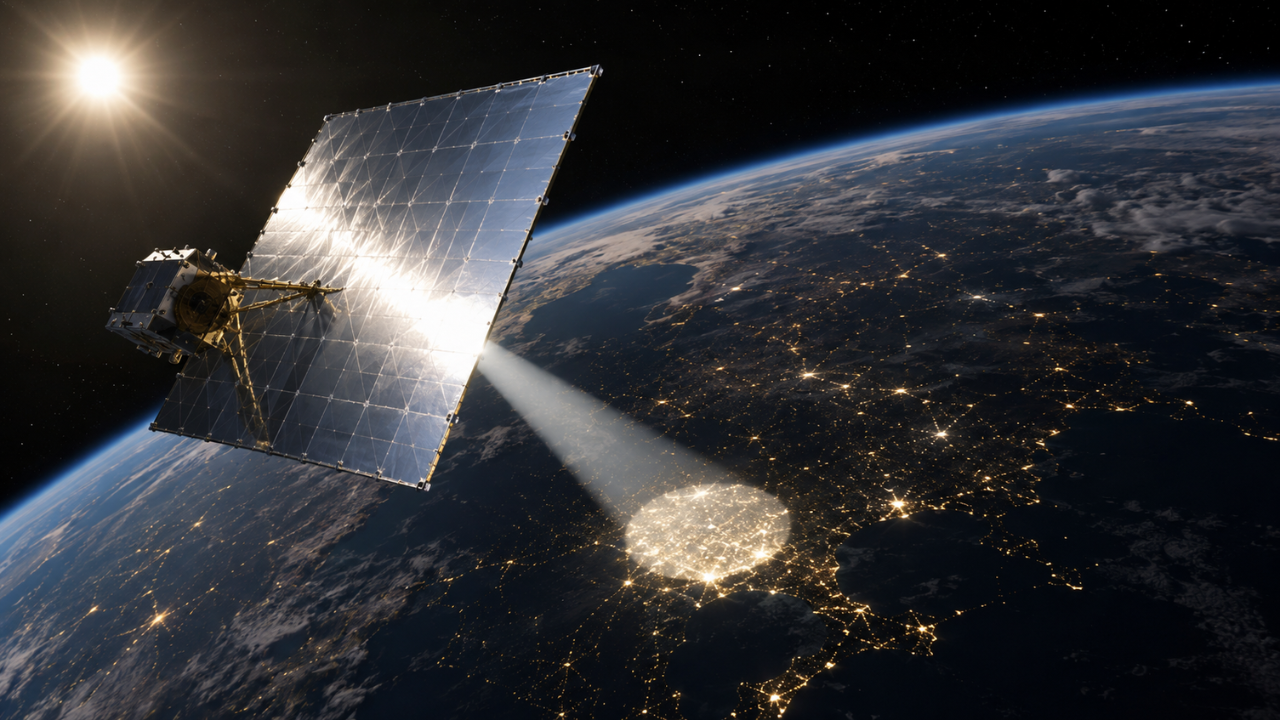
Reflect Orbital's prototype satellite, roughly the size of a dormitory refrigerator, will deploy a square mirror measuring nearly 60 feet (around 18 metres) across once it reaches an altitude of about 400 miles (640 kilometres).
The mirror is designed to redirect sunlight onto a circular area roughly three miles (five kilometres) wide on Earth's surface. According to the company, the reflected light could keep solar farms generating electricity after sunset, assist rescue teams during emergencies and allow construction work to continue safely through the night.
The company has far bigger ambitions. It aims to deploy around 1,000 larger satellites by 2028 before eventually expanding the constellation to as many as 50,000 satellites by 2035. Future mirrors could stretch to nearly 180 feet (55 metres) wide and produce illumination comparable to the brightness of around 100 full moons.
Why are scientists worried?
The project has drawn strong criticism from the scientific community. The American Astronomical Society argued in a letter to the FCC that the proposal does not serve the public interest and warned it could seriously affect astronomical observations.
Astronomers fear bright reflections from the mirrors could overwhelm sensitive telescopes, making it harder to study faint celestial objects. Samantha Lawler, an astronomer at the University of Regina in Canada, warned that losing naturally dark skies would severely hamper research.
Experts have also raised concerns about the impact on wildlife and human health. Artificial lighting at night can disrupt circadian rhythms that regulate sleeping, feeding, flowering and migration in humans, animals and plants. There are also fears that flashes from repositioning the mirrors could distract pilots and motorists.
Why did the FCC approve it?
The FCC said its role is limited to regulating satellite communications and radio frequencies rather than assessing broader environmental impacts. In its approval order, the commission described the mission as a potentially groundbreaking technology that could strengthen American leadership in space.
The agency also argued that current US regulations do not require environmental reviews for activities carried out in outer space.
The idea itself is not entirely new. In 1993, Russia briefly tested an 80-foot space mirror that reflected sunlight onto parts of Siberia before abandoning the programme after a later mission failed. Whether Reflect Orbital succeeds where that earlier effort did not could determine whether artificial sunlight becomes a practical technology — or remains another ambitious space experiment.