Get all your news in one place.
100's of premium titles.
One app.
Start reading
Euronews
Euronews
Peter Kristof

Study: cooling temperatures increase risk of cardiac arrests

Falling temperatures are among the most important weather-related risk factors for cardiac arrest, according to a study published in the journal Public Health. According to the researchers, each one-degree Celsius drop in average temperature was associated with an average 1.4% increase in the daily number of out-of-hospital cardiac arrests.

In a seasonal comparison, the researchers also found that almost 18% more cardiac arrests occurred in winter than in summer.

Based on a nationwide analysis of more than 114,000 cases carried out by staff at Semmelweis University in Budapest, the Budapest University of Technology and Economics and the Hungarian National Ambulance Service, the researchers concluded that weather data could be used to predict up to three days in advance when more out-of-hospital cardiac arrests than average are likely to occur.

The researchers compared data on out-of-hospital cardiac arrests that occurred between November 2018 and December 2023 with daily meteorological indicators, including temperature, wind speed, air pressure, humidity and air quality.

The findings show that not only sudden cold snaps but generally lower temperatures can pose a risk. Rapid changes may be particularly important: a daily temperature drop of more than 5 degrees Celsius could already serve as a warning sign in an early warning system.

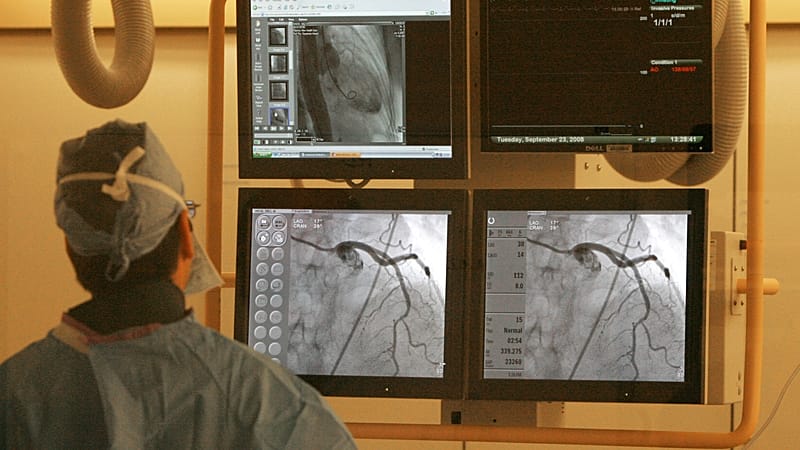
Cardiac rehabilitation session at a Cleveland clinic on 21 December 2009 (Copyright 2009 AP. All rights reserved.)

One of the study's key findings is that the impact of weather changes does not necessarily appear immediately; it may show up as an increase in out-of-hospital cardiac arrests as late as three days afterwards.

According to the study, models based on meteorological forecasts could in future help patients with cardiovascular disease and their families prepare for periods of increased risk, and support ambulance services and hospitals in managing the expected heavier workload.

Why would it be important to forecast the number of cardiac arrests?

Out-of-hospital cardiac arrest (OHCA) is one of the leading causes of death in developed countries.

In Europe, between 67 and 170 cases occur per 100,000 inhabitants each year, and the survival rate is below 10%.

Identifying any factor that can signal a forthcoming rise in case numbers can help emergency services prepare, alert the public to the importance of rapid assistance and resuscitation, and, in the longer term, contribute to improving the chances of survival.

Sign up to read this article
Read news from 100's of titles, curated specifically for you.
Already a member? Sign in here
Related Stories
Top stories on inkl right now
One subscription that gives you access to news from hundreds of sites
Already a member? Sign in here
Our Picks
Fourteen days free
Download the app
One app. One membership.
100+ trusted global sources.