Get all your news in one place.
100’s of premium titles.
One app.
Start reading
Radio France Internationale
Environment
Amanda Morrow

Stronger protection for marine life as landmark law takes hold on high seas

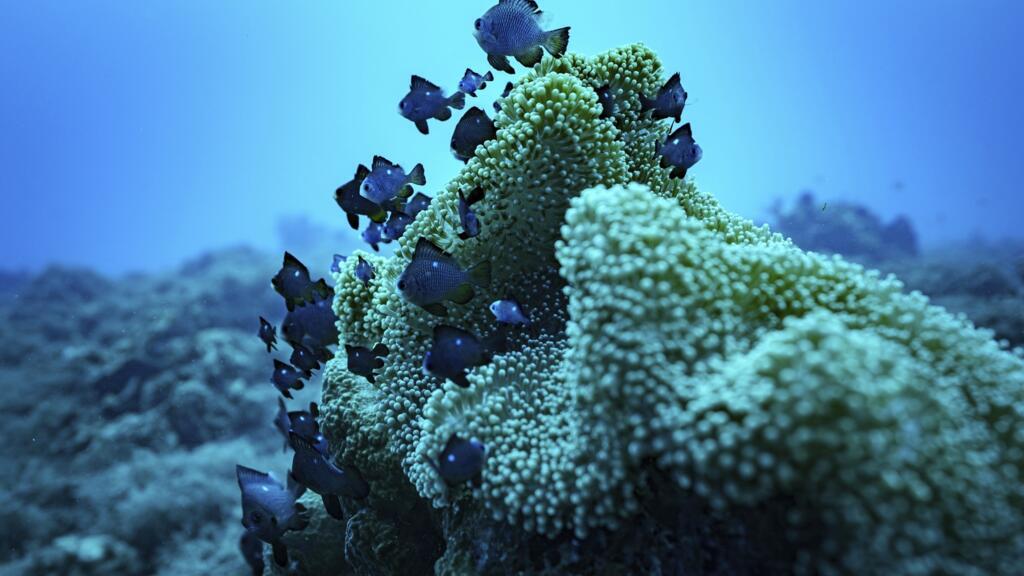
The High Seas Treaty sets new global rules for protecting marine life beyond national borders. © AP - Annika Hammerschlag

For decades, vast stretches of ocean beyond national borders have been governed by patchwork rules and weak oversight. On Saturday, that changes. The High Seas Treaty enters into force, creating the first legally binding global framework to protect marine life in international waters that span nearly half the planet.

Known as the Biodiversity Beyond National Jurisdiction (BBNJ) Agreement, the treaty gives countries a shared legal toolbox to conserve and manage the parts of the ocean that belong to nobody.

After almost 20 years of marathon negotiations, the United Nations adopted it in June 2023. In September, Morocco became the 60th country to ratify the treaty, triggering the countdown to it becoming law. More countries have joined since.

Conservation groups say its long-awaited rollout marks a shift from ambition to obligation.

Nations that have ratified the agreement must begin applying a set of legal duties to protect marine life – even as key institutions are still being built.

Once thought to be lifeless, the high seas are now known to host extraordinary biodiversity, from deep-sea corals to migratory species that travel vast distances across the ocean.

They also play a critical role in regulating Earth's climate. The ocean absorbs around 30 percent of carbon dioxide emissions and more than 80 percent of the excess heat they generate, helping to slow the pace of global warming.

But scientists warn that this vast ecosystem is under growing pressure from human activity – including fishing, pollution and climate change – that often happens far from public view.

The big blue blindspot: why the ocean floor is still an unmapped mystery

An ocean beyond borders

The high seas are the open ocean and deep seabed beyond countries’ exclusive economic zones. They make up about two-thirds of the ocean and nearly half of Earth’s surface.

Despite this extraordinary scale, less than 1 percent of the high seas is currently protected.

One of the treaty’s most anticipated outcomes is the creation of marine protected areas, where human activities would be limited or banned to allow ecosystems to recover.

The treaty sets out a formal process for proposing and adopting these areas, including scientific review and consultation. While final decisions will be taken by the Conference of the Parties, or BBNJ Cop – due to be held within the treaty's first year – countries can already begin preparing proposals.

The High Seas Alliance, a coalition of conservation organisations, has identified several places that could form a first generation of protected areas. They include the Emperor Seamounts, a chain of underwater mountains in the Pacific; the Sargasso Sea, a biologically rich area of the Atlantic; and the Salas y Gomez and Nazca ridges, a vast seafloor region off South America.

“For the first time, the global community has a legal mechanism to protect the parts of the ocean that belong to no one state,” said Kevin Chand, director of Pacific ocean policy at Pristine Seas, an ocean conservation programme of the National Geographic Society.

Chand also pointed to the role of Pacific countries in pushing negotiations over the line, saying their “bold leadership” helped turn a vision into law.

Indigenous knowledge steers new protections for the high seas

New obligations

While some of the treaty’s bodies are still under construction, a range of obligations apply immediately. Countries that have ratified must promote the treaty’s conservation goals when they take part in decisions at other international ocean bodies – including fisheries, shipping and seabed authorities.

They must also begin cooperating on marine scientific research, technology transfer and capacity building, particularly with developing countries.

Planned activities under a country’s control that could harm marine life in international waters must now undergo environmental impact assessments that meet the treaty’s standards.

The agreement also introduces new reporting and transparency rules around marine genetic resources – genes from plants, animals and microbes that could be used in research or commercial products such as medicines.

Countries must start signalling the collection and use of these resources and sharing non-monetary benefits such as data and access to samples.

Niue, the tiny island selling the sea to save it from destruction

A global test of follow-through

Enric Sala, founder of Pristine Seas and a National Geographic explorer, warns that protection on paper will not be enough.

“New marine protected areas – whether they are established in the high seas or near shore – will only be effective if they are strictly protected and fully monitored for illegal activity,” he said.

“This is the only way we can ensure that marine reserves deliver benefits to climate, biodiversity and economies.”

The treaty does not automatically protect any part of the ocean – nor does it override existing bodies that regulate fishing, shipping or seabed mining. Instead, it relies on countries to align their decisions with the new conservation framework.

Supporters say this means that political will, funding and widespread participation will be critical. Only countries that ratify the treaty are legally bound by its rules, but wider uptake will be needed if it is to work as intended.

For now, Saturday marks the start of a new phase. After years of negotiation, scientists say the challenge now centres on cooperation and whether countries will actually use the tools they have given themselves.

Sign up to read this article
Read news from 100’s of titles, curated specifically for you.
Already a member? Sign in here
Related Stories
Top stories on inkl right now
One subscription that gives you access to news from hundreds of sites
Already a member? Sign in here
Our Picks
Fourteen days free
Download the app
One app. One membership.
100+ trusted global sources.