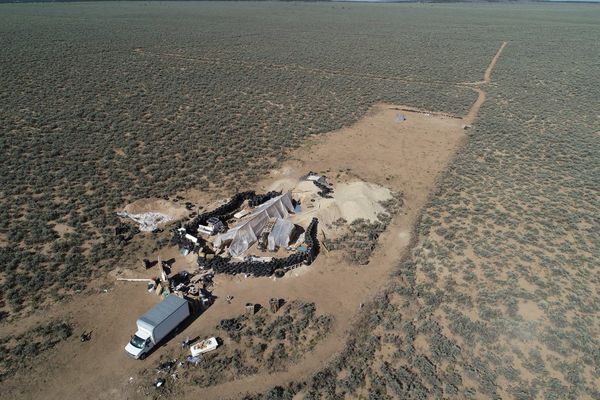
Recent analysis of historical Google Earth imagery has sparked renewed interest in alleged UFO activity after researchers observed unusual objects in multiple locations. In particular, images of the New Mexico high desert appear to show a bright white or silver object embedded in a hillside. Comparative studies of older and newer imagery suggest the object is no longer visible, with newer images showing buildings or blurred areas.
The potential disappearance of these features has prompted questions among online communities about whether sensitive sites are being deliberately obscured. Some users have noted that vegetation patterns surrounding the object remain consistent in earlier images, lending support to the claim that the location has been altered in recent updates.

Locations of Interest and Imagery Changes
Beyond New Mexico, satellite enthusiasts on Reddit have identified areas off the coast of California and Baja Norte where detailed imagery has been replaced or blurred. The seafloor near Point Mugu in California and the region southeast of Isla Guadalupe off Baja Norte were previously available in high resolution but now appear with 2026 watermarked blur-outs in Google Earth.


Observers have noted that these changes coincide with regions of strategic or military interest, although Google has not commented publicly on why certain images have been updated or obscured. The pattern of older high-detail imagery being replaced with blurred or modified views has fuelled speculation about intentional cover-ups, especially in areas associated with sensitive installations.
Insights on Satellite Imagery Updates
Satellite imagery analysts note that changes in Google Earth are not uncommon and can result from a range of factors. Updates may reflect newer satellite data, image resolution adjustments, or security-related redactions in sensitive regions. In some cases, blurred imagery is applied to protect military or critical infrastructure sites rather than to hide evidence of extraterrestrial activity.
One commenter even said that 'there was a guy that hiked out there' and 'it was like an antenna base.' Another one wrote that those photos were of a 'round concrete base with a collapsed satellite dish.' They even added that it is not a spaceship coverup.
On the other hand, others emphasise that differences in visual appearance can arise from the timing of the imagery, weather conditions, and seasonal changes affecting vegetation. Analysts stress that while unusual objects in historical imagery are intriguing, there is no verified evidence confirming that they represent crashed UFOs.
Public Interest and Online Reactions
The alleged disappearance of these features has generated significant discussion on Reddit and other online forums. Enthusiasts have shared side-by-side comparisons of older and newer images, drawing attention to the changes and highlighting areas they believe may be suspicious.
Users have expressed a range of reactions, from curiosity to scepticism, with some questioning whether powerful entities are controlling the release of information about unexplained phenomena. The debate has attracted international attention, with interest in both terrestrial sites and offshore locations that appear to have undergone similar image modifications.
Visual Evidence and Documentation
Researchers emphasise the importance of visual documentation in analysing satellite imagery. Comparative images showing consistent vegetation patterns, bright objects, and subsequent alterations can help the public assess changes over time. Google Earth allows users to access historical imagery, providing a tool for examining how locations have evolved or been updated.
While claims of UFO crash sites remain unverified, the combination of historical data, altered imagery, and ongoing public interest continues to fuel speculation. These developments highlight the role of satellite imagery in both research and public discourse surrounding unexplained phenomena.