Get all your news in one place.
100's of premium titles.
One app.
Start reading
The Conversation
The Conversation
Gokcay Balci, Lecturer in Sustainable Freight Transport and Logistics, University of Leeds

Strait of Hormuz: Gulf states’ food security is at immediate risk but wider shortages could push up consumer prices globally

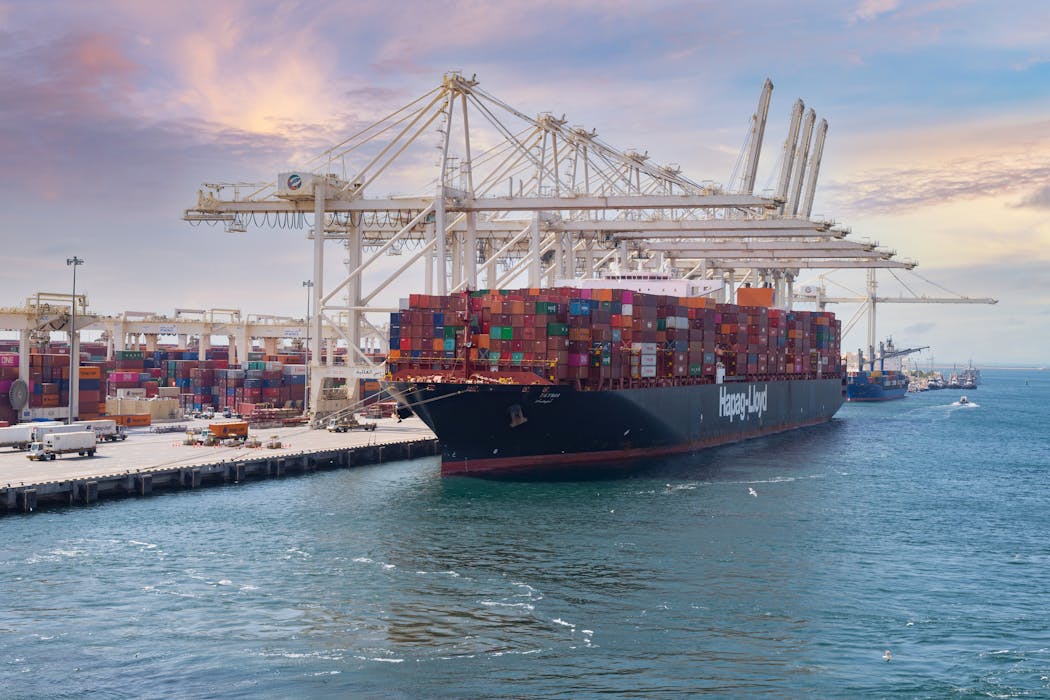
Before the crisis began, ports like Jebel Ali in the UAE were seeing millions of containers of goods passing through them every year. Druid007/Shutterstock

The Iranian regime has announced the closure of the strait of Hormuz and threatened to target ships attempting to transit the narrow waterway. Some have already been damaged. While this could seriously harm global energy supply and raise costs, the consequences actually extend far beyond these markets.

The strait of Hormuz, which sits to the south of Iran and connects the Persian Gulf with the Arabian Sea, is one of the most critical chokepoints for international trade. More than 30,000 ships, carrying around 11% of global seaborne trade by volume, transit the strait each year. And around 34% of seaborne oil exports and 19% of seaborne natural gas shipments also pass through it.

Sign up to read this article
Read news from 100's of titles, curated specifically for you.
Already a member? Sign in here
Related Stories
Top stories on inkl right now
Our Picks
Fourteen days free
Download the app
One app. One membership.
100+ trusted global sources.