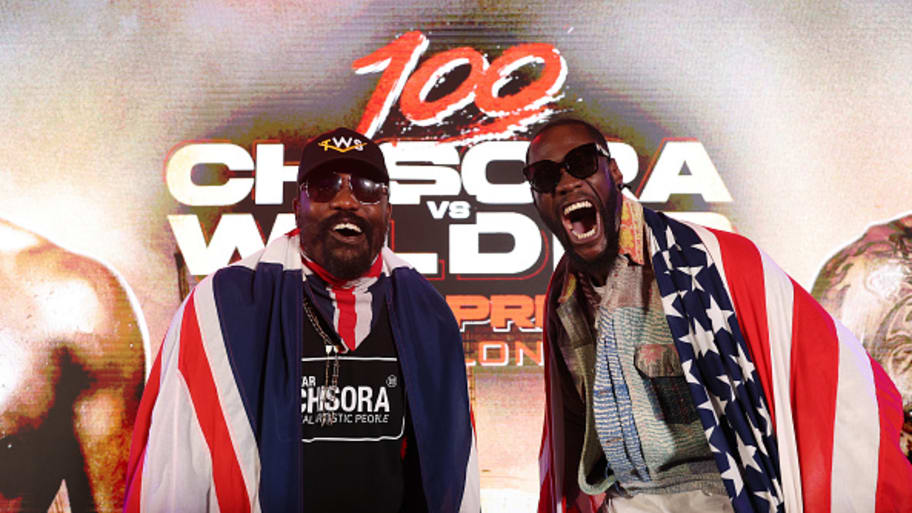
In 2015, I made my first trip to Tuscaloosa, Ala., where a young Deontay Wilder was preparing for his first crack at a heavyweight title. Over several days I watched him train, dined with him over chicken and waffles and dug into a remarkable life story. Boxing wasn’t a childhood passion, Wilder told me back then. It was a means to an end, a way to earn money to help his daughter Naieya, who was born with spina bifida, a rare back condition. It’s what brought him to Jay Deas’s gym, where Deas molded him from an athletic ex-football player into an explosive heavyweight prospect. What came after—the Olympic bronze medal, the flawless pro start—wasn’t just a surprise to others. It was a surprise to him.
As unorthodox as Wilder’s start was, his finish has looked more conventional. Wilder has lost four of his last six fights, mixing in a pair of low-level wins (Robert Helenius, Tyrell Herndon) with one-sided losses to Tyson Fury (twice), Joseph Parker and Zhilei Zhang, with three of them coming by knockout. At 40, the ex-heavyweight champion who made 10 successful title defenses has looked like a shadow of his former self.