
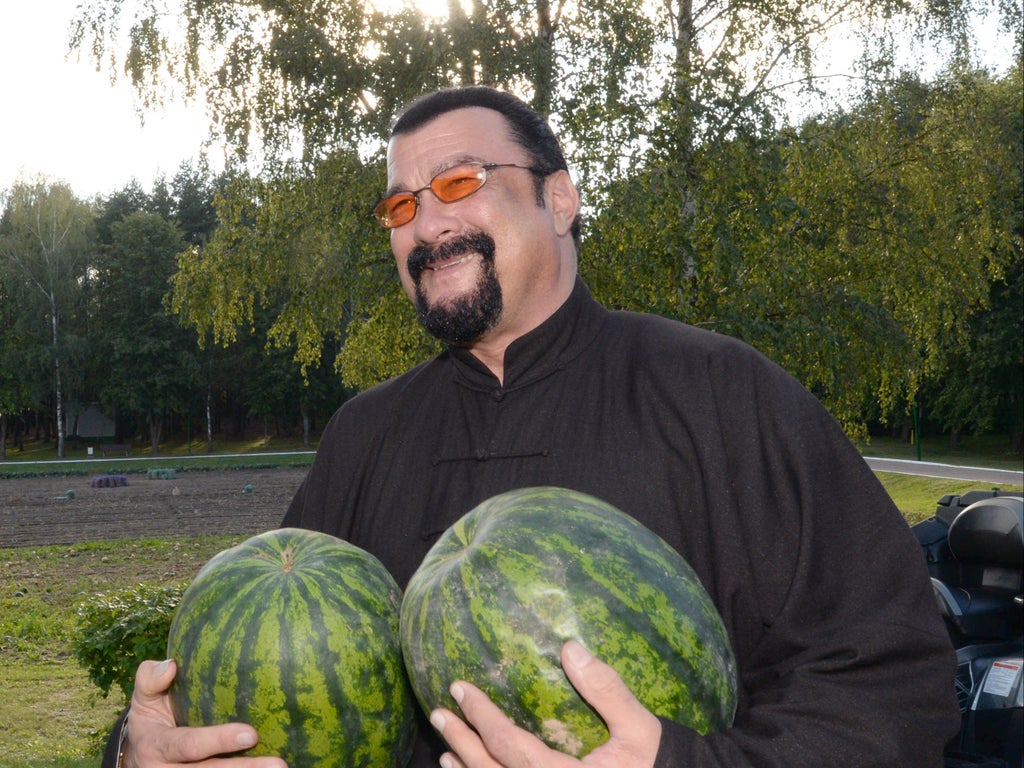
It’s never been easier to ignore Steven Seagal. The martial arts star isn’t exactly a ubiquitous presence on the late-night talk show circuit. The action hits of his heyday don’t festoon the banners at the top of Netflix. Whole generations of kids will have now reached adulthood without once hearing the words, “Hey, how about we go check out that new Steven Seagal movie?”
Seagal has continued making films, mostly direct-to-video, though the shine of early Nineties thrillers like Hard to Kill and Under Siege faded long ago to nothingness. Over the past three decades, Seagal has faced multiple accusations of sexual harassment and sexual assault (all of which he has denied). This has probably contributed to his drastic tumble away from the Hollywood mainstream, but it’s not the only factor. Even during his pomp, Seagal was largely known as a peddler of high-octane schlock – an all-action martial arts man whose ability to deliver any kind of dialogue convincingly was rather beside the point. Over the past few years, Seagal’s film work has migrated to obscure streaming productions (and the 2017 Chinese film China Salesman, which also starred Mike Tyson). But he’s found a new means of holding people’s attention: as one of Hollywood’s few vocal cheerleaders for Russia.












