A statewide inquiry into universities that determined the sector needed a major governance overhaul has questioned claims of financial challenges at the University of Newcastle (UON).
In the final report on NSW university governance, the inquiry committee said it remained "unconvinced" that UON experienced the "financial crisis" it purported to.
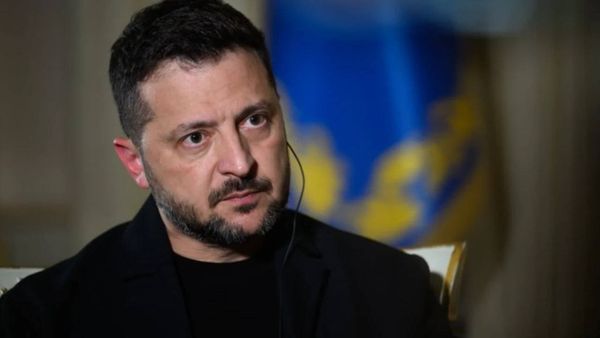
UON vice-chancellor Alex Zelinsky, however, said the university had never described itself as being in a financial crisis.
"Rather, we have consistently highlighted the significant financial challenges facing the higher education sector and the pressure these would place on our finances and long-term sustainability if left unaddressed," Professor Zelinsky said.
During the April inquiry hearing, the committee questioned Professor Zelinsky and then-chief financial officer Paul McCubbin on the financial analysis underpinning the Business Improvement Program that led to job losses and course restructures.
The university had targeted more than $20 million in ongoing annual savings after it reported a $16 million deficit in 2024 based on its core operating result.
In the September report, the inquiry committee said understandings of the university's financial position differed depending on whether the adjusted result or the audited financial statement was relied on.
The core operating result excluded restricted funds that the university said were not available for day-to-day activities, such as philanthropic donations and investment returns.
"We remain unconvinced by the university's position that its investment income should not be used to offset operational costs," the report said.
The committee said evidence from UON highlighted the importance of transparency when non-statutory or adjusted finances are relied on to justify major reforms.
CEO of the Australia Institute Richard Denniss, who pushed back on a deficit existing at the university, said the report vindicated his research into the university sector.
"These are not privately owned companies, these are publicly owned educational institutions, the purpose of an annual report is to provide accounting transparency to staff and taxpayers," Dr Denniss said.
Dr Denniss said the committee raised concerns, accusing multiple universities of using "creative accounting".
"Different universities were all coming up with different indicators, so there was no traditional bottom line," he said.
Professor Zelinsky said the Business Improvement Program had delivered more than $28 million in savings, equivalent to about 2 per cent of annual revenue, while minimising impact on staff.
In response to several universities' financial reporting, including UON, the committee recommended the state government establish enhanced reporting requirements for university annual reports.
The committee also found that while changes under the business improvement program and academic calendar reforms were intended to help with long-term sustainability, they were troubled by the "strength and consistency" of consultation, governance, workloads and psychosocial safety concerns.
The committee was also concerned about uncertainty surrounding whether a risk assessment had been done on the Academic Work Allocation Model
In response to the Newcastle Herald, the University of Newcastle pointed to its answers to supplementary questions where it said a workplace health and safety risk assessment was undertaken before introducing the new work allocation policy in 2022.
Professor Zelinsky said the policy was being reviewed with staff input and proposed improvements would be trialled next year.
Many inquiry participants felt consultation occurred after key decisions had effectively been made.
The committee also noted the consistency of evidence at UON about declining morale, fear of reprisal, psychosocial risks and perceptions.
Associate Professor Tricia Pender told the inquiry of how unsafe teaching workloads led to acute stress, and she said the report's findings were "extraordinarily validating" for staff and students.
"It should serve as an important wake-up call to UON management to right this ship before it fully runs aground," Dr Pender said.
"It's not just my story, it's the story of everybody who's been trying to draw attention to this," she said.
Dr Pender pointed to a few inquiry recommendations that gave her some hope, including legislation promoting psychologically safe workplaces, checks and balances on power held by senior leaders and establishing an independent external mechanism where staff can confidentially raise concerns with whistleblower protections.
National Tertiary Education Union Newcastle branch president Terry Summers said the findings reinforced his feeling that over the past 10 years, universities had seen a degradation in the work environment.
"In the way universities operate it's become far more corporate and far less collegial and I think that has led to some very bad outcomes," he said.
Dr Summers pointed to recommendations regarding clear reasonings behind executive remuneration and transparency of university councils.
The University of Newcastle Student Association (UNSA), which also gave evidence at the inquiry hearing, welcomed the report findings.
"The findings make clear that transparency, accountability, and meaningful consultation are not operational extras," UNSA president Imogen Reid said.
Professor Zelinsky said the university would await the state government's response and consider all recommendations alongside new federal government requirements.
The overall inquiry found that governance structures for NSW universities were not fit for purpose nor implemented in ways that enabled public confidence.
Committee chair Sarah Kaine said the inquiry exposed systemic problems that could no longer be ignored including that universities had drifted too far towards corporate models of governance and management.
"The committee heard repeated concerns about decisions being made behind closed doors, staff and students being shut out of decision-making, and university communities losing faith in the institutions they serve," Dr Kaine said.
"That should concern everyone."