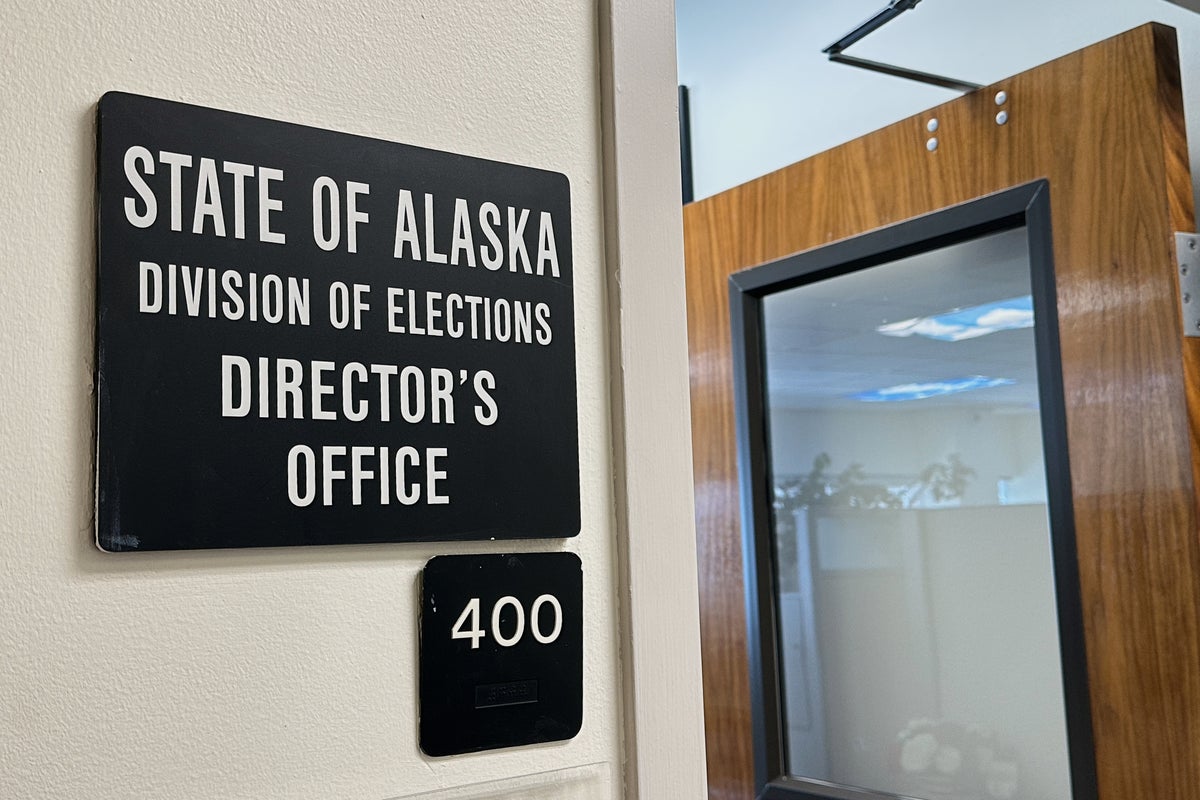
Seventy-five absentee in-person ballots cast by voters in rural western Alaska communities arrived too late to be counted in last month's primary election, officials said.
The Alaska Division of Elections blamed a “mail delivery delay” that affected voters in seven communities, with Kotzebue, Igiugig and Naknek combining for 62 of the ballots. But a spokesperson did not provide more details on the nature of the delay. Absentee in-person ballots are sent to regional offices — in this case, Nome — for review.

The division's announcement this week came after officials in the vote-by-mail states of Washington and Oregon said the number of ballots rejected for late postmarks was up sharply this year. The U.S. Postal Service last year finalized a rule stating that postmarks don’t necessarily reflect the date the agency first took possession of a piece of mail, but rather the day it was handled in an agency processing center. On Thursday, the postmaster general, David Steiner, encouraged by-mail voters in this year's midterm elections to vote early.
‘Any number of factors’ can affect mail delivery times
In response to questions about the Alaska ballots, Nikolaj Hagen, a Postal Service spokesperson, said “any number of factors” can affect the timeliness of mail delivery. Employees take their roles seriously, he said.
“Without a review of the actual mailpieces involved, the Postal Service is unable to comment further,” he said in a statement. “We will continue to work closely with Alaska election officials to identify opportunities for communication and coordination where needed.”
The state accepts absentee ballots postmarked by Election Day and sent from within the U.S. up to 10 days after elections. But that grace period isn't always enough. In 2022, for example, ballots from some villages weren't fully counted due to mail delays.
Most Alaska communities aren't connected to the state's main road system, and air service also plays a key role in getting voting materials and ballots to and from communities.
Voting advocacy group supports plan to address mail concerns
Michelle Sparck, director of Get Out the Native Vote, said the 75 ballots that arrived too late to be counted “represent a measurable loss in participation.”
“Experiences like this can deepen voter apathy and reinforce the systemic perception that our votes do not matter,” she said by email.
She said her organization supports the Division of Elections' announcement that it will reroute absentee in-person ballots from western Alaska from the regional office in Nome to that in Anchorage, the state's largest city.
“This is a practical adjustment to the realities of transporting election materials from rural Alaska, where mail delays can prevent valid ballots from being processed on time,” Sparck said.
Voter plans to closely monitor November ballot
Sallyann Hughes, who lives in the small southwest Alaska village of Naknek, said she voted absentee in-person on Aug. 5 — 13 days before the primary. She later received a letter saying her ballot had not arrived in time.
“I was quite unpleased,” she said. “I made an extra effort to make sure that I was there and that I voted because I wanted my vote to count and it didn’t.”
Hughes will be out of state for the general election and plans to get an absentee ballot delivered to her electronically that she must download and print and get a witness signature for. She said she plans to then “take it and walk into the post office, make them stamp the postmark on it in front of me and mail it with tracking.”