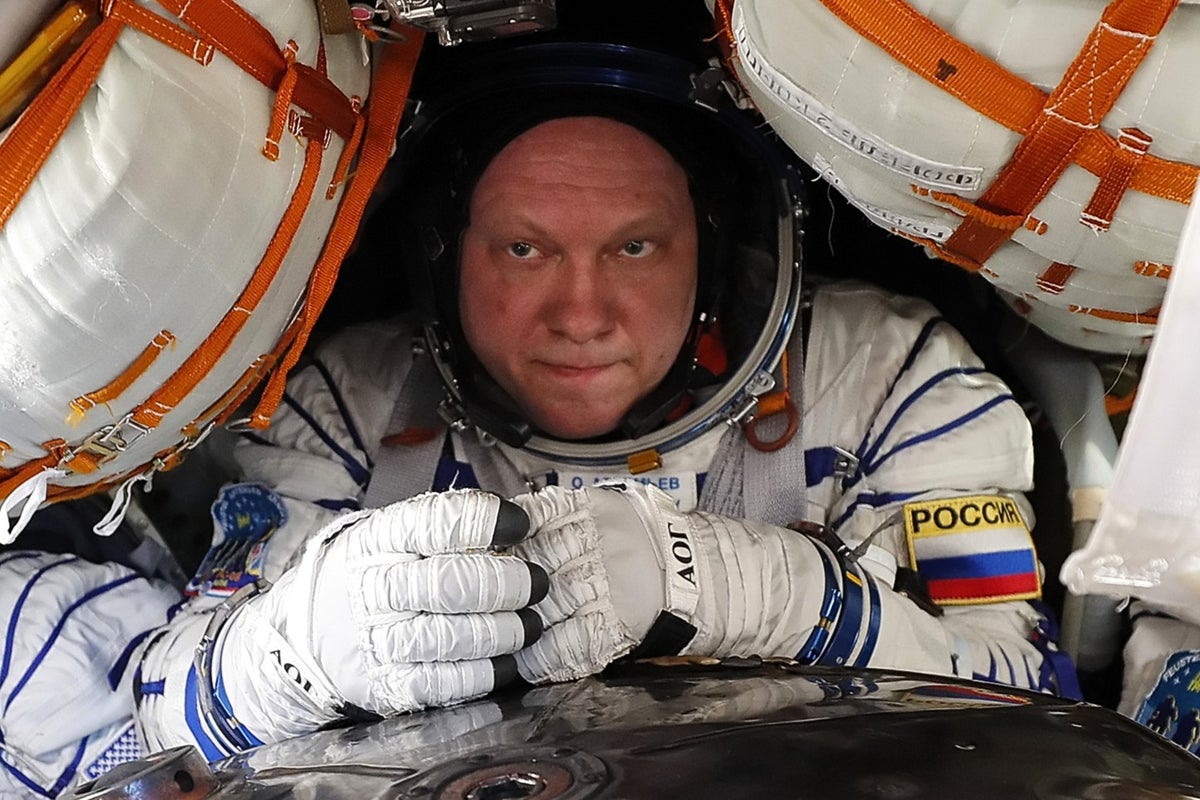
SpaceX has removed a Russian cosmonaut from an upcoming mission to the International Space Station over national security concerns, according to a report.
Oleg Artemyev, who was supposed to be part of a four-person crew scheduled to launch in February, allegedly took photos of SpaceX rocket engines and classified documentation, The Insider reported.

The 54-year-old has been part of three previous missions to the ISS, most recently in 2022, spending a total of 560 days in space.
“It’s hard to imagine an experienced cosmonaut making such a serious mistake unintentionally,” space industry analyst Georgy Trishkin told the publication.
Russian space agency Roscosmos said in a statement published on Telegram that a “decision was made due to Oleg Artemyev's transfer to another job”.
No further details were given, with the space agency describing Mr Artemyev as a “hero of Russia”.
Nasa and SpaceX are yet to comment on Mr Artemyev’s removal. Fellow cosmonaut Andrei Fedyayev has been named as his replacement for the upcoming Crew-12 mission.
The mission is scheduled to launch no earlier than 15 February, with crew members set to spend six months aboard the ISS.

Russia recently lost its ability to launch people into space after its only crewed-mission launch site suffered major damage during a rocket launch.
The launchpad at the Baikonur Cosmodrome in Kazakhstan partially collapsed into an exhaust trench during the launch of the Soyuz MS-28 spacecraft on 27 November.
Roscosmos said that the launchpad would be unusable until repairs are made, but did not give a specific timeframe.
“The launch complex’s condition is currently being assessed,” the Russian space agency told state media.
“All necessary backup components are available for restoration, and the damage will be repaired in the near future.”
It is the first time since 1961 that Russia does not have the ability to launch a crewed rocket into space.
Roscosmos did not respond to a request from The Independent for more information.
SpaceX cleared to redevelop Cape Canaveral launchpad for Starship operations
Amazon debuts Starlink competitor as Bezos takes on Musk’s space monopoly
Scientists ‘astonished’ as moss survives nine months in space
SpaceX’s upgraded Starship booster fails during test
‘Cold Supermoon’ this week is the highest full Moon of the year
NASA uses Death Valley to test next-gen drone tech for flights across Mars