-
Over 300 South Korean technicians caught up in the 2025 Hyundai-LG raid in Georgia have begun filing formal claims against nine federal agencies, the required first step before any lawsuit.
- The claims lean on one striking detail: the search warrant used to enter the plant named only four targets, and court records describe them as Hispanic, not Korean.
-
Hyundai and LG are now publicly distancing themselves from the litigation, even as some of the detained engineers have quietly gone back to work at the very same site.
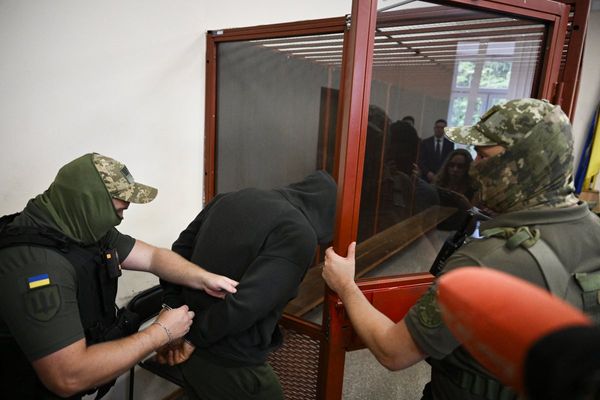
More than a year after federal agents swarmed a Georgia battery plant in what officials called the biggest single-site immigration enforcement action in agency history, the South Korean technicians caught up in that operation are finally pushing back in court. Lawyers for the group have begun submitting formal claims against nine federal agencies, a mandatory first step before any civil lawsuit, arguing the men were detained under a warrant that never listed a single one of their names. The filings, sent out this week, are the first coordinated legal response to the operation that halted work at the Hyundai and LG Energy Solution battery site in Ellabell on September 4, 2025.

A Warrant That Skipped Right Past Them
Nearly 500 federal, state and local officers took part in the sweep, publicly tied to the Justice Department's nationwide Operation Take Back America initiative and run locally under the case name Operation Low Voltage. The operation ended with 475 people in custody, a tally federal officials still describe as the largest such action ever carried out at a single U.S. work site. Just over 300 of them were South Korean nationals; the exact figure recorded at the time was 317, a total that South Korea's own foreign ministry broke down as 307 men plus 10 women.
The rest of those detained were not Korean at all. Reporting from the raid's early days and consular statements named Mexican, Colombian, Venezuelan, Chilean, Guatemalan, Japanese, Chinese and Indonesian nationals among those rounded up, and a local television station's own tally put the number of non-Korean detainees still held, after the Koreans and a handful of other Asian workers were flown home days later, at roughly 175. That detail turns out to matter a great deal for the legal case now moving forward: the judge-approved warrant used to enter the site authorized agents to search for just four specific people, and none of the four turned out to be Korean.
Court records and reporting since the raid instead describe those four as carrying Hispanic surnames, tying the case directly to the same worksite-enforcement tactics that have swept up Latino workers at job sites nationwide. Attorneys for the South Korean technicians argue that gap sits at the center of their claim: hundreds of engineers, they say, were detained despite appearing nowhere in the paperwork that justified the search in the first place.
What the Claims Say Happened Inside
Six of the nine named agencies have been confirmed publicly so far: ICE, the FBI, Customs and Border Protection, the Department of Homeland Security, and the Justice and Labor departments. Because this stage happens outside a courtroom, it proceeds under the Federal Tort Claims Act, a law that requires anyone suing federal agents to first give the agencies six months to respond before a case can move to federal court.
One claimant, identified only by his surname, Kim, has already mailed his paperwork, according to the Georgia-based attorney representing the group. His filing recounts a week inside the Folkston, Georgia, ICE facility, held under conditions his own claim calls degrading, and it seeks compensation for confiscated belongings, lost wages and lasting psychological harm.
Kim says he and other detainees were first packed into a room holding up to 80 men who shared a handful of toilets, before eventually being moved into two-person cells; he described the food as sour-smelling and the water as off-tasting. He also says an agent, responding to his objections over paperwork he was being pressured to sign, warned him: "They might torture you." The attorney representing the group said the point of filing the claims is to force the government to "admit it and apologize."
Federal Agencies Defend the Search
None of the named agencies has responded point by point to the mistreatment allegations. Their consistent position, repeated since the claims became public, is that the raid grew out of an active criminal investigation into unlawful hiring at the site and that agents carried out a validly signed court order, making the search itself lawful in the government's account. Customs and Border Protection has pointed back to a 2025 statement noting that those detained were found in violation of their visa terms. No criminal charges connected to that investigation have surfaced publicly in the year since, a detail confirmed again this week by outlets covering the new filings.
Hyundai and LG Keep Their Distance
As the claims went public this week, both companies moved to separate themselves from the litigation. An LG Energy Solution representative said the company only learned employees were pursuing legal action after seeing media coverage, and that it has no plans to track who joins the effort, framing it as an individual decision by each worker. A Hyundai Motor Group representative went further, saying none of the automaker's own direct hires had been swept up in the raid, an implicit pointer toward subcontractors and staff from partner firms instead.
The Same Plant, a Contested Timeline
The legal fight is unfolding against an awkward backdrop: some of the very engineers who were shackled and flown home have already returned to work at the Ellabell site. Over 100 of the original 317 detained South Koreans have since had their B-1 business-travel paperwork reinstated without needing to reapply, evidence, their lawyer argues, that the men had legal grounds to install equipment all along. Roughly 50 came back to the United States within about two months of the raid.
Where the plant itself actually stands is murkier. One account describes the battery facility as finished, with commercial production underway since April. A separate report published this same week describes the plant as merely recently completed, with mass production not expected to start until sometime later this year, implying output has not truly begun. Neither the joint venture operator nor Hyundai has publicly resolved that contradiction.
A Parallel Claim From a Different Corner of the Same Raid
The South Korean technicians are not alone in pursuing the government over the Ellabell operation. Days before their claims became public, a Colombian worker named Alfredo Fajardo Melgarejo filed his own $2 million claim against ICE, alleging he was choked, had a rifle pointed at him and was held for nearly nine months before being deported in May, despite holding a valid work permit at the time of his arrest. DHS disputed his account, insisting its officers used no excessive force and adding pointedly that "work authorization does NOT confer legal status." His case, filed separately with different attorneys, shows how far the raid's legal fallout now reaches beyond the plant's Korean workforce.
Legal experts say the technicians' claims could still force answers the government has so far avoided giving. A comparable 2018 raid on a Tennessee meatpacking plant ended with the federal government paying more than $1 million to settle claims of racial profiling and excessive force. Whether the Hyundai-LG case follows a similar path may not become clear for months: if the named agencies fail to act within six months, the workers can take their fight to federal court.