Get all your news in one place.
100's of premium titles.
One app.
Start reading
The Times of India
The Times of India
World
TOI World Desk

South Dakota’s Mystic began as a gold camp in 1876 and drew two railroads; after mining, mills and trains failed, just 14 buildings remained

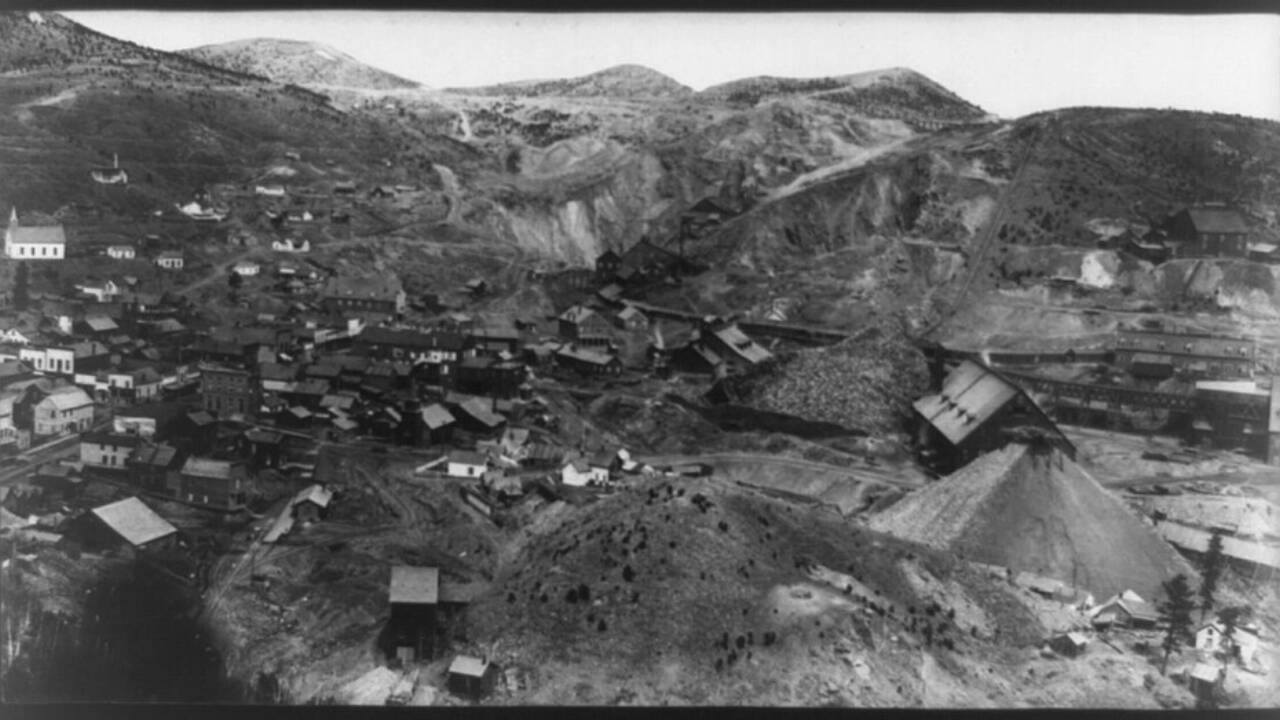
Hidden among the ponderosa pines of South Dakota’s Black Hills National Forest, Mystic is one of the state’s best-preserved ghost towns: that is, a place where abandoned buildings, silent rail beds and weathered mining relics recall the once boom-and-bust cycles that shaped the western American landscape. In accordance with HistoryNet’s report, in 1876, Mystic was founded as a placer gold camp during the Black Hills gold rush; the settlement then evolved into a thriving community sustained by mining, railroads, and later the timber industry before economic decline emptied its streets. According to the South Dakota State Historical Society and the National Park Service, the surviving townsite was listed on the National Register of Historic Places in 1986, thus preserving a rare snapshot of frontier life that has largely escaped modern development.

Get breaking news anytime, anywhere. Download the TOI app now!

Evolution from gold camp to railroad junction

Mystic’s origins can be traced back to gold discoveries along Castle Creek shortly after prospectors flooded into the Black Hills despite the region being recognised as Lakota territory under the 1868 Fort Laramie Treaty. The Sitting Bull settlement, the first in the area, emerged beside the creek in 1876 and had around 100 residents by 1879. Following the settlement's growth, a post office opened in 1895, and the community eventually adopted the name Mystic, though historians still argue whether it was inspired by Mystic, Connecticut, or the area’s mysterious landscape. In 1889, when the Chicago, Burlington and Quincy Railroad reached Mystic (still known as the Sitting Bull Camp), the town’s fortune changed dramatically. A second line, the Rapid City, Black Hills and Western Railroad, popularly known as the Crouch line, arrived in 1906, turning the settlement into an important transportation point for miners, loggers and travellers crossing the central Black Hills.

Although gold gave Mystic its start, industry repeatedly reinvented the town. The Mystic Reduction Mill processed ore from nearby mines, but gold production declined as the community increasingly relied on timber rather than mining. According to historical accounts, the construction of a large mill named Frink Sawmill in 1918 prolonged Mystic’s existence for more than three decades, thus supplying lumber from the surrounding Black Hills forests until the mill closed in 1952. Notably, by then, passenger rail services had largely disappeared, and the post office closed in 1954, marking the once-busy settlement's entry into the final stage of long decline.

Preserved by history and surrounded by nature

Mystic’s decline did not erase its place in Black Hills history. During President Calvin Coolidge’s extended summer vacation in the Black Hills in 1927, he and First Lady Grace Coolidge travelled through the ghost town while visiting the nearby summer cabin of former Nebraska Governor Samuel Roy McKelvie. Black Hill Visitor cited that the presidential entourage arrived via the Crouch line before continuing to the McKelvie property, only weeks before Coolidge participated in ceremonies connected with the early development of Mount Rushmore. HistoryNet has shared that the visit briefly placed the otherwise remote railroad town in the national spotlight, demonstrating how the Hills had become both a political destination and a growing tourist attraction during the 1920s.

One of the most notable survivors from Mystic’s final decades is the McCahan Memorial Chapel, completed in 1930 using lumber produced at the Frink sawmill. HistoryNet reported that the chapel was funded by Philadelphia philanthropist Elizabeth McCahan and reflected the town’s close-knit community even as mining had largely faded. The National Register Historic District today includes 14 contributing buildings, among them the chapel, a boardinghouse, cabins, sheds, a granary and several commercial buildings that collectively document the transition from a mining settlement to a timber town.

Notably, although trains disappeared decades ago, the route that once sustained the town found a new purpose. The 109-mile George S. Mickelson Trail follows more of the former Burlington railroad corridor, passing through forests, granite outcroppings, more than 100 converted railroad bridges and four rock tunnels. Thus, Mystic serves as one of the trailheads on the route, allowing hikers, cyclists and horseback riders to explore a landscape where traces of mining, logging and railroad history remain visible.

Sign up to read this article
Read news from 100's of titles, curated specifically for you.
Already a member? Sign in here
Related Stories
Top stories on inkl right now
One subscription that gives you access to news from hundreds of sites
Already a member? Sign in here
Our Picks
Fourteen days free
Download the app
One app. One membership.
100+ trusted global sources.