Get all your news in one place.
100's of premium titles.
One app.
Start reading
The Conversation
The Conversation
Lewis C. E. Mason, Lecturer in Microbiology, Kingston University

Some animals catch cancer from others in their species – here’s why humans aren’t one of them

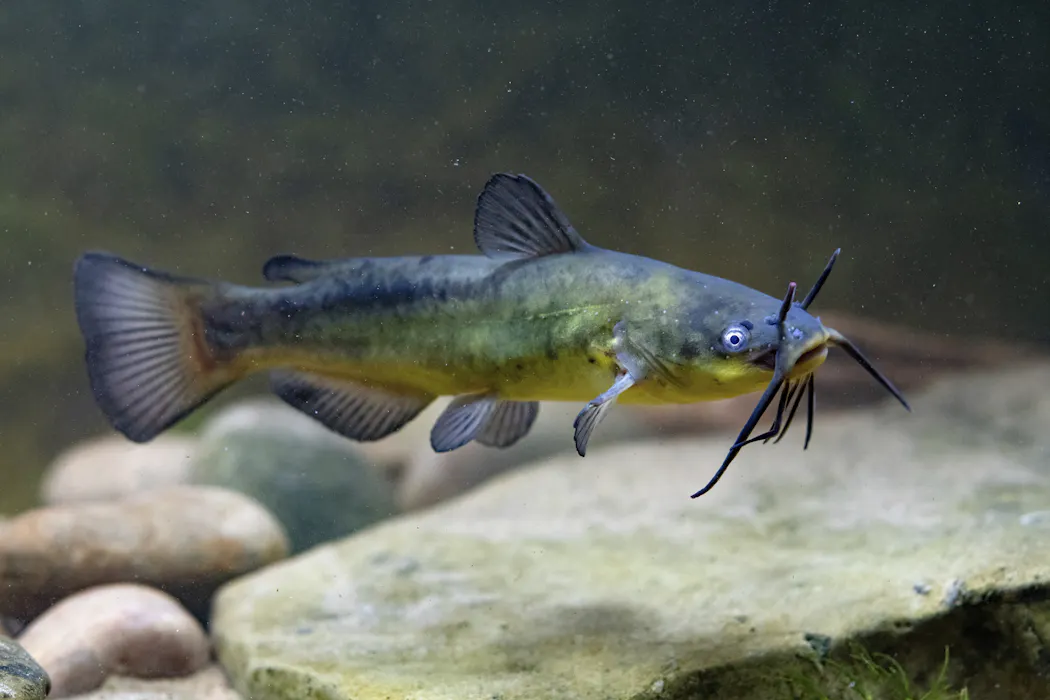
Bullhead catfish. jack perks/Shutterstock.com

Scientists in Vermont have just discovered something that shouldn’t really be possible: a skin cancer that’s spreading from catfish to catfish. It’s only the fourth transmissible cancer ever found in nature.

Catfish now join Tasmanian devils, dogs and shellfish as the only animals known to carry naturally occurring cancers that can pass between individuals. In each case, cancer cells break free from one body, travel to another and carry on living and dividing as cancer cells in their new host. No virus, bacteria or parasite is involved – it’s the cancer cells themselves doing the spreading, which is what makes them so unusual.

Tasmanian devils bite each other’s faces when mating or fighting, letting tumour cells pass directly from one animal’s wounds into another’s. Something similar happens in dogs, where canine transmissible venereal tumour cells spread between mating partners via damage to their genitals.

Shellfish do it differently again, passing cancer cells to one another through the water they live in. When a shellfish with cancer dies, it releases huge numbers of cancerous blood cells into the water. Other shellfish filter that water as they feed, and can pick up the cancer cells in the process.

Exactly how the disease is spreading between catfish is still being worked out. The scientists behind the study have suggested it could be linked to mating behaviour, as in dogs and Tasmanian devils, or to catfish picking up cancer cells from the water, as happens in shellfish.

Why is this so rare?

Transmissible cancers need living cancer cells to move from one body to another and then take hold in their new host – which sounds simple, but is biologically extremely tricky.

A healthy immune system is a formidable defence, constantly hunting down and destroying anything that isn’t “self”. Cancer cells from another animal look foreign to the immune system, even if they come from the same species, so they’re usually wiped out fast. It’s the same principle behind organ transplants: a donated organ can be rejected by the recipient’s immune system, which is why transplant patients are given immune-suppressing drugs.

Genetics adds another layer of difficulty. Most animals – humans included – have huge genetic variation even within their own species, so cancer cells from one individual are usually too different to survive in another body of the same species. Tasmanian devils are a rare exception: their genetic diversity is unusually low, which is part of why their facial tumour disease spreads so easily.

Then there’s the sheer fragility of cells. Picture a soap bubble balanced on a pin – the smallest knock, change in temperature or brush with air or sunlight, and it’s gone. Cells are much the same. Even when cancer cells do escape a body, they usually die before they reach a new one. That’s why transmissible cancers tend to need a direct route between hosts: injection of cells in Tasmanian devils, close contact between membranes in dogs, or a survivable medium like seawater in shellfish.

The good news is that there’s no evidence of a naturally occurring, independently spreading cancer in humans. A true transmissible cancer is one where cancer cells break away from their original host, become an independent lineage, spread between people, and then persist and evolve as a self-sustaining clone in their own right.

There are rare cases in humans that can look similar but aren’t – such as cancer cells present in a transplanted organ, cancer passed from mother to baby before birth, a lab worker accidentally infected by a needle, or cancers caused by viruses such as human papillomavirus (HPV). These are one-off transfers, not a cancer with an independent life of its own.

Studying transmissible cancers in other animals still has plenty to teach us about human cancer, though, including how tumours evolve, dodge the immune system and spread. It’s a window into cancer biology that human tumours alone can’t offer.

This article was originally published on The Conversation. Read the original article.

Sign up to read this article
Read news from 100's of titles, curated specifically for you.
Already a member? Sign in here
Related Stories
Top stories on inkl right now
One subscription that gives you access to news from hundreds of sites
Already a member? Sign in here
Our Picks
Fourteen days free
Download the app
One app. One membership.
100+ trusted global sources.