Get all your news in one place.
100's of premium titles.
One app.
Start reading
The Economic Times
The Economic Times

Solar Eclipse 2026: NASA has a bold plan to unlock the Sun's secrets

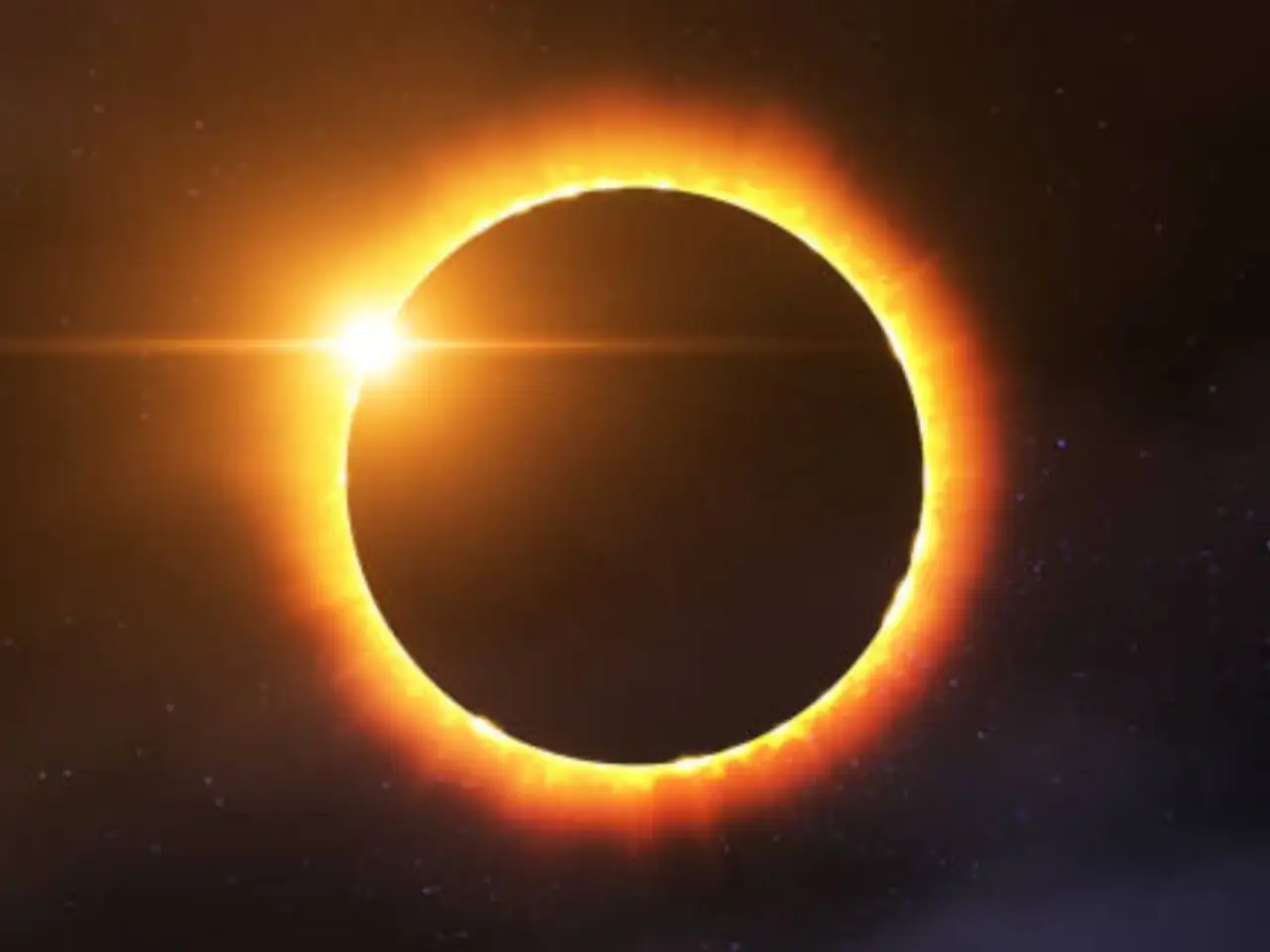
When the Moon blocks the Sun on August 12, millions of skywatchers will witness one of nature's most spectacular events. But while people look up in awe, NASA will launch an ambitious scientific campaign in the skies above Greenland, Iceland and Spain to unlock new secrets about the Sun and Earth's atmosphere.

Using a high-altitude research aircraft and dozens of scientific balloons, NASA-funded teams will study the elusive solar corona and measure how the sudden disappearance of sunlight affects the planet below.

High-speed jet will chase the Moon's shadow

At the heart of NASA's eclipse mission is the WB-57 high-altitude research aircraft, which will fly directly along the eclipse path at nearly 460 mph.

Mounted in the aircraft's nose is a sophisticated camera system capable of capturing at least 20 high-resolution images every second in both visible and infrared wavelengths.

By following the Moon's shadow, the aircraft will extend the viewing time of the Sun's corona to nearly three minutes, compared with a maximum of about two minutes and 18 seconds for observers on the ground. Flying at around 50,000 feet also allows the cameras to capture infrared wavelengths that are normally blocked by Earth's lower atmosphere.

Scientists hope to answer long-standing solar mysteries

The brief moments of totality offer researchers a rare opportunity to observe the Sun's outer atmosphere, or corona, which is usually hidden by the Sun's intense brightness.

NASA scientists plan to study how solar prominences form, investigate why the corona reaches temperatures of nearly one million degrees, and better understand the connection between the corona and the solar wind, the stream of charged particles constantly flowing from the Sun through the solar system.

Dozens of balloons will track changes in Earth's atmosphere

The eclipse mission isn't limited to the skies above the Sun.

NASA is also supporting the Nationwide Eclipse Ballooning Project, which will send university student teams to Iceland and Spain to launch scientific balloons before, during and after the eclipse.

In Iceland, 80 balloons will be released over a 26-hour period to study changes in the atmospheric boundary layer—the part of the atmosphere closest to Earth's surface.

Meanwhile, teams in Spain will launch six balloons equipped with 360-degree cameras and instruments designed to measure atmospheric ozone levels. Researchers want to see how the temporary loss of sunlight influences ozone production and whether the results differ from observations made during the 2024 total solar eclipse.

Rare eclipse offers a unique scientific opportunity

NASA says total solar eclipses provide scientists with observation conditions that cannot be recreated anywhere else in the solar system.

The agency notes that understanding the Sun is increasingly important because solar activity can affect satellites, astronauts in space, communication systems and technology on Earth.

The August 12 eclipse will pass over Greenland, Iceland and Spain, while many other parts of the Northern Hemisphere—including portions of the United States, Canada, Europe and northwestern Africa—will witness a partial solar eclipse.

NASA to share eclipse mission with the public

Although the path of totality will not cross the United States, NASA plans to provide updates and educational resources throughout the mission, allowing people around the world to follow the scientific observations as they unfold.

For researchers, the eclipse represents far more than a spectacular celestial display. It is a rare natural laboratory that could reveal new clues about the Sun's behaviour and its influence on life and technology on Earth.

Sign up to read this article
Read news from 100's of titles, curated specifically for you.
Already a member? Sign in here
Related Stories
Top stories on inkl right now
One subscription that gives you access to news from hundreds of sites
Already a member? Sign in here
Our Picks
Fourteen days free
Download the app
One app. One membership.
100+ trusted global sources.