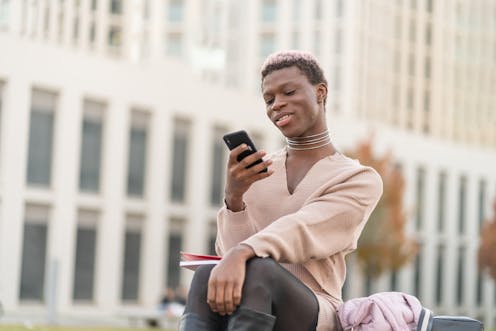
Social media has revolutionised how we relate to our colleagues and higher-ups, offering us opportunities to showcase different aspects of our lives. Currently, three out of four employees are connected with their coworkers via social media platforms like Instagram and Facebook. Be it in person or online, we all strive to present the best versions of ourselves, and social media allows us to filter these representations in ways that are specific to each platform. Twitter, for example, emphasises short, text messages, while Instagram focuses on images and videos. We also consider the diverse audiences and how they will interact with our content when determining our online behaviour.
But what happens when lesbian, gay, bisexual, transgender, queer, questioning, intersex, or asexual (LGBTQIA+) employees, often marginalised in their workplaces, also need to decide whether or not to show their true selves online? As a management researcher interested in social issues, I recently delved into the experiences of gay male employees at the Brazilian subsidiary of a multinational automaker. My analyses of 480 hours of observation and 20 interviews with gay male employees uncover how they navigate online self-representation in the face of adversity.