
Get all your news in one place.
100's of premium titles.
One app.
Start reading
Tom’s Hardware
Tom’s Hardware
Technology
Luke James

'Slopfix' software team charges $10,000 a week to delete AI-generated code bloat — ironically, the team uses AI agents to trim messy repositories by up to 65%

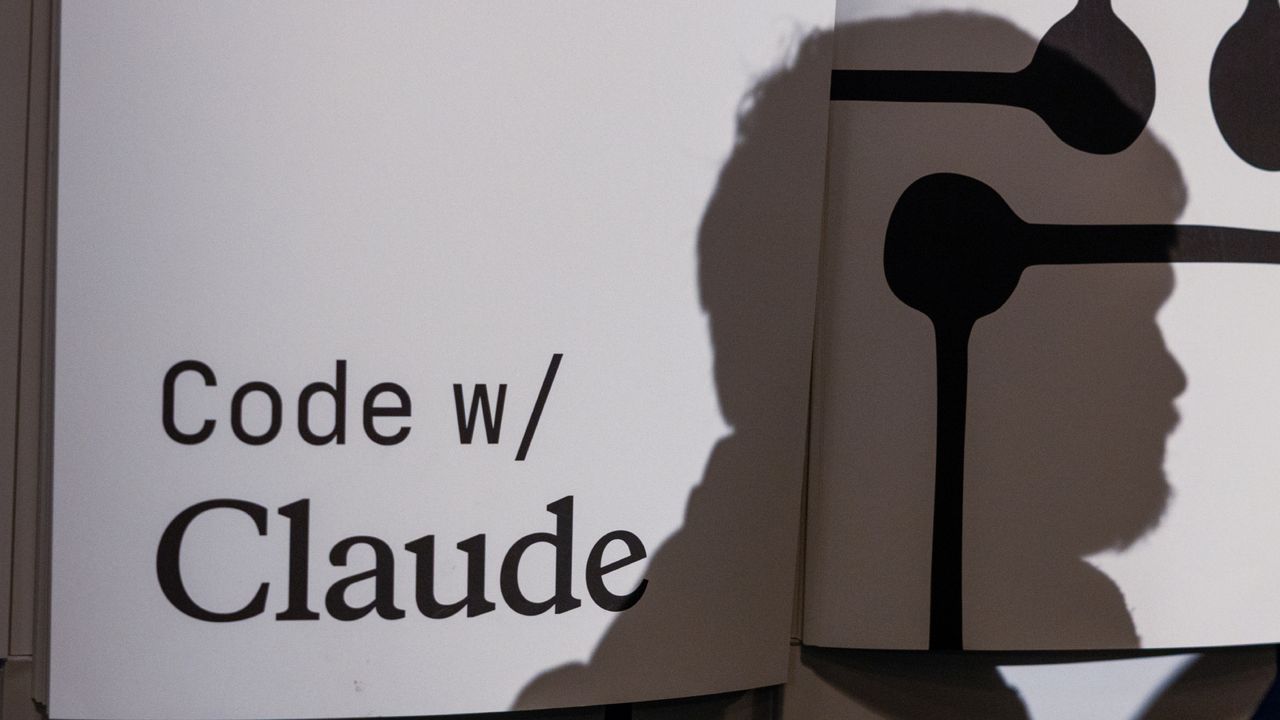
Code with Claude with a man's head as the silhouette. .

A software house (if you can call it that) known as 'Slopfix' has launched a fixed-price service that refactors AI-generated codebases, charging $10,000 for one week of work and getting paid according to how much code it deletes. Its three engineers agree to a line-reduction target before starting, with a stated example of whittling a 100,000-line project down to 35,000 while maintaining the same functionality. The best part? Slopfix uses AI coding agents itself to do the trimming.

According to its website, Slopfix analyzes its clients' repos for free and walks away if it decides it can't make a dent. When it does take a job, the first step is a written inventory of what the application does, screen by screen and endpoint by endpoint, effectively doubling as a regression checklist before any changes are made. Clients keep the slimmed-down codebase, that checklist, and a set of guardrails meant to slow future bloat, including a CLAUDE.md instruction file, lint rules, and CI checks. A two-week warranty covers any issues that arise from a previously working component.

The company's founder, who posts on Hacker News as 'zie1ony,' wrote in the launch thread that Slopfix commits to a reduction target and the client pays in proportion to how much of it the team hits, adding that "we get paid to delete code." The engineers lean on coding agents to find and collapse redundancy, describing the tools as a power source kept "on a very short leash" rather than the thing making the calls.

Duplicated code blocks are now appearing at the highest rate code-analytics firm GitClear has recorded across 623 million changes, up 81% since 2023, per the company's 2026 Maintainability Gap report. Refactoring has cratered over the same window, making up 21% of changed lines in 2022 and sits below 4% so far in 2026. Developers are now roughly five times more likely to copy and paste than to refactor, a reversal from 2022.

With AI-generated “vibe-coded” code, issues tend to start showing up several months into a project once agents stop holding the whole context of the codebase in their immediate memory and begin reinventing logic. It's the same failure mode behind the vibe-coded OS that scored five out of nine on a basic functionality test earlier this year, and the unsupervised setup that let a coding agent wipe a company's production database in seconds.

Slopfix's business model isn't anything new. Decades ago, consultancies built businesses untangling offshore-outsourced code, then cloud migrations, then crypto integrations. AI-generated code is just the latest iteration of that, but it's accumulating faster than any of those, meaning Slopfix can charge a serious premium for its services. That said, it simply undoes agentic output with the same class of agent that produced it in the first place, and anyone who has spent any time on the Internet recently will immediately flag the marketing copy on its own landing page as the type of AI slop it promises to clear out — naturally.

Sign up to read this article
Read news from 100's of titles, curated specifically for you.
Already a member? Sign in here
Related Stories
Top stories on inkl right now
One subscription that gives you access to news from hundreds of sites
Already a member? Sign in here
Our Picks
Fourteen days free
Download the app
One app. One membership.
100+ trusted global sources.