
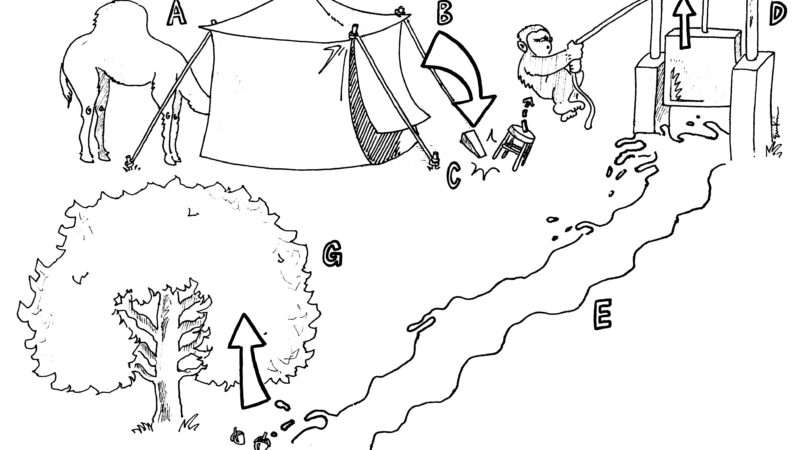
[This month, I'm serializing my 2003 Harvard Law Review article, The Mechanisms of the Slippery Slope; in yesterday's post, I laid out some examples and definitions, but here I want to flag several observations.]
[1.] Though the metaphor of the slippery slope suggests that there's one fundamental mechanism through which the slippage happens, there are actually many different ways that decision A can make decision B more likely. Many of these ways have little to do with the mechanisms that people often think of when they hear the phrase "slippery slope": development by analogy, by changes in people's moral or empirical attitudes, or by "desensitization" of people to earlier decisions.













