
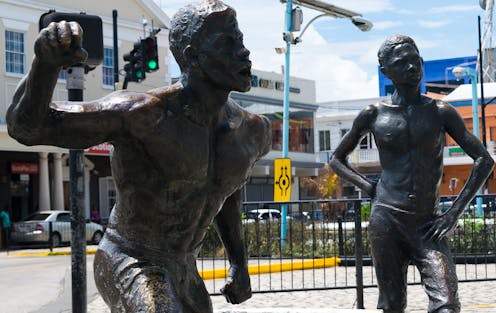
In a speech to mark Unesco’s campaign for the Remembrance of the Slave Trade and its Abolition, UN secretary-general António Guterres told the United Nations general assembly earlier this year that the inequalities created by 400 years of the transatlantic chattel trade persist to this day. “We can draw a straight line from the centuries of colonial exploitation to the social and economic inequalities of today,” he said.
Guterres’ words were echoed by Judge Patrick Robinson of the international court of justice, who has called for the UK to recognise the need to pay reparations for its part in the slave trade, telling The Guardian on August 22 that: “Reparations have been paid for other wrongs and obviously far more quickly, far more speedily than reparations for what I consider the greatest atrocity and crime in the history of mankind: transatlantic chattel slavery.”













