
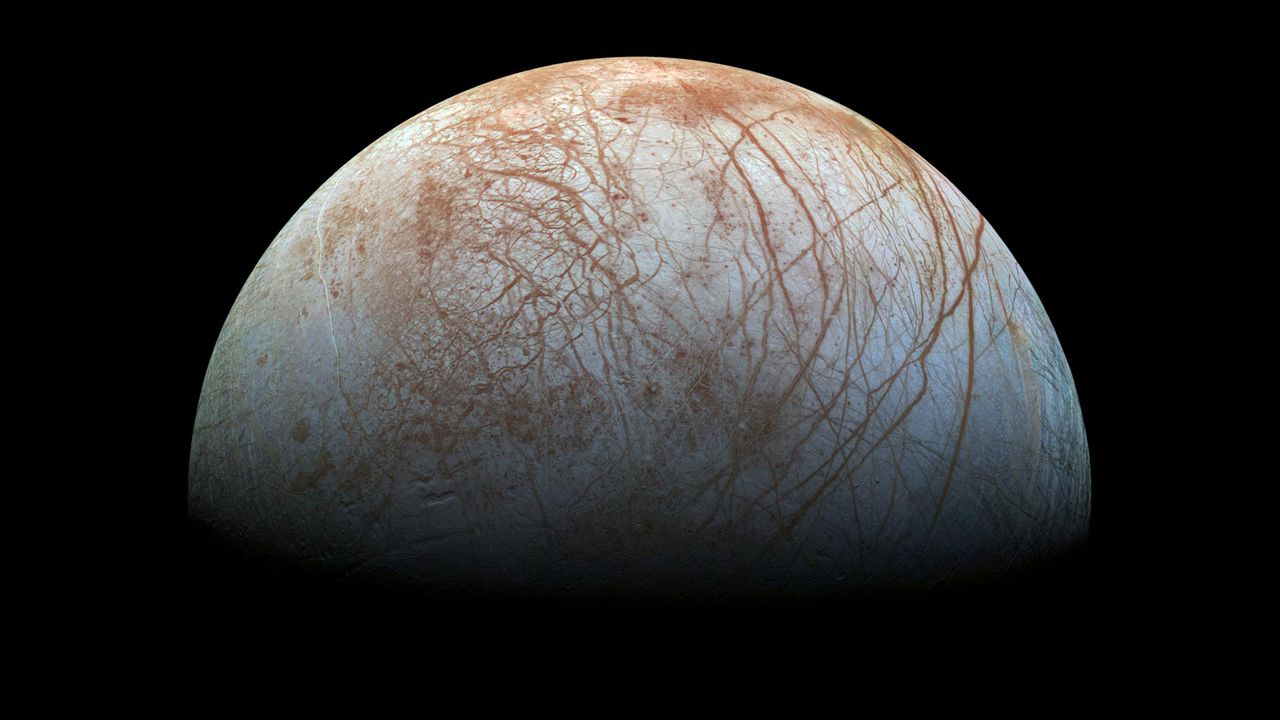
Jupiter's icy moon Europa may have a previously unrecognized way of delivering life-supporting chemicals to its vast subsurface ocean, according to new research.
Europa, one of the dozens of moons orbiting Jupiter, has long intrigued scientists as one of the most promising places in the solar system to search for extraterrestrial life, thanks to a hidden global ocean beneath its fractured, frozen surface that may contain twice as much salty water as all of Earth's oceans combined. Unlike Earth, however, Europa's ocean is deprived of oxygen and sealed off from sunlight, ruling out photosynthesis and requiring any potential life to rely on chemical energy instead. A key unanswered question has been how ingredients for that energy — such as life-supporting oxidants created on the moon's surface by intense radiation from Jupiter — could be transported through Europa's thick ice shell to the ocean below. Now, a new study by researchers at Washington State University suggests the answer may lie in a slow but persistent geological process that causes portions of Europa's surface ice to sink, carrying those chemicals downward.