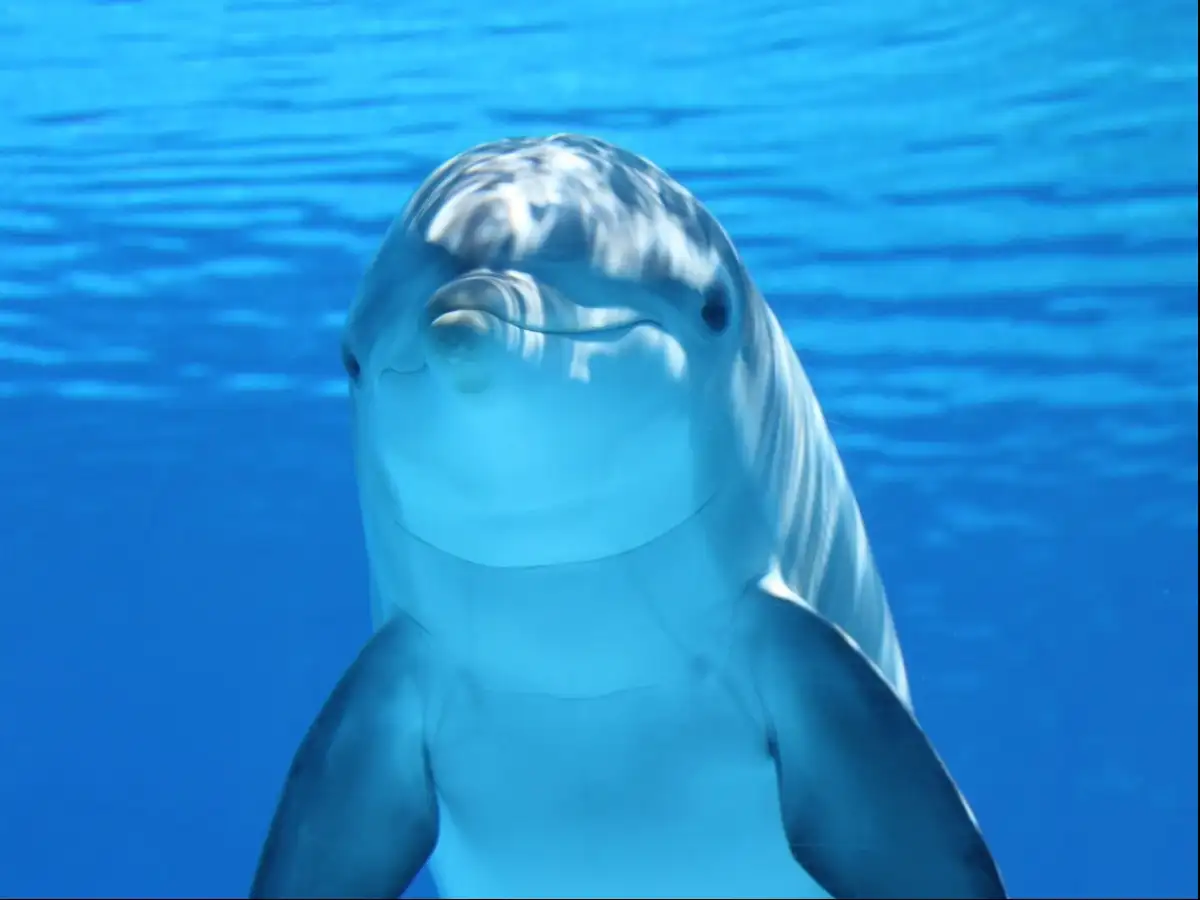
Off Lady Elliot Island in Australia's southern Great Barrier Reef, a wild bottlenose dolphin has found an unusual way to eat. Instead of hunting fish on his own, he chases them until they vomit, then eats what comes up. This behavior was recorded by researchers from the University of the Sunshine Coast who published their findings on September 13, 2026, in the journal Ecology and Evolution. Bubbles, a dolphin spotted in waters around the island since 2017, has a notched dorsal fin and a scar on his right side, which can be used to identify him. The discovery came from the university’s long-term ecological monitoring project, Leaf to Reef, around Lady Elliot Island, supported by the Great Barrier Reef Foundation’s Reef Islands Initiative.
How Bubbles turns another fish’s meal into his own

Unlike common bottlenose dolphins, which typically hunt socially, Bubbles hunts alone. The researchers say each chase was a solo effort, even when other dolphins were nearby. His behavior follows a clear pattern. He begins by scanning a school of bigeye trevally, moving his head from side to side, using echolocation. After choosing a fish, usually one that has just fed, he separates it from the school and begins a close chase, following its every move. The chase lasts until the fish, most likely from stress, vomits and Bubbles quickly eats the regurgitated food as the fish swims away. Between 2021 and 2025, researchers documented 20 occasions when Bubbles attempted this tactic; the fish actually regurgitated and successfully fed on it 11 of those times. In a 30-minute session, he has been observed to repeat the chase up to ten times. Researchers used photo identification to confirm it was the same dolphin each time.
The sounds behind the chase
When hunting, Bubbles makes two kinds of sounds: sharp echolocation clicks and short, low tones lasting from about a third of a second to two seconds. Researchers have two working ideas about what these sounds do: the low tones may stress the fish into vomiting, while the clicks may help Bubbles size up which fish has the fullest belly before he even starts the chase. However, this theory has not yet been proven. The researchers consider the findings a hypothesis since the audio recording was made during a single encounter. Asia Armstrong, a marine biologist and co-author of the study, says dolphins may use echolocation to detect small differences in fish size and choose their prey.