the breakdown
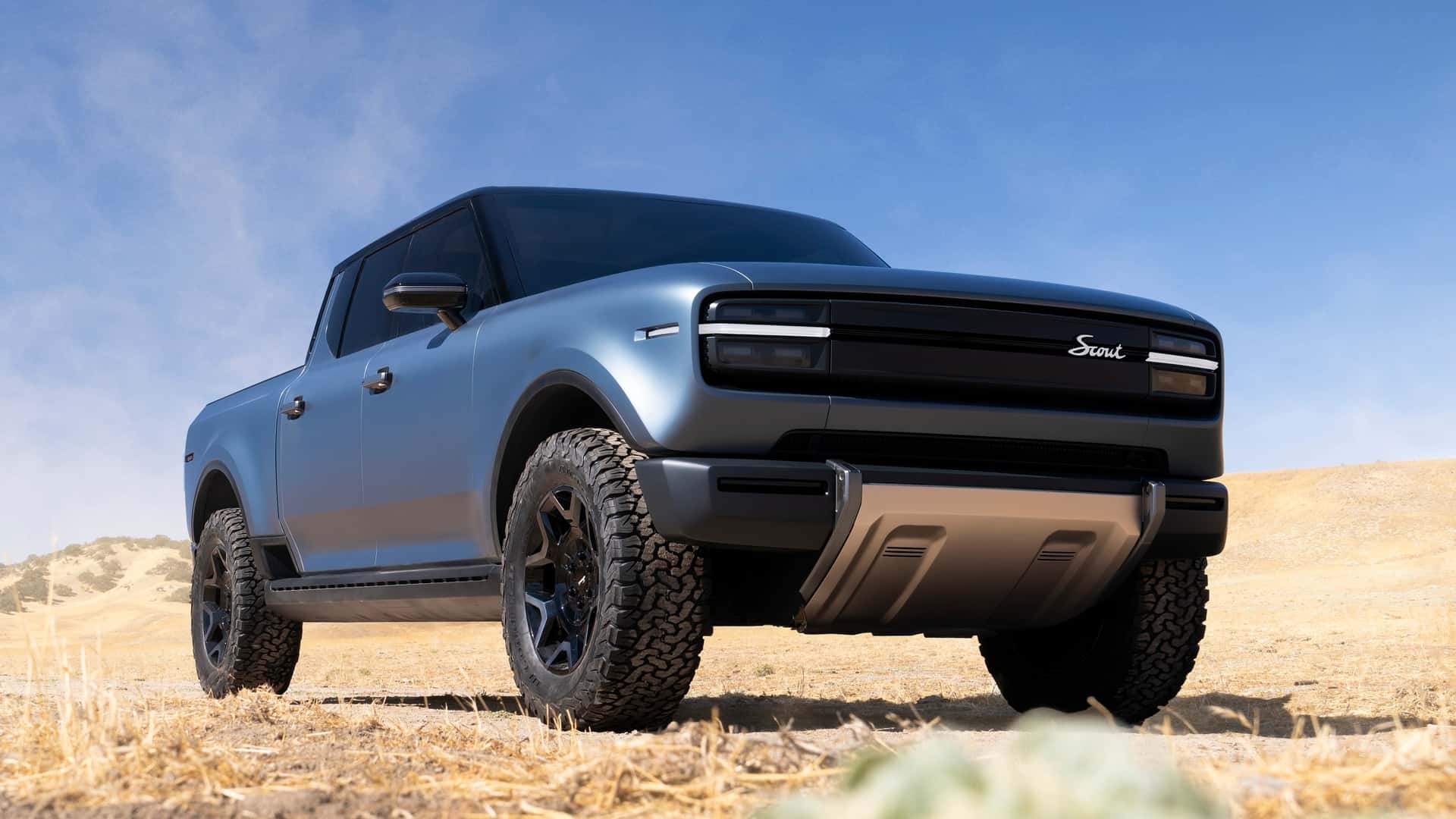
- Scout’s Terra pickup could be delayed until 2030, years later than originally expected.
- The delay would put production roughly six years after the concept first debuted.
- Ongoing technical challenges and shifting EV plans may be behind the extended timeline.
Update: This story has been updated with an official statement from Scout.
When the revived Scout brand announced its return in 2022, the company promised to bring its first two vehicles to market within a few years. However, new reports suggest those plans may be in jeopardy, with both off-roaders now potentially delayed. According to the latest details, we may not see a production-ready Scout SUV until at least 2028—and even longer for the truck.
A report from AutoForecast Solutions claims that production of the Traveler SUV has been pushed back by a full year to 2028, which coincides with previous reports. The Terra pickup appears to be facing an even longer delay, with production now expected to begin in March 2030—a full six years after the original Terra prototype debuted.
For now, the automaker’s consumer website still lists both the Terra truck and Traveler SUV as targeting production in 2027 and deliveries beginning in 2028. Those timelines are, of course, subject to change. We reached out to Scout for a statement, and a spokesperson told us:
Scout Motors has not spoken with AutoForecast Solutions and we do not have anything additional to share regarding timing beyond what we've already announced. As we've previously shared, initial production is targeted to begin in 2027. We will start producing initial validation vehicles this year. That effort will continue and mature into 2027. We expect customers will begin taking delivery of new Scout vehicles in 2028.

More Delays For Scout?
This isn’t the first sign of trouble, though. In February, the German newspaper Der Spiegel reported that Scout was facing "technical problems" that could delay the Traveler’s production start to 2028. At the time, no updated timeline was given for the Terra pickup.
Scout did respond to those claims. Staff member Jamie Vondruska posted on the company’s official forum, saying that the company was making "good progress." While she didn’t confirm specific production dates, she did note that the team is still moving "full steam ahead."
EREV Over EV
Whenever the Terra and Traveler do reach production, they won’t debut as fully electric vehicles. Instead, Scout plans to launch extended-range electric vehicle (EREV) versions first, pairing a small four-cylinder engine with a battery pack. As of October, more than 100,000 reservation holders had opted for these extended-range models over the pure EVs.
Scout’s EREV models will offer more than 500 miles of range when combined with a gas engine. The EVs, on the other hand, are expected to deliver up to 350 miles of range on a single charge.
Both vehicles were originally expected to start at under $60,000, with the company asking customers to drop a $100 refundable reservation to hold their spot. Whether that pricing holds amid potential delays remains to be seen.


Motor1's Take: With ongoing shifts in the EV market and reports of technical challenges, it may still be several years before Scout’s new models hit the road. That said, developing entirely new vehicles from scratch is rarely a smooth process, so delays like these aren’t unusual. Hopefully, we’ll see the Terra and Traveler arrive sooner rather than later.