Get all your news in one place.
100’s of premium titles.
One app.
Start reading
InsideEVs
InsideEVs
Technology

Scout's Extended-Range EVs Are Front And Center In A New Dealer Lawsuit

  • A group of dealers sued Colorado over a dealer license the state granted to Scout Motors in December. 
  • The dealers allege that Scout shouldn't qualify for the same exemptions as EV-only brands like Tesla and Rivian because it plans to make gas-extended EVs. 
  • A Scout spokesperson tells InsideEVs that both EVs and EREVs count as electric vehicles under Colorado law. 

Scout Motors, the new Volkswagen Group brand gearing up to sell electric and range-extended SUVs and trucks in the U.S., is facing yet another lawsuit from dealers who take issue with its plans to sell direct-to-consumer. 

This time, the fight is in Colorado, where a group comprised of more than one-third of the Volkswagen, Audi and Porsche dealers in the state have unsheathed their litigious pens to take on the manufacturer before even a single production vehicle rolls off the line. But—and here's the weird part—the dealers aren't suing Scout this time.

They're suing the state for, they allege, unlawfully granting Scout a license to sell direct-to-consumer in December.

Critical Materials newsletter subscribers got this story early.

The must-read auto and tech briefing hits your inbox every weekday.

Automotive News has the scoop on the suit:

The lawsuit, submitted Jan. 20 in Denver District Court alleges that the state’s Department of Revenue Division of Motor Vehicles incorrectly interpreted Colorado law when it found that Scout is a manufacturer of only electric vehicles and downplayed Volkswagen Group’s financial backing of the brand.

The dealers argue that Scout and its parent company, the VW Group, are one and the same. That would mean that VW is essentially competing with its own franchised dealers, and that's not legal under dealer laws.

Here's the even more fascinating part. Scout's decision to sell extended-range EVs (EREVs)—electric vehicles with gas-powered generators that feed the battery—is also at the center of the lawsuit. 

According to Automotive News: "The lawsuit refers to Scout’s extended-range system as a plug-in hybrid system and therefore claims that the brand does not qualify for exceptions in Colorado law which are meant for EV-only brands such as Rivian and Lucid." 

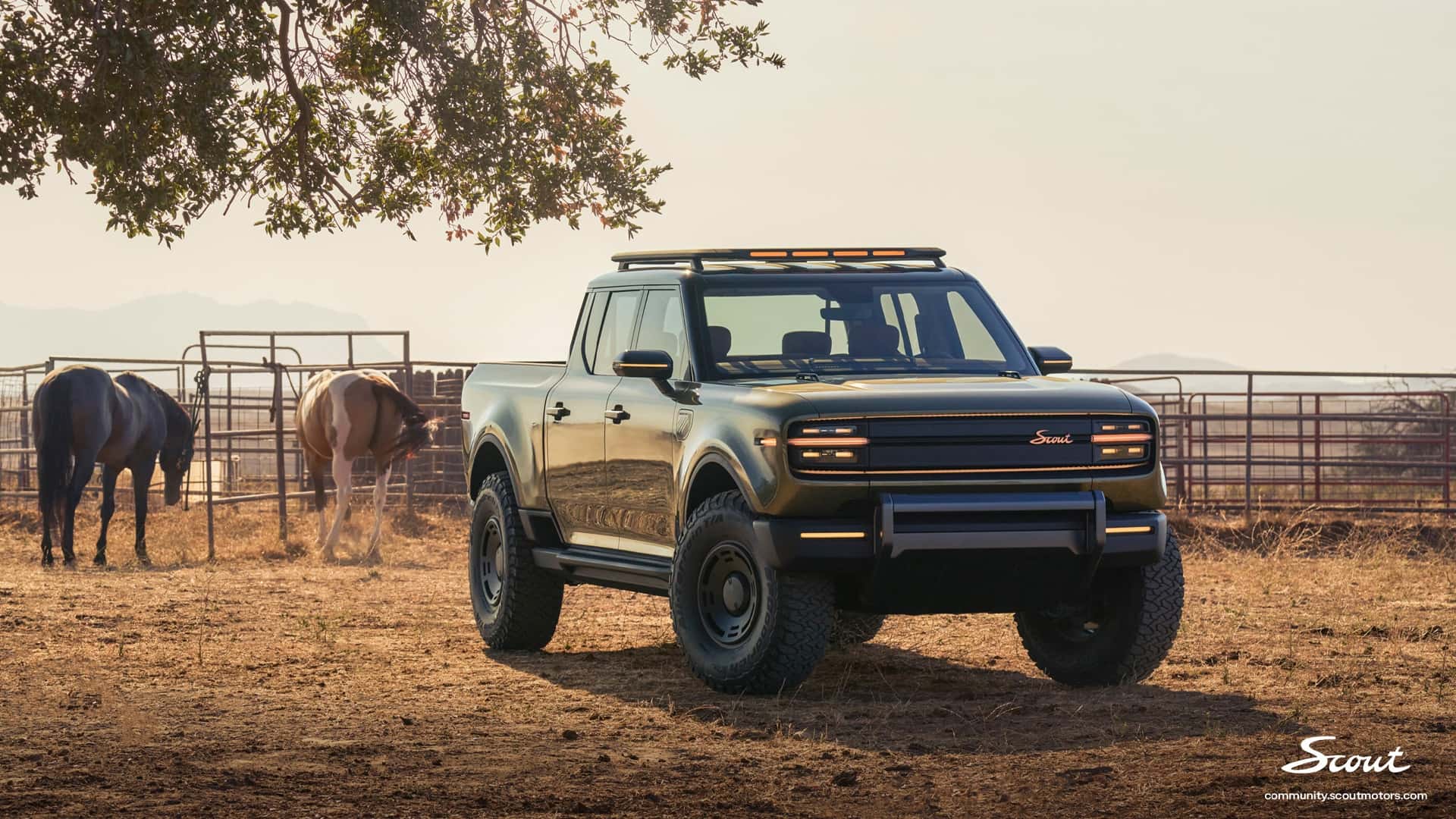
The Scout Terra.

Indeed, Scout's embrace of EREVs sets it apart from other new electric brands. The company plans to sell "Harvester" versions of the Terra pickup and Traveler SUV that feature smaller batteries than their pure-electric counterparts, plus a four-cylinder gas engine that boosts range. Those should get around 500 miles of range, Scout says, as opposed to the 350 miles you can expect from one of the company's all-electric vehicles. 

The Terra and Traveler are set to go into production in 2027 at a new factory in South Carolina.

EREVs are a trendy choice these days, especially for large SUVs and pickup trucks that largely failed to take off in pure-electric form. The vehicles promise the best of both worlds: zero-emission driving most of the time, plus some backup energy for heavy towing or long road trips.

The Scout Traveler.

Ford canceled the electric F-150 Lightning last year, opting for its next generation to be an EREV instead. Hyundai plans to bring an EREV SUV with 600 miles of range to the U.S. in 2027. Ram and Jeep have launches this year. No modern EREVs have hit the U.S. market yet, but Scout was among the earliest to announce plans to do so. 

Given the slowdown in EV demand, Scout's decision to offer a hybrid option is looking mighty prescient these days. And early signs show that Scout made the right move. The automaker's CEO, Scott Keogh, told Bloomberg in October that 80% of Scout's roughly 130,000 reservations are for range-extended vehicles

The Scout Terra and Traveler will be available as extended-range electric vehicles, or EREVs. 

Now those plans may get in the way of its dealer license in Colorado, a key market for both rugged trucks and electric vehicles.

In 2020, the state adopted an amendment to its dealer-franchise laws, regulations that exist all over the country to codify the role of car dealers and prevent manufacturers from competing with them directly. The new law states that manufacturers may own and operate dealerships "if the manufacturer manufactures only electric vehicles and has no franchised dealers of the same line-make in this state."

The dealers' case ultimately rests on the definition of "electric vehicle." The bill summary says that an electric vehicle is "a motor vehicle that can operate entirely on electrical power," but that doesn't appear to be in that section of the law itself. Under that definition, it sounds like an EREV would qualify, since it doesn't need gasoline to function. 

That's what Scout Motors believes. A spokesperson told InsideEVs via email that "battery electric vehicles and extended range electric vehicles both meet the definition of electric vehicles under Colorado law, which is why the Dealer Board overwhelmingly approved our license."

Direct-to-consumer sales might be the future, but the present is full of dealerships fighting as hard as they can to maintain control. Dealers in Florida and California have sued Scout and the Volkswagen Group of America to block Scout's plans. 

Contact the author: Rob.Stumpf@InsideEVs.com 

Additional reporting by Tim Levin

Updated at 7:20 p.m. ET with comment from a Scout spokesperson. 

Got a tip for us? Email: tips@insideevs.com
Sign up to read this article
Read news from 100’s of titles, curated specifically for you.
Already a member? Sign in here
Related Stories
Top stories on inkl right now
One subscription that gives you access to news from hundreds of sites
Already a member? Sign in here
Our Picks
Fourteen days free
Download the app
One app. One membership.
100+ trusted global sources.