
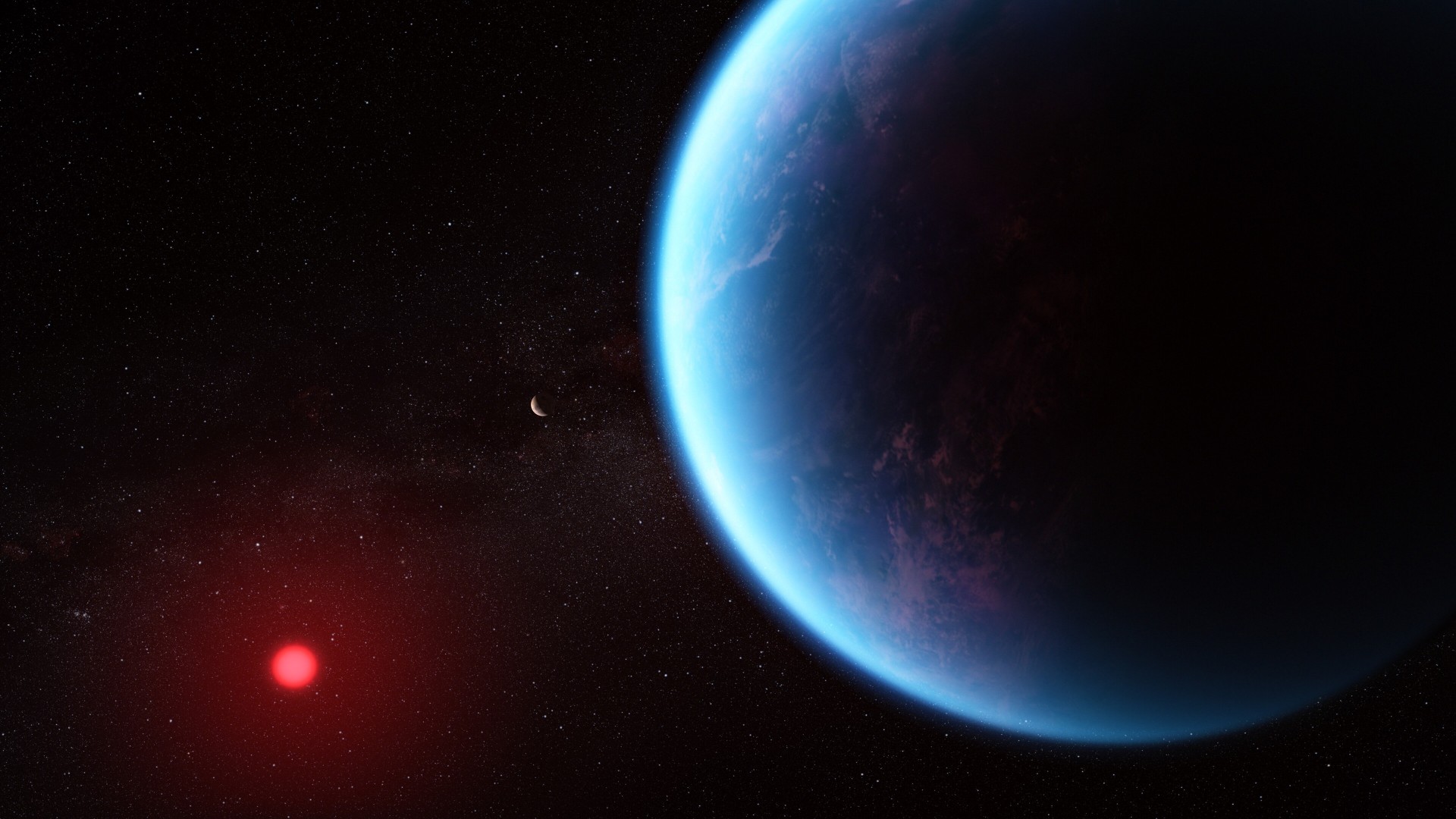
In 2023, scientists from Cambridge University reported what appeared to be very exciting news. NASA's James Webb Space Telescope, they said, had detected signs of a liquid water ocean — and possibly life — on the exoplanet K2-18b, a temperate sub-Neptune world located about 124 light-years away from Earth. Then, earlier this year, the same team announced what they called even stronger evidence for those potential signs of alien life.
The signs were rooted in a tentative detection of dimethyl sulfide (DMS) — a molecule produced on Earth solely by marine life — and/or its close chemical relative DMDS, which is also a potential biosignature, in the atmosphere of the exoplanet. This finding, along with the possibility that K2-18b is a "Hycean world" with a liquid water ocean, sparked significant interest about its potential to support life.









