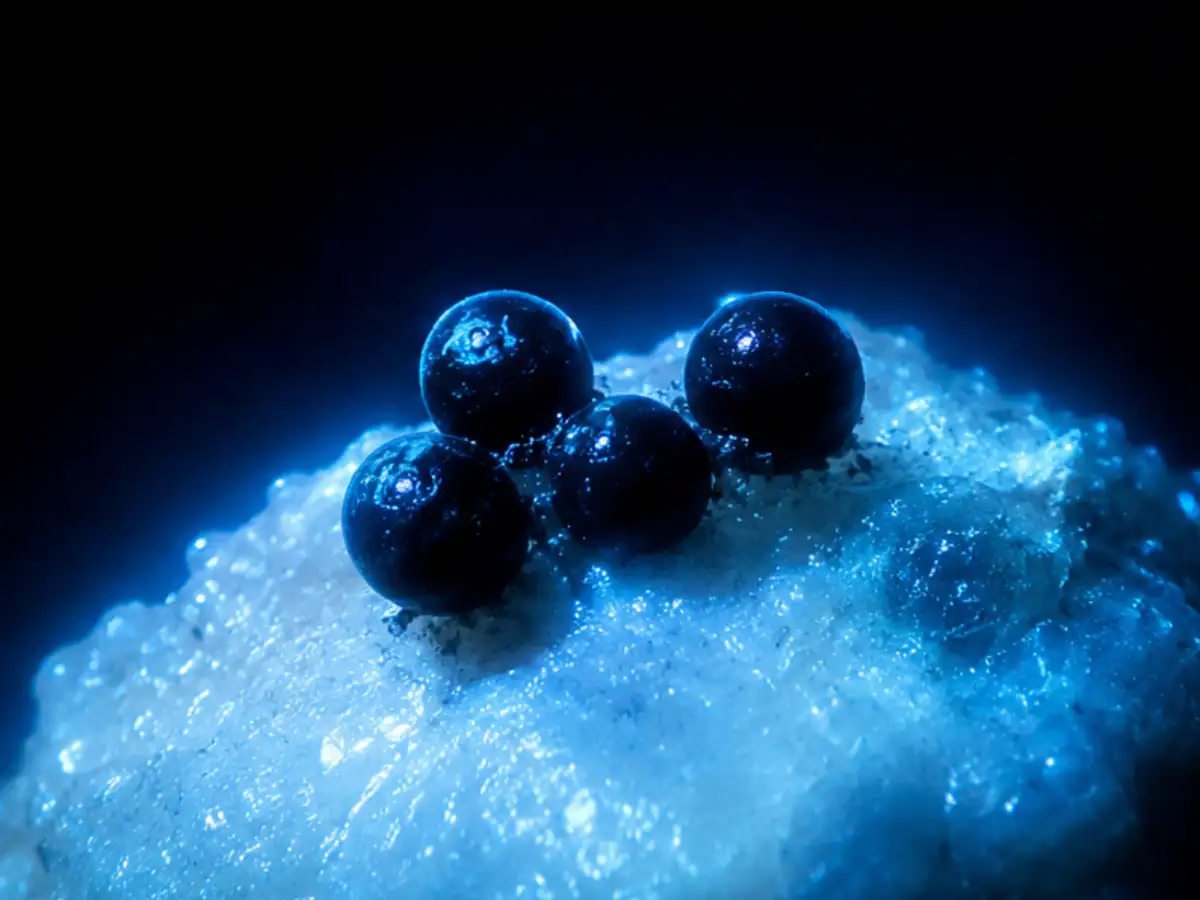
Nearly four miles under the Pacific Ocean, in a place darker and colder than almost anywhere else on Earth, a robotic vehicle spotted something odd stuck to a rock. Small, jet-black spheres. Nobody on the research team knew what they were looking at.
That moment turned into one of the more unexpected biology stories of the decade. According to the study, ‘Flatworm cocoons in the abyss: same plan under pressure,’ published in the journal Biology Letters, those black spheres turned out to be egg capsules, and inside them were flatworms living deeper than any free-living flatworm humans have ever documented.

The researchers report that the capsules were about 3 mm across and contained between three and seven individuals at different developmental stages. Genetic analysis placed the animals in the marine suborder Maricola within Tricladida, and the eggs had been recovered from the Kuril-Kamchatka Trench at roughly 6,200 meters, making them the deepest free-living flatworms yet documented.
If you think of the deep ocean as a barren place, this discovery is a reminder that it is far more complex.
Where exactly did this happen
The eggs were collected from the Kuril-Kamchatka Trench in the northwest Pacific, off the coast of Japan, at depths between roughly 6,176 and 6,200 meters. That's about 20,000 feet down, deep enough to sit in what oceanographers call the abyssopelagic zone. There's no sunlight down there, the water is close to freezing, and the pressure is intense enough to crush most equipment not built for it.
A team piloting a remotely operated vehicle, or ROV, during a research cruise noticed the spheres attached to rock fragments and pulled a few up for closer study. Most of the eggs they found were torn open and empty by the time they reached the surface. Four, though, were still sealed.