Get all your news in one place.
100's of premium titles.
One app.
Start reading
The Economic Times
The Economic Times

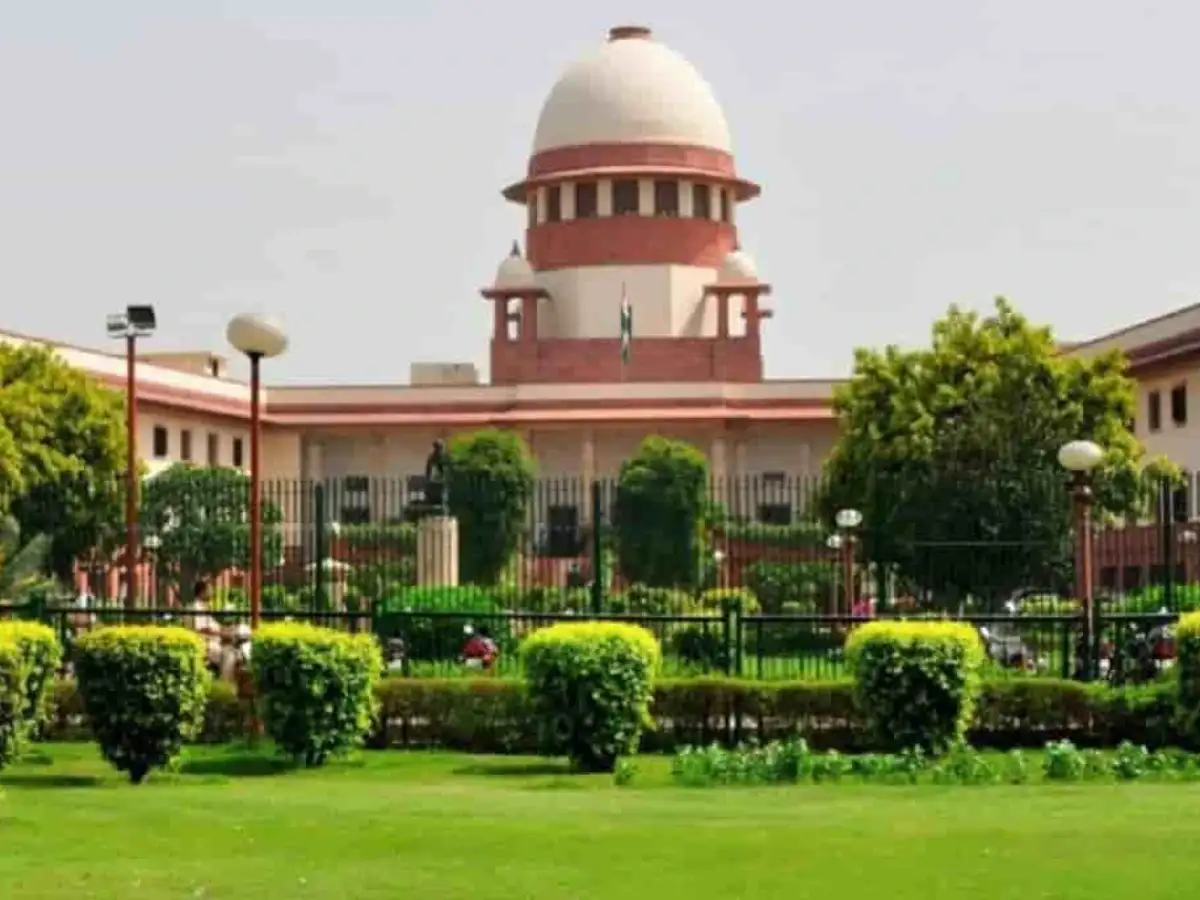
SC gives split opinions on referring to larger bench pleas against 2023 law appointing CEC, ECs

New Delhi: In a significant development, the Supreme Court on Wednesday gave split opinions on whether a batch of pleas challenging the validity of a 2023 law that excludes the Chief Justice of India from the panel for selecting the Chief Election Commissioner (CEC) and Election Commissioners (ECs) should be referred to a larger Constitution bench.

A bench of Justices Dipankar Datta and Satish Chandra Sharma, which heard the matter for five days, said that due to a difference of opinion, the matter be placed before CJI Surya Kant on the administrative side for constitution of a bench of appropriate strength for an effective and authoritative adjudication.

Also Read: SC reserves order on Noida DM Medha Roopam's plea against Rs 5 lakh recovery in NSA case

The bench also requested the CJI to explore the possibility of setting up a permanent five-judge Constitution bench for deciding seminal issues.

The batch of pleas challenged the constitutional validity of the Chief Election Commissioner and Other Election Commissioners (Appointment, Conditions of Service and Term of Office) Act, 2023, which excludes the Chief Justice of India (CJI) from the selection panel for appointing election commissioners and Chief Election Commissioners.

However, the Centre had submitted that the petitions raise seminal questions of constitutional importance and should be referred to the five-judge Constitution bench.

In his order, Justice Datta, who headed the bench, refused to accept the Centre's submission, while Justice Satish Chandra Sharma, the other judge on the bench, disagreed with Justice Datta's views.

"If free and fair elections are to be ensured, it is axiomatic that the ECI must not only be an independent body but also be seen to act independently," Justice Dutta said, noting that the executive will have an "effective" veto in the selection of the CEC and ECs.

Citing a cricket analogy, he said, since the umpire is picked by the captain of one side in a cricket match and his team wins, even if the decisions taken by such umpire are correct, "it has the patina of suspicion".

"Though the 2023 Act may possibly survive the frontal challenge of not including the CJI in the selection committee. It also has to succeed on the perception test, which this court has repeatedly said is essential".

Also Read: SC declines PIL seeking removal of social media content allegedly threatening communal harmony

Can it be argued with conviction that the selection committee, envisioned in section 7 of the 2023 Act, looks as independent as the pro-tem committee constituted by the apex court in 2023, he said.

A five-judge Constitution Bench of the Supreme Court, in a landmark verdict aimed at insulating the appointment of the CEC and ECs from the executive's interference, ruled on March 2, 2023, that their appointments will be made by the president on the advice of a committee comprising the prime minister, the leader of the opposition in the Lok Sabha and the CJI.

Subsequently, Parliament enacted the Chief Election Commissioner and Other Election Commissioners Act, 2023, in December 2023.

Justice Datta said that while the court does not express any conclusive response to the questions, since they deal with the legitimacy of the 2023 Act, some prima facie observations would be necessary in the present context.

"There can be no gainsaying that free and fair elections, to a large extent, depend on a truly independent ECI. It is not enough for the ECI to be independent; it must also appear to be independent," he said.

Elaborating on the panel sought to be constituted by the 2023 law, Justice Datta said the minister nominated by the prime minister to function as the third member of the selection committee, chaired by the PM, cannot be expected to defy his own nominator and risk his continuation as such nominated member on the committee for all practical purposes.

"Even otherwise, the collective responsibility doctrine would preclude the minister from opposing his prime minister, as observed in the Manoj Narula case (2014 verdict) which reposes faith in the prime minister, and the entire nation has expectations of good governance being carried on by the ministers of his choice," he said.

He added that since it is the Council of Ministers who has the collective responsibility to sustain the integrity and purity of the constitutional structure, it is far-fetched to expect that a minister who is part of the council and bound by the collective responsibility under Article 75(3) would adopt a stand in the matter of appointment to a sensitive constitutional office disagreeing with the leader of the government.

"In such a circumstance, the inclusion of a Cabinet minister in the selection committee fails to provide the independent counterweight that a neutral selector could, and the cabinet minister would merely echo the voice of his leader, and consequently, the presence of the leader of opposition in the selection committee becomes largely ornamental without furthering the purpose of his inclusion," Justice Datta emphasised.

He said the point urged by the petitioners that since the 2023 Act vests overwhelming selection power in the executive, and thereby undermines the appearance of independence essential to Article 324 of the Constitution and the basic structure, prima facie does appear to have substance.

Justice Datta, in his opinion, objected to the phrase that "judges appoint judges" in the Indian judiciary.

"It is considered absolutely necessary to address a misconception that has been allowed to proliferate. The oft-repeated phrase that 'judges appoint judges' is a myth, which people have been fed by vested interests through motivated narratives, often drawing sustenance from certain controversial decisions taken in this century in relation to appointment of judges," he said.

The law, enacted by Parliament in December 2023, came months after a landmark verdict by which the apex court directed that election commissioners be appointed by a committee comprising the prime minister, the leader of the opposition and the CJI.

The apex court had earlier refused to stay the appointment of new election commissioners under the 2023 law.

Sign up to read this article
Read news from 100's of titles, curated specifically for you.
Already a member? Sign in here
Related Stories
Top stories on inkl right now
One subscription that gives you access to news from hundreds of sites
Already a member? Sign in here
Our Picks
Fourteen days free
Download the app
One app. One membership.
100+ trusted global sources.