A hearing that finally kept its date
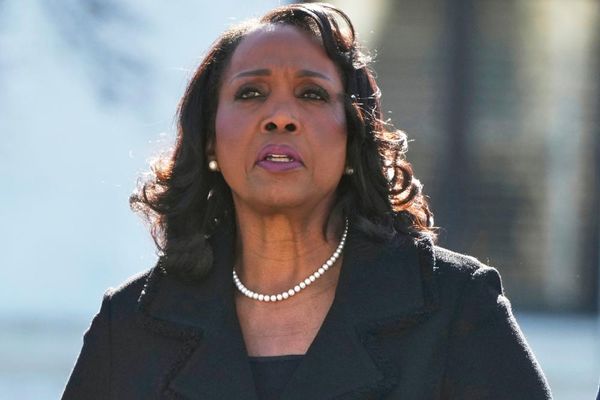
The House Foreign Affairs Committee's Western Hemisphere Subcommittee gaveled in Tuesday afternoon for a session titled "Confronting the Totalitarian Ortega-Murillo Regime." The session started at 2 p.m. in Room 2200 of the Rayburn Building with chairwoman María Elvira Salazar (R-FL) running the show with only one witness in the chair: Ana Quintana-Lovett, who holds the State Department post of deputy assistant secretary covering Central America and migration.
Coverage from journalists present, including La Mesa Redonda, gave an account and full picture of the session. Salazar opened by insisting Nicaragua hadn't slipped off Washington's radar even as Venezuela and Cuba dominate regional headlines, then delivered a blunter line aimed at Managua — the ruling couple, in her telling, will not manage to hang on to the country. She cited more than 450 disappeared political figures and roughly 5,000 shuttered civil society groups under the regime, and pressed the cancellation of Nicaragua's presidential elections. Rep. Chris Smith (R-NJ) used his time to raise the persecution of the Catholic Church and the country's political prisoners, according to opposition figures who attended.
China's airfield gambit — and the paper trail behind it
On the record, Salazar has tied her concern about Beijing directly to Punta Huete, an airfield project she's described publicly as "an airbase in Nicaragua capable of accommodating strategic bombers," warning a Chinese aircraft flying from there could reach Washington in roughly three hours. The site itself has history: Sandinista authorities laid the original runway in the 1980s, propped up at the time by Moscow and Havana and built to receive Soviet MiG-21 fighters that, in the end, never touched down during the civil war, and it lay overgrown for decades afterward. The current reconstruction is financed largely through a yuan-denominated loan from the Chinese state contractor CAMCE, with the project's total cost revised upward to roughly $500 million as Managua's own required 20 percent share came in above initial estimates.
The construction gap the budget numbers reveal
Here's where the alarm and the reality diverge. Nicaragua's finance ministry allocated close to $97.5 million córdoba-equivalent to Punta Huete for 2025, yet its own January-through-September execution report — reviewed by La Prensa — shows barely $15.5 million actually went out the door, about one-sixth of what was budgeted, mostly for demolition, an access road and initial runway grading. Officials nearly doubled next year's allocation to roughly $199 million while rolling over what went unspent, and the government's own completion target now sits in October 2028. None of that erases the strategic worry driving Tuesday's questioning, but it does complicate any picture of a Chinese foothold advancing on schedule.
Corinto, gold mines and Beijing's broader reach
The port side of the story checks out more cleanly. Nicaragua's National Assembly approved a $126.6 million Chinese credit — plus a roughly $22.4 million state match, for a $149 million total — to expand a logistics hub tied to the port of Corinto, running alongside Chinese-supplied cranes, forklifts and trucks already delivered there. Beijing-linked firms have also picked up at least 20 mining concessions across Nicaraguan territory as of this summer, a footprint economists have flagged as a possible workaround for U.S. Treasury sanctions on the country's gold trade, since several of the beneficiary companies have no prior track record. Even Quintana-Lovett reportedly cautioned lawmakers not to take every announced Chinese megaproject at face value — a source close to the hearing said she described a chunk of the publicized investment as more marketing than substance.
The OAS track wasn't left out of the room
The hearing wasn't a swap of one subject for another. Attendees describe a session that moved fluidly between Beijing's infrastructure bets and the diplomatic pressure building at the OAS, where the Permanent Council voted 29-1 on August 19, Brazil casting the lone dissent and Mexico sitting out the tally, to call a rare Meeting of Consultation of foreign ministers on Nicaragua's crackdown on political opposition, even though the country formally left the bloc in 2023. Castro reportedly floated the idea of sanctions aimed at specific economic sectors as part of a broader strategy, and Quintana-Lovett's testimony touched on the coming ministers' session directly, according to two opposition figures who observed the hearing.
What comes next
Structurally, a subcommittee hearing can't produce a vote or a binding recommendation, and this one didn't try. Two sanctions bills remain pending regardless: Salazar and Smith's House measure from January and a Senate companion from Cruz and Kaine that would stretch existing sanctions authority out to 2035 and add fresh triggers keyed to the gold trade. The OAS meeting itself is the bigger open question. Secretary General Ramdin told reporters this month he wants the session "as soon as possible, shortly after the UN General Assembly," and has floated September 28 to Nicaraguan opposition contacts as one tentative date — though nothing is locked in. A United Nations human rights report on Nicaragua is separately expected September 18. Until the OAS actually sets a date, Tuesday's hearing functions as a public record lawmakers can point to, not a policy decision in itself.