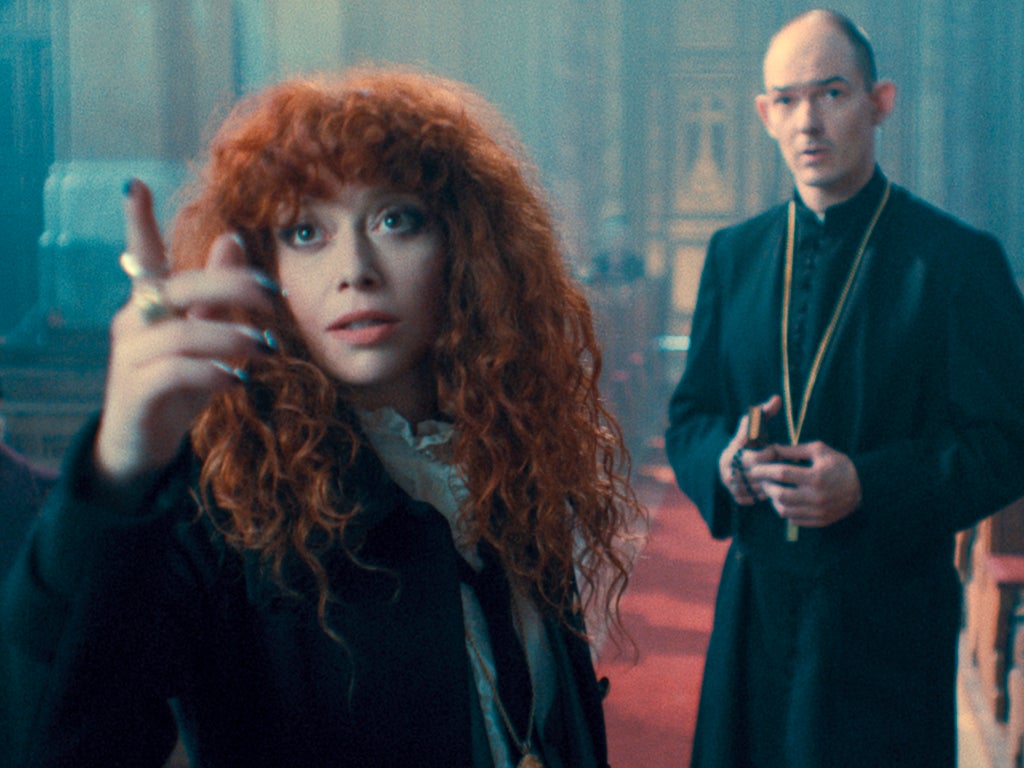
The idea of “high-concept” television is nothing new. It dates all the way back to the early days ofThe Twilight Zone, those self-contained episodes that hinged on an intriguing but simple proposition. What if the Earth moved closer and closer to the sun, until the oceans began to boil? What if you saw your doppelgänger at a bus stop? What if you looked out your plane window and saw a monster? These ideas are the height of “high-concept”, as was the first season of Netflix’s acclaimed comedy-drama Russian Doll. The show posed a simple question: what if you walked out on your birthday party, got hit by a car and woke up back at the start of festivities once again?
The problem with high-concept, of course, is what happens next. It’s why The Twilight Zone (and its spiritual successor, Black Mirror) utilise standalone episodes. The drama plays out and then it ends. As has been proven in years gone by (I’m looking at you, Lost) where the story gets strung out, beyond its apparent resolution, the law of diminishing returns takes effect. So here we have the second season of Russian Doll, which picks up where the first ended: with Nadia and Alan (Natasha Lyonne and Charlie Barnett) seemingly escaping their infinite day, ploughing on through separate timelines where they’re both alive, safe and together. But obviously Russian Doll is far too classy a show to simply rehash its Groundhog Day premise, so the new season picks a fresh (but well-trodden) concept to heighten: time travel.