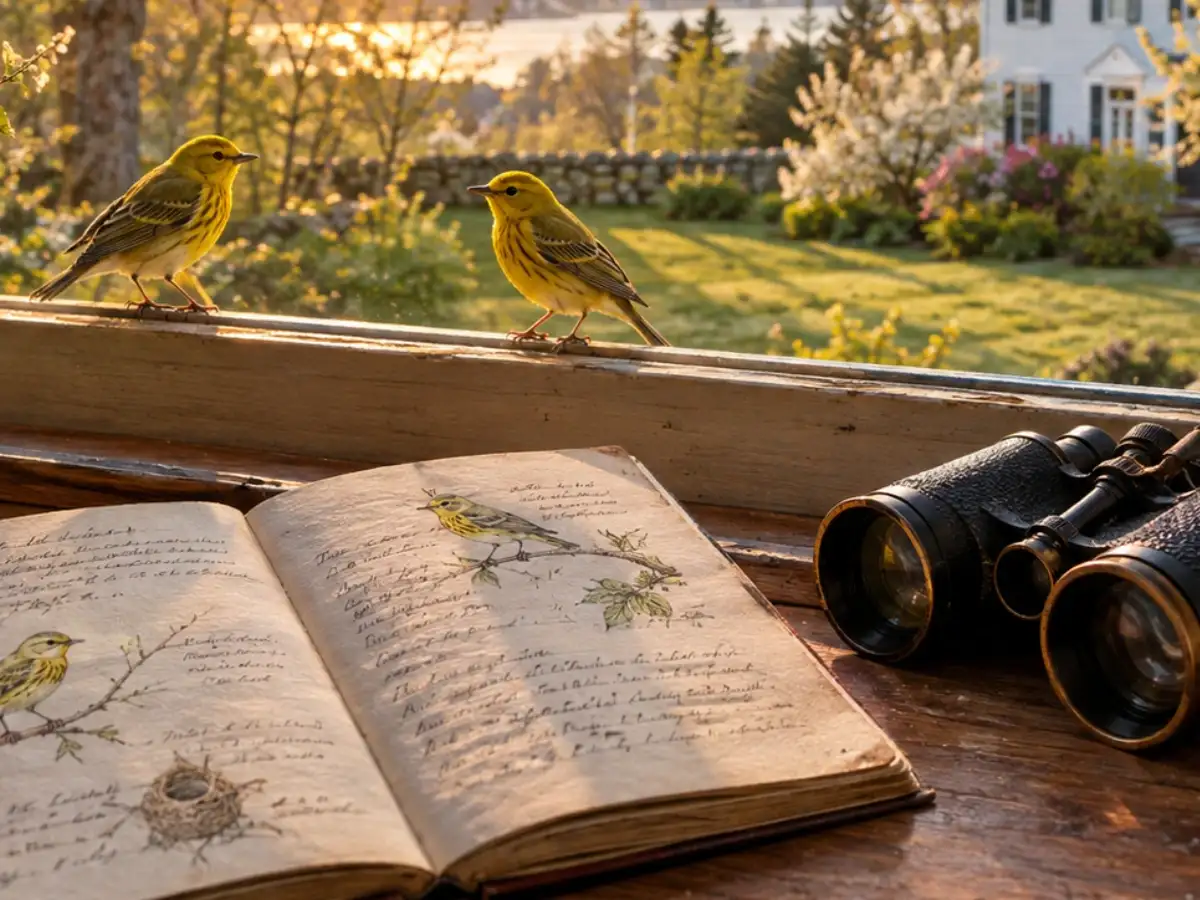
A notebook kept by a Massachusetts schoolteacher is now part of a long record showing how spring bird migration is changing. Rosita Corey, a retired schoolteacher and birdwatcher in Concord, Massachusetts, maintained records of first arrival dates of birds from 1956 to 1973 and again from 1988 to 2007. Researchers combined her observations with older records and, more recently, modern bird sightings to study changes in migration timing. A 2025 study, "Integrating historical records and citizen science data to understand bird responses to climate change in Concord, Massachusetts: Thoreau to eBird", found that 18 migratory bird species were arriving in Concord approximately seven days earlier, on average, in the modern period than in the historical records.
It started with observations made more than 170 years ago

Concord has a long history of bird arrivals in the spring. The story begins with the naturalist and writer Henry David Thoreau, who kept bird notes in Concord between 1851 and 1854. Observations of bird arrivals were recorded by ornithologist William Brewster in 1886 and from 1900 to 1919, and by ornithologist Ludlow Griscom in 1930, 1931, and from 1933 to 1954. Corey then provided another set of observations for the periods 1956–1973 and 1988–2007.
These records were compiled in the 2010 paper published in The Condor: Ornithological Applications. The resulting data set spanned 157 years, the longest known record of bird-arrival dates in North America at the time. The researchers also note that the observers' methods were similar in important ways: they walked around Concord several times a week, visiting different habitats and recording newly arriving birds. They also found that some details, like how many hours each observer spent watching birds and the exact area they covered, were unknown.