
Get all your news in one place.
100’s of premium titles.
One app.
Start reading
Space
Space
Science
Mike Wall

Rocket returned, lightly used: Why Blue Origin's landed New Glenn booster is so clean

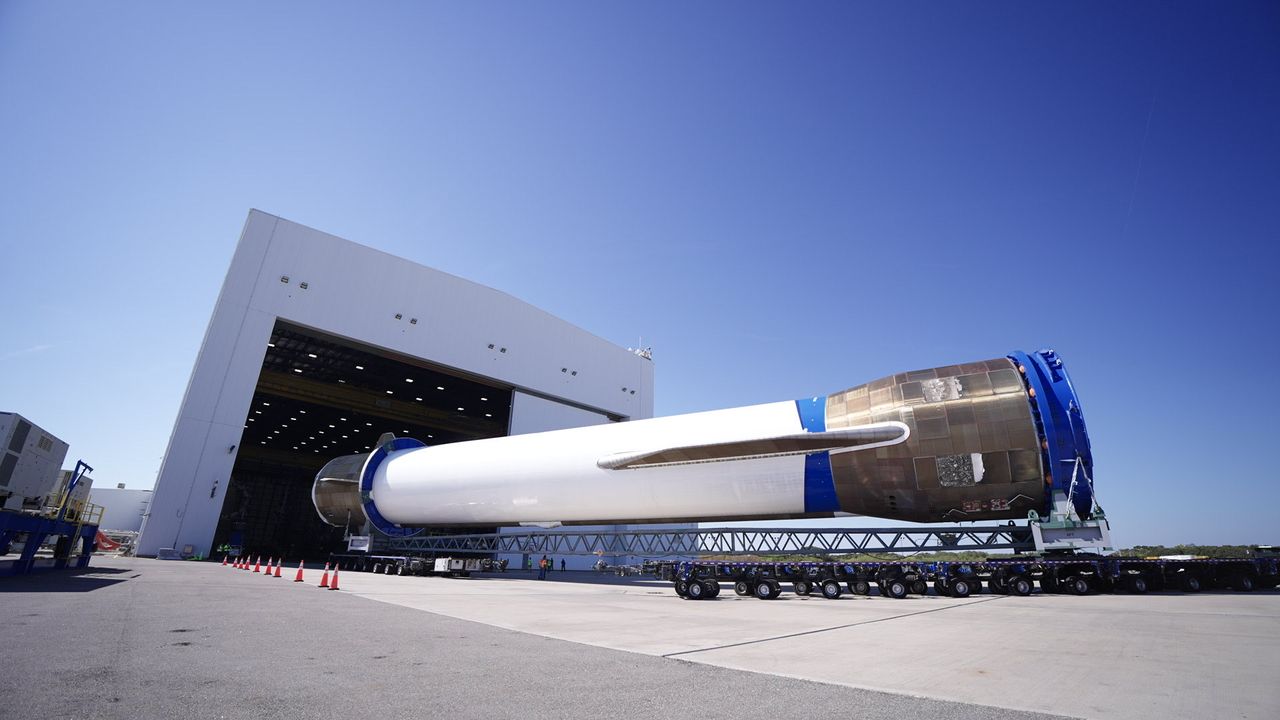
The first stage of Blue Origin's New Glenn rocket, which launched NASA’s ESCAPADE Mars mission on Nov. 13, 2025, is rolled into a hangar at Cape Canaveral Space Force Station for inspection and refurbishment. Blue Origin CEO Dave Limp posted this photo on X on Nov. 20, 2025.

Blue Origin's New Glenn rocket aced its first-ever landing last week — and even managed to stay pretty, despite the ordeal.

The milestone occurred on Nov. 13, during the launch of NASA's twin ESCAPADE Mars probes from Florida's Space Coast. New Glenn's first stage came back to Earth about nine minutes after liftoff, touching down in the Atlantic Ocean on Blue Origin's drone ship "Jacklyn."

The booster looked pristine, its white, gold and blue livery sparkling in the afternoon sun. It was quite a departure from the baseline visual most of us have of a landed rocket — consider a soot-streaked SpaceX Falcon 9 booster, for instance, its char marks worn like a badge of honor.

But there's a simple explanation for the difference between a landed Falcon 9 and a landed New Glenn — their respective propellants.

SpaceX's Merlin engines, which power both stages of its Falcon 9 and Falcon Heavy rockets, run on liquid oxygen and RP-1, a rocket-grade form of kerosene. Kerosene creates soot when it burns, and Falcon boosters therefore fly through self-generated clouds of this gunk when they come back down to Earth.

New Glenn's BE-4 first-stage engines, on the other hand, burn liquid oxygen and liquid methane, a combo known as methalox. Methane combustion doesn't generate appreciable soot, so the big rocket came home clean last week. (New Glenn's upper stage features two BE-3U engines, which are powered by liquid oxygen and liquid hydrogen.)

SpaceX has developed a methalox engine of its own, by the way — Raptor, which powers the company's next-gen Starship megarocket. Starship is designed to help humanity settle Mars, and methane makes sense as a fuel for a Red Planet rocket, according to company founder and CEO Elon Musk: It can be produced on Mars from components in the planet's atmosphere.

The New Glenn booster after its successful landing on Nov. 13, 2025. (Image credit: Blue Origin)

Blue Origin will soon find out if the landed New Glenn booster is in as good a shape as it looks: The rocket just made it back to Cape Canaveral Space Force Station's Launch Complex 36, where the company will inspect and refurbish it.

The plan is to fly the booster again, and again ... and again.

Each New Glenn first stage is designed to launch at least 25 times, in fact. That level of reuse would be quite a feat, but Blue Origin is following a trail that SpaceX has blazed. Multiple Falcon 9 boosters have dozens of flights under their belts, and one has launched a record 31 times. That soot is just a cosmetic issue, after all.

Sign up to read this article
Read news from 100’s of titles, curated specifically for you.
Already a member? Sign in here
Related Stories
Top stories on inkl right now
One subscription that gives you access to news from hundreds of sites
Already a member? Sign in here
Our Picks
Fourteen days free
Download the app
One app. One membership.
100+ trusted global sources.