
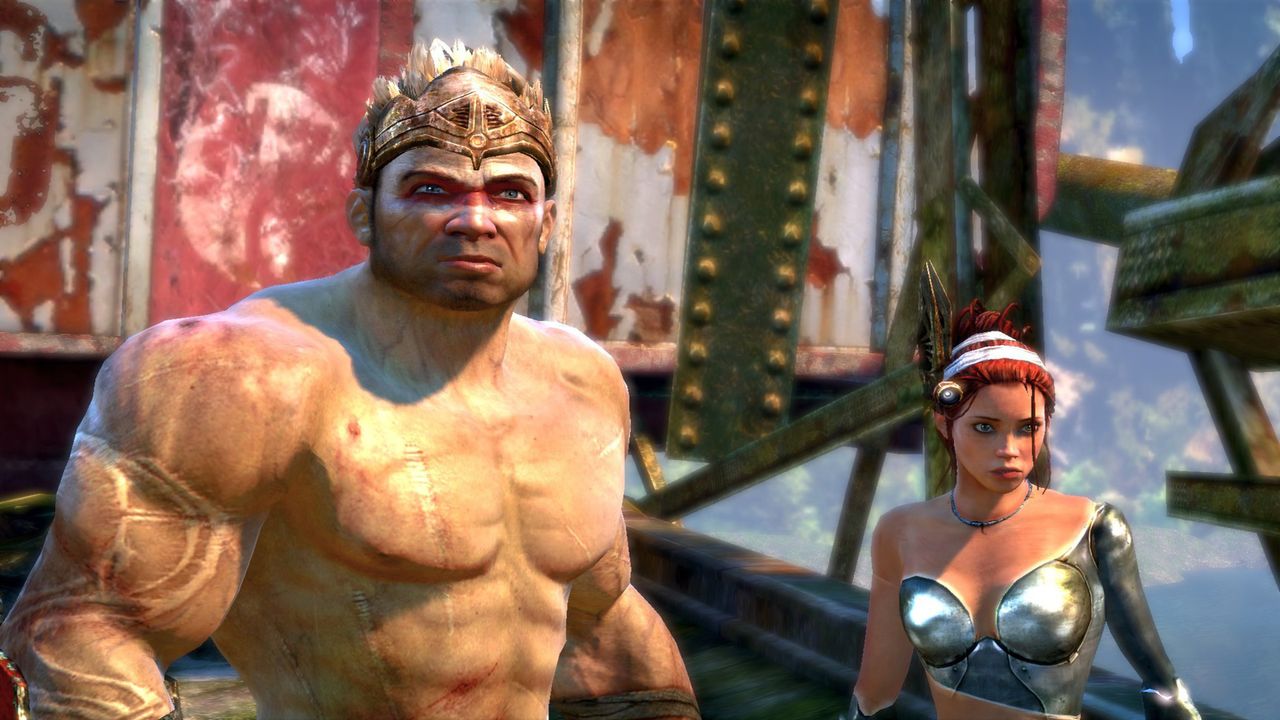
No, it's nothing like the book. Enslaved may be based on a piece of classic Chinese literature (Wu Cheng'en's Journey To The West) but it takes substantial liberties with the source material. Rather, the original text serves as a starting point for a very different kind of adventure – one that, all these years later, might sound familiar. Stop us if you've played this one before: a taciturn, world-weary man reluctantly escorts a smart but naïve young woman across a ruined America. Pockets of human survivors eke out a miserable existence in this overgrown world, no longer the planet's dominant species. The pair's westward journey brings moments of tragedy and hope, as an uneasy alliance steadily blossoms into something more meaningful, before an ending that hangs upon a choice between living a blissful lie or confronting a horrifying truth.
To return to Enslaved after playing The Last Of Us is to be shocked at how many similarities there are between the two. Both feature strangely beautiful future dystopias; both deliberately subvert the traditional pioneer's journey across America; both feature odd-couple central relationships that endeavour to sidestep cliché (and mostly succeed). More pertinently, both display a rare commitment to ludonarrative consistency. Here are worlds that have been meticulously thought through, where every part is congruous to an internal logic.