
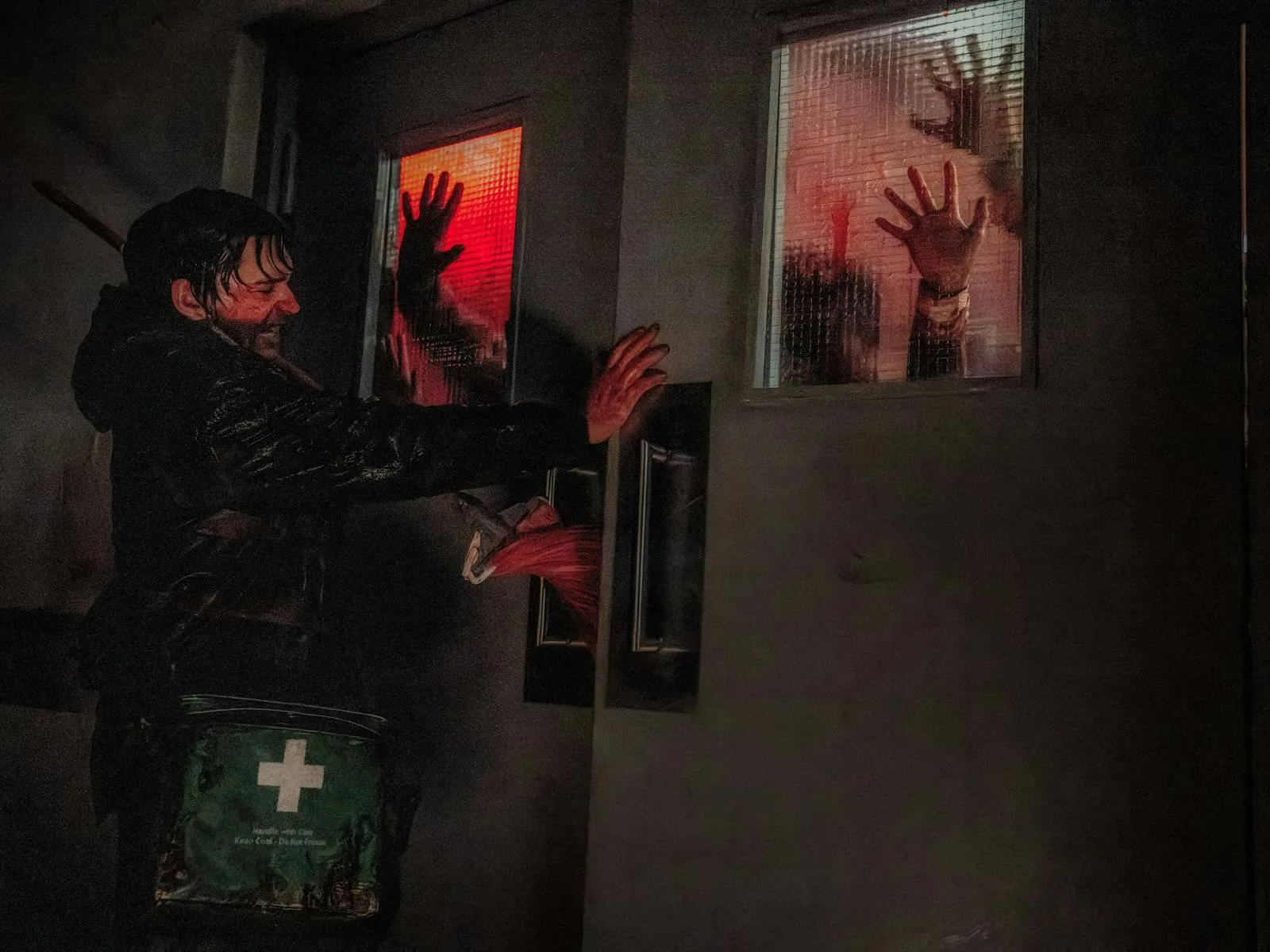
What is it exactly that has made Resident Evil the premiere survival horror franchise a whole 30 years after the original game was released? Is it the convoluted lore revolving around biological weapons, sinister megacorporations, and a shadow war being waged using zombie outbreaks? Is it the larger-than-life action hero archetypes like Leon S. Kennedy, a perpetual heartthrob of fan-fiction and TikTok edits? Or is it the refined, atmospheric gameplay, which sees players descend into a nightmare crisis that forces them to conserve resources, explore labyrinthine settings filled with unknown danger, and face their fears head-on in the form of ingenious mutated grotesqueries?
Zach Cregger’s Resident Evil playfully engages with the first, is totally uninterested in the second, and cashes all in on the third. For a movie and a filmmaker to have spent months at ground zero of a battle over what form video game adaptations should take, it’s ironic that Resident Evil would end up being one of the best video game films ever made. By bucking the cloying attempts at “pleasing fans” that have sunk so many other movies of this kind, Zach Cregger has made the platonic ideal of what a video game movie should be: a cinematic experience that approximates the medium-specific idiosyncrasies of the game, while offering something new and satisfying for fans and newcomers.