
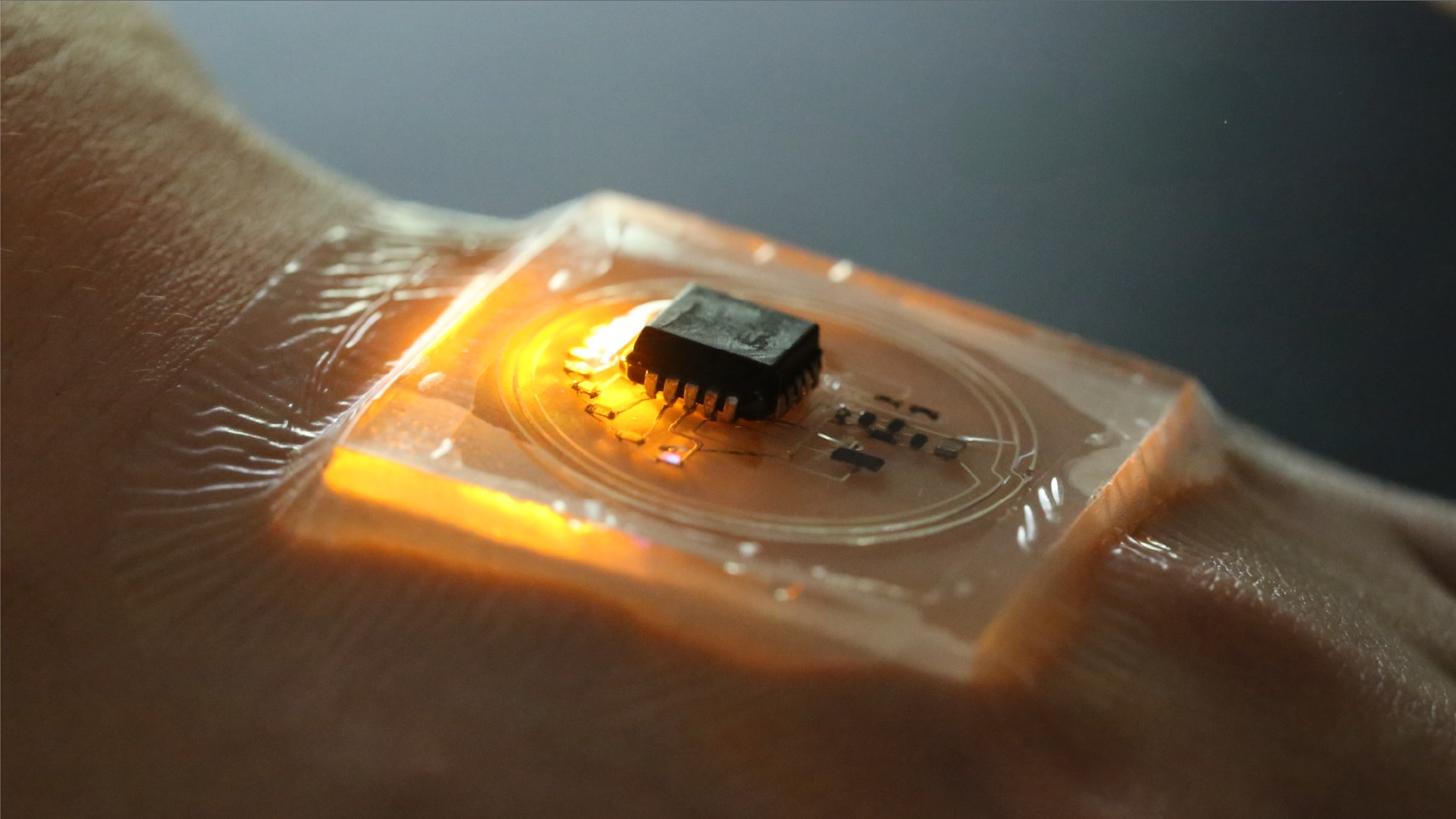
With new advancements in computing technology making wearable electronics increasingly tiny while packing in plenty of features, problem of providing power remains. Some devices have managed to recharge using solar energy, but batteries remain an integral component. But researchers at the Future Interfaces Group found a remarkable way to address this obstacle, using a Power-over-Skin approach that taps a user's intra-body RF energy. It requires no contact apart from the user's skin, potentially eliminating the need for batteries.
The research paper, published by Andy Kong, Daehwa Kim, and Chris Harrison from Carnegie Mellon University, notes that the human body is particularly efficient at generating 40 MHz RF energy. Tapping into that through a 'worn receiver' provides power without using any invasive means. The researchers invested most of their efforts into optimizing these receivers to ensure usable size, weight, form factor and power efficiency. The receiver could potentially be placed anywhere, and since it's capacitive, it could even work through clothing — theoretically creating the potential to be integrated into a smartphone.
The researchers demonstrated the technology with devices including a Bluetooth ring with a joystick, a stick-and-forget medical patch that logs the user's health data, a sun-exposure patch with a screen, and various other devices. Other future possibilities include VR/ AR headsets and new types of wearable devices. Since the body consistently generates energy, people could wear multiple devices simultaneously without the need to remove and charge.