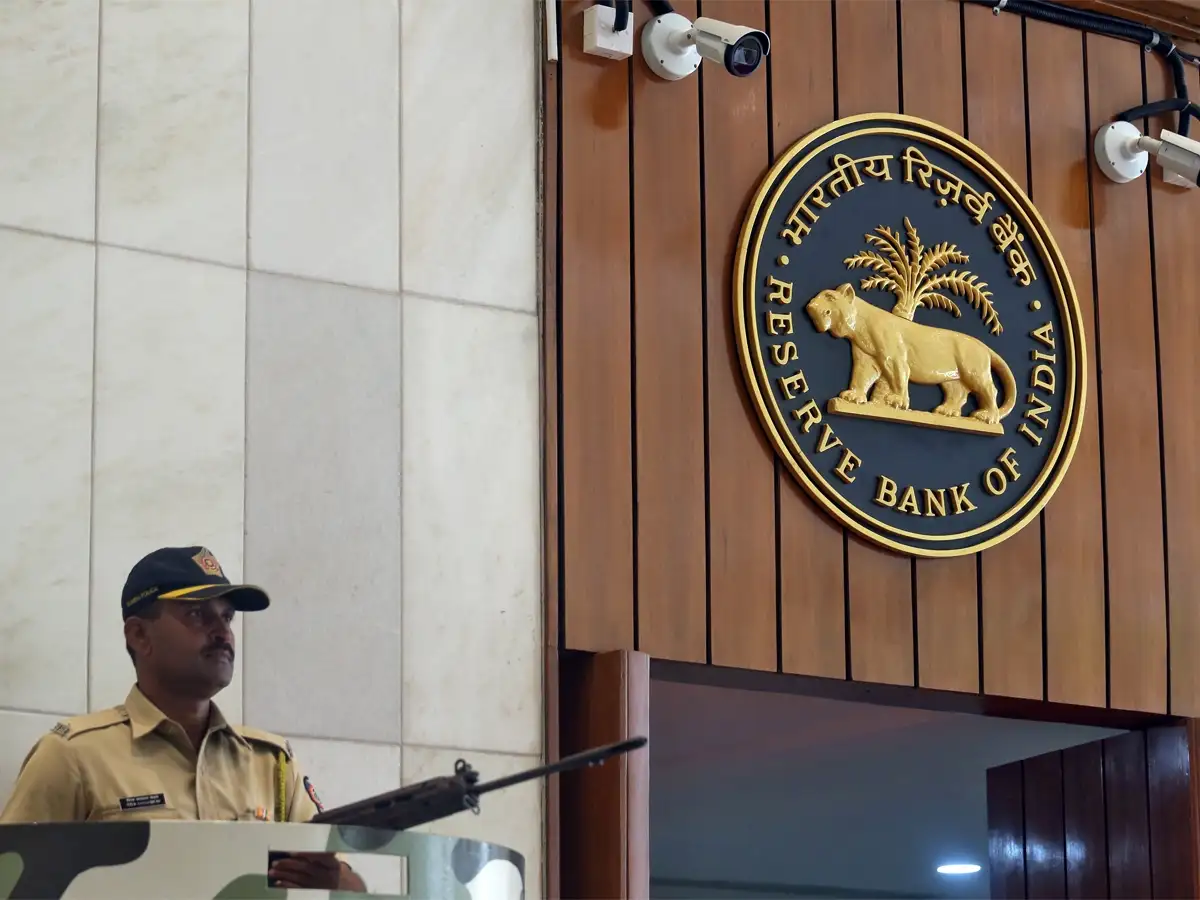
Reserve Bank Governor Sanjay Malhotra on Friday announced the Monetary Policy Committee's (MPC) decision, with repo rate remaining unchanged at 5.25%. The status quo reflects the RBI's cautious approach amid uncertainties arising from the ongoing West Asia conflict, which has heightened concerns over inflation and economic growth.
At its previous policy review in April, the RBI had kept rates unchanged, choosing to closely monitor the evolving geopolitical situation and its potential impact on energy prices, inflation and economic activity.
All six members of the rate panel, which includes three central bank officials and three external appointees, voted to hold rates. The MPC decided to continue with its "neutral" stance.
"The central bank's rate panel noted that the global environment has deteriorated," RBI Governor Sanjay Malhotra said.
Also Read- RBI MPC 2026 Live
Key Policy Rates Unchanged
- Repo rate: 5.25%
- Standing Deposit Facility (SDF): 5.00%
- Marginal Standing Facility (MSF) & Bank Rate: 5.50%
- Stance: Neutral
MPC cuts GDP projections:
The Reserve Bank of India on Friday trimmed its FY27 GDP growth forecast to 6.6% from 6.9%, citing heightened uncertainties stemming from the West Asia conflict, elevated crude oil prices, supply-chain disruptions and weather-related risks. The central bank, however, kept the benchmark repo rate unchanged at 5.25%.
The RBI now projects GDP growth at 6.6% in the first quarter of FY27, 6.3% in the second quarter, 6.5% in the third quarter and 6.8% in the fourth quarter.
Inflation update
Amid West Asia war, the RBI has forecasted inflation at 5.1% for the fiscal year 2026-27, as against 4.6% forecasted in the previous meeting.
For the four quarters of FY27, the RBI MPC has projected inflation to be at 4.2% in the first quarter; Q2 at 5.1%; Q3 at 5.9% and Q4 at 5.9% with risks evenly balanced.
While inflation is expected to rise, underlying price pressures remain benign, Malhotra said. Second-round effects of the price pressure warrant vigil, Malhotra said.
Measures to attract dollar inflows
All new issuances of 15-year, 30-year and 40-year government bonds will be a part of Fully Accessible Route
- Bonds under this category are part of three global indexes
- Limits on investment in other government securities will also be removed
- Limits for investments by Non-Resident Indians and Overseas Citizens of India are being increased, and extended to all individual persons residing outside India
- RBI will provide a facility of concessional forex swap for about four months till September 30
- RBI will also incentivise external commercial borrowings, by public sector undertakings
- RBI will allow a similar facility for bearing the full hedging cost till September 30 to banks for raising three to five year FCNRB deposits
- RBI will restore time for realisation for export proceeds to nine months
'Domestic economic activity largely steady'
- High-frequency indicators suggest domestic economic activity has remained largely stable since the outbreak of the conflict.
- Private consumption has stayed resilient, while fixed investment has maintained momentum despite rising cost pressures.
- Merchandise exports recorded strong growth in April 2026, although higher freight and insurance costs continue to weigh on trade.
- Services exports have remained robust, providing support to overall economic activity.
- While the economy has so far absorbed the spillover effects of the conflict with limited disruption, signs of strain are becoming increasingly visible.
- Looking ahead, elevated energy and commodity prices, along with persistent supply-chain disruptions, are expected to affect economic activity.
- Diversification of imports in affected commodities has helped improve supply availability, but at a higher cost.
- The overall impact on the economy will depend on the duration of the conflict, the pace of supply-chain normalisation and how costs are shared among stakeholders.
- The south-west monsoon is expected to be deficient, posing risks to agricultural output and rural demand.
- However, government initiatives such as crop diversification, water harvesting and conservation, climate-resilient farming practices and the promotion of short-duration crops are expected to cushion the impact.
Global risks persists
The Governor noted that while India remains relatively well-positioned, policymakers must use the current phase of global turbulence to further strengthen the country's economic resilience.
"It is important to not only confront and address these challenges, but also, at the same time, take this as an opportunity to further enhance our resilience," he added.
The RBI Governor further pointed to the continuing geopolitical impasse in West Asia, escalating energy prices and global supply chain disruptions as key risks weighing on the world economy.
According to him, monetary policy across major economies has become increasingly cautious as central banks grapple with difficult trade-offs between supporting growth and containing inflation. He also observed that major advanced economy central banks may increasingly lean towards monetary tightening.
While global equity markets continue to remain buoyant, supported by optimism surrounding artificial intelligence-led growth, global bond markets remain under pressure due to renewed inflation concerns and worries over debt sustainability, he said.