
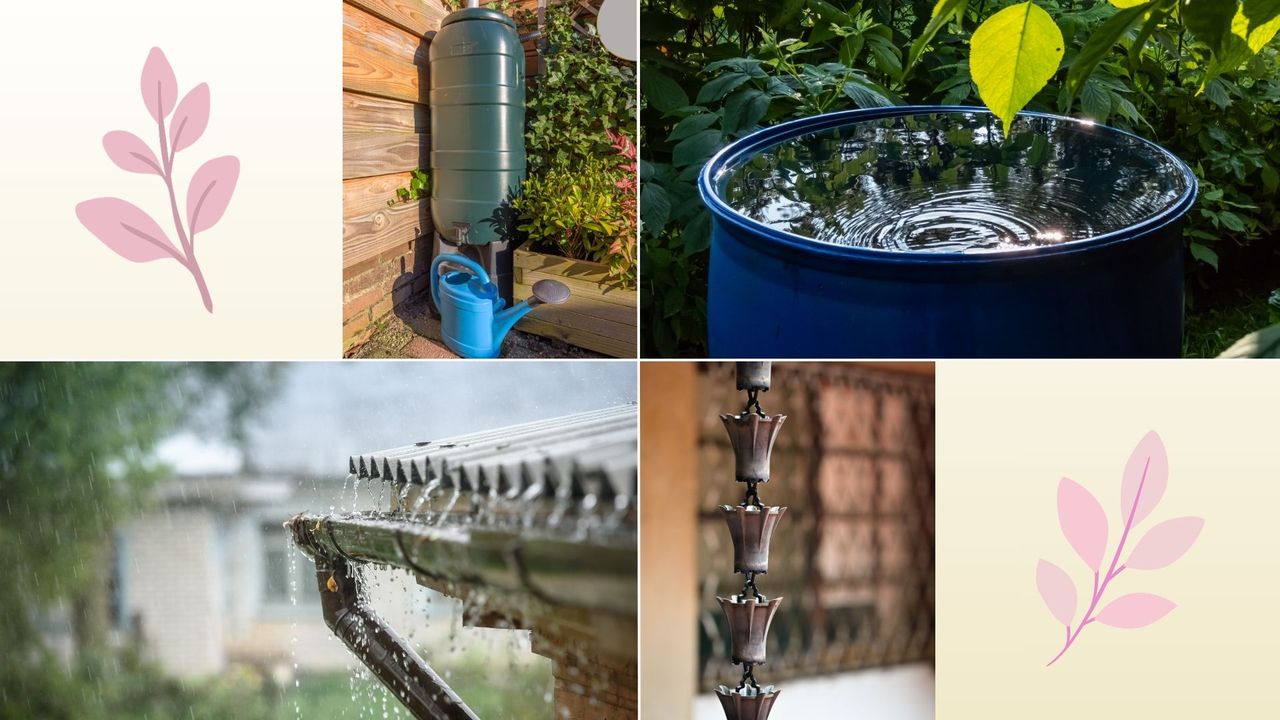
When it comes to sustainable gardening is doesn't get much better than rainwater harvesting. Whether you've heard of the term before or not, this is the one garden trend you need to try out this year.
This easy garden trend is one you won't be able to get enough of. Rainwater harvesting is not the newest trend on the block, but it will soon become your favourite thanks to its money-saving functionalities. And much like the rainscaping garden trend, it couldn't be easier to follow.

So if you're in the market for sustainable garden ideas, then here's what the garden experts said when we asked them what rainwater harvesting is and how you can achieve it in your garden.
What is rainwater harvesting?
Finding ways to reuse old things and repurpose natural resources is one of the easiest garden tips that every gardener should know. But what exactly is rainwater harvesting? Well, while it is a rather simple complex, there is a little more to it than knowing how to use eggshells in your garden.
"Rainwater harvesting is the process of collecting and storing rainwater, rather than allowing it to be diverted through drainage systems, to save it for later use," explains Tom Clifford, landscaper and director of Gardenstone.
There are endless ways to use collected rainwater, from watering your plants to washing your car. Using harvested rainwater will not only help the environment by reducing your water usage and providing plants with fluoride-free water, but it will also save you money on bills.
How to try rainwater harvesting at home
Whether your interest has been piqued by the enticing thought of saving money on your water bills or you're trying out the rewilding trend and want to be more sustainable, there are several ways to harvest rainwater at home.
And doing so can save you an impressive amount of money on your water bills. Charlie McNeill from Rainclear says, "Harvesting water using a water butt for outdoor usage could lower your annual bill by as much as 10%, while installing a full rainwater harvesting system could cut it back by as much as 50%."
So, what are you waiting for?
1. Install a water butt

One of the simplest and most affordable ways to start rainwater harvesting is by investing in a good water butt. So if you're looking to transform your garden on a budget, this one is for you.
"A water butt is the simplest and most common rainwater harvesting system. Water butts are large containers that are connected to your property's guttering system. This diverts rainwater straight from the downpipes and collects directly in the water butt," says Tom.
The best thing about water butts is that you can choose the size and style you'd like, so depending on how big your garden is and what aesthetic you're going for they'll be a water butt for you. We are especially fond of the Hartley Botanic aluminium water butts; they're maybe the most chic way to start rainwater harvesting if you ask us.
Why buy one water butt when you can get two and harvest twice the amount of rainwater? These water butts from Amazon come with taps, stands and filler kits so you can start harvesting as soon as possible.
2. Unblock your gutters
This might not be the most glamorous or fun way to harvest rainwater, but it is the most effective. After all, how are you going to collect water in your water butt without functional gutters?
Speaking to Sarah Raven, a professional gardener and established author, she explains, "The first thing to do is assess whether this is a job you can carry out yourself. If the gutters are easily accessible and not too high, then the easiest way to reach them would be to use a step ladder and empty the gutters of leaves and debris by hand."
She also recommends laying down some liners below your gutter whilst completing the job, to keep the mess to a minimum. Clearing your gutters out every 3 to 4 months will mean debris doesn't build up to an overwhelming amount.
The other happy side effect of clearing your gutters is preventing any damage to the exterior paint, which helps to make your house look expensive from the outside.
3. Set up a rain chain

This method is a great trick for anyone looking for essential small garden tips, as it takes up vertical space instead. Sarah says, "The aptly named ‘rain chain’ is a great way to direct water around your garden."
She explains that they work most effectively if they have a vertical water source to work from, such as guttering or downspouts; however, she points out that this shouldn't stop you from being innovative, as they can work with flat roofs too.
"I actually love the rustic look of them and am often tempted to thread decorative flowers around them in the summer, though best to avoid this if you’re expecting lots of rain, of course. You’ll want something to collect the water from based at the bottom of the chain, but otherwise, no work is required," says Sarah.
Looking to hop onto the rainwater harvesting trend? These rain chains are the perfect first step and are an effective, hassle-free way to collect rainwater whilst not sacrificing your garden style.
4. Create a rain garden
If you're looking at how to incorporate more of the most alluring plants to liven your garden, then a rain garden is a brilliant way to do this, whilst harvesting rainwater at the same time.
"Collecting rainwater doesn’t always require a gutter; in fact, one of the most fun and innovative ways to collect and save rainwater is to set up a rain garden. All you need to do is find a shallow bit of ground with a slope of less than 10%," explains Sarah.
Once you've established this shallow sloped area, then you can fill it with wet-tolerant plants that don't mind being waterlogged now and then. Sarah recommends planting these in the rain garden around spring or early autumn for the best chances of establishment in the ground.
5. Install a rainwater harvesting system

If budget is not an issue, then Charlie highly recommends investing in a rainwater harvesting system.
She says, "Whether it’s for environmental or financial reasons, those who’re serious about water harvesting should consider installing a complete rainwater harvesting system. This is a much more expensive route, but it leads to significant savings long-term and can even add value to your home."
The harvesting systems cost around £2,500 on average but offer a potential savings of around 40-50% off your annual water bill. The systems collect rainwater from your roof and store it underground, where it passes through an in-built filtration system and can be used for several purposes. The underground tank has a pump installed and will pump filtered rainwater directly into any designated appliances within your home.
"When the tank level drops below a set point, the system automatically switches to the mains water supply, ensuring you won’t run out of water during dry periods of weather," explains Charlie.
FAQs
How effective is rainwater harvesting?
You may be wondering now if all this is worth it and how helpful rainwater harvesting can be when it comes to caring for your plants. Well, rainwater is not just helpful with cutting costs and reducing your water waste; it's also much healthier for your plants.
"The water from the tap is often treated with chemicals, minerals and chlorine to be safe for drinking, and these chemicals aren’t always good for plants and the soil. In contrast, rainwater is naturally soft and contains fewer dissolved minerals, such as magnesium and calcium," explains Peter Ivanov, a professional gardener from FantasticGardeners.
There are, of course, some disadvantages to rainwater harvesting, one being the inconsistency of rainfall. Even in the UK, the weather is unpredictable and dry periods can last longer than expected, which means less rainwater for you to harvest and use as you please.
Peter also points out that most rainwater harvesting systems and methods require a lot of maintenance, which can cost you a little more money and time.
What is rainwater harvesting used for?
Although rainwater can be used in your garden to look after the plants that every garden needs, there are a few other uses for it. Peter points out that the practice of collecting rainwater is one of the oldest methods for supplying water for a household independently.
He says, "In general, you can use rainwater anywhere you’d normally use tap water, which can be indoor non-potable use, such as for the toilets and clothes washers, or a whole house portable use when it’s properly filtered and disinfected."
So, whilst you can use it to water plants, when you can harvest large quantities, there are several additional ways you can make use of it inside your home.

Is it illegal to harvest rainwater in the UK?
You may be wondering if rainwater harvesting is one of the common garden laws you can break without knowing; luckily, that's not the case.
"It is not illegal to harvest rainwater in the UK, and this misconception may have come from historic regulations in the USA, even though there are no similar restrictions in the UK," starts Richard Barker, horticulture expert and Commercial Director at LBS Horticulture.
"The only laws around rainwater harvesting in the UK revolve around combining harvested rainwater with ground or surface water, for which you need a water abstraction licence. People also need to ensure that they have precautions in place to stop rainwater from entering the mains water supply," he continues.
It's always best to check with your local council about what exactly is allowed and how far you can legally take your rainwater harvesting set-up.
What are the disadvantages of rainwater harvesting?
Even the most sustainable home hacks can have disadvantages that may affect whether or not you want to add them to your garden. Rainwater harvesting has several considerations that you'll want to consider before taking the plunge.
- High upfront costs: Sometimes installing tanks, filtration systems and even some rain chains can be really expensive. Although you save money in the long term, it's not always budget-friendly at the start.
- Maintenance: "Regular cleaning and maintenance of gutters, filters and tanks are necessary to prevent algae growth and a buildup of sediment or debris," explains Richard.
- Inconsistent supply: Although the UK is generally quite rainy, there's no guarantee of a steady supply. Richard points out that this is all dependent on the weather, so you may need a backup supply during spells of dry weather.
- Contamination and safety hazard: Water can easily become contaminated from bird droppings or roof material, which can affect plants or local wildlife. Richard also says, "Unsealed rainwater tanks can become a breeding ground for insects."
From using tea bags and banana peels in your garden to repurposing old towels, finding sustainable hacks that will promote growth for your plants is a great way to cut costs when gardening, all whilst helping out the environment.
As Charlie points out, "Even if you only use harvested water for outside tasks, you reduce reliance on these stressed resources and help to lower demand during the peak summer months."