Regardless of whether you're in love or not, it's not difficult to notice a strange imbalance in it. One person always seems to have a little more to lose, a little more to worry about, a little more tenderness exposed to the possibility of being hurt. And still, knowing that love can end, that people can leave and that even the happiest moments are temporary, we keep choosing to love as though the heart has never learned the mathematics of loss.
It is this uncomfortable imbalance, between loving and being loved, between vulnerability and self-protection, that German author Thomas Mann captured in one of his fearless love quotes of all time. A writer deeply interested in the inner conflicts of his characters, Mann understood that love is rarely as simple as happiness or sorrow. Sometimes, the person who feels more is also the person who has more at stake.
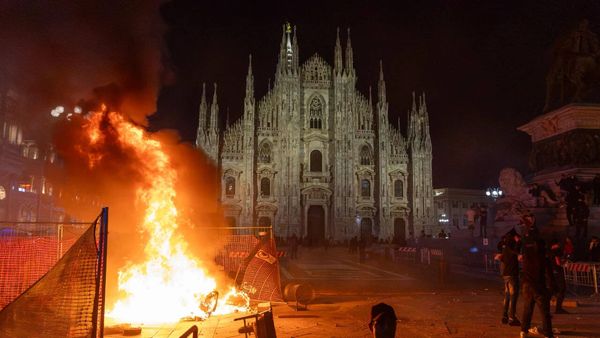
Quote of the Day by Thomas Mann: “Whoever loves the more is at a disadvantage and must suffer” - is from his novella Tonio Kröger that follows the internal journey of Tonio, a sensitive boy born between two opposing worlds: his stern, conventional German father and his passionate, artistic southern mother.
Why Thomas Mann’s quote on love matters today
In many cases, people consider love as a bond between two people that makes both of them equals. In reality, such equality does not always exist; one person might become more emotionally connected than the other. This situation leaves the more emotionally connected person vulnerable to a terrible heartbreak.
Mann’s phrases address the question of vulnerability without making the concept of love seem weak. The deeper you care, the higher the risks that you expose yourself to, or the more you stand to lose.
What Thomas Mann’s quote means in real life
Think about the person who always notices when something feels wrong, sends the first message after an argument or rearranges their life around someone else's needs. They may not necessarily be loved less. But, as per Maan, they are risking more.
That is where the quote becomes uncomfortable for those who are blinded by love. Love gives another person access to parts of us that we normally protect. Their silence can hurt more, their disappointment can matter more, and their absence can leave a larger space behind. Loving deeply does not guarantee suffering, but it can make us more vulnerable to it.
Who was Thomas Mann?
Thomas Mann was a German novelist and essayist born in Lübeck in 1875. He came from a wealthy family whose business later declined, and his early life was marked by personal and family difficulties. His literary career gained momentum with works such as “Gefallen” and Buddenbrooks, the 1901 novel that established his reputation.
Mann became one of Germany's most important writers and received the Nobel Prize in Literature in 1929. His writing frequently examined the conflict between artistic sensitivity and conventional bourgeois life, along with questions of identity, desire and society.
Thomas Mann and his legacy
Mann's career changed dramatically with the rise of Nazi Germany. He left the country and eventually settled in the United States, where he continued writing novels and essays that explored European culture, politics and the psychology of individuals caught between competing worlds.
His later works included Doctor Faustus and Lotte in Weimar. Mann died in Zurich in 1955, leaving behind a body of work known for its psychological depth and complex characters.
His observation about love remains compelling because it does not promise an easy answer. Sometimes, the person who loves more is not necessarily weaker. They may simply be the person who has allowed themselves to have more at stake, knowingly or unknowingly.