Get all your news in one place.
100's of premium titles.
One app.
Start reading
The Times of India
The Times of India
World
TOI News Desk

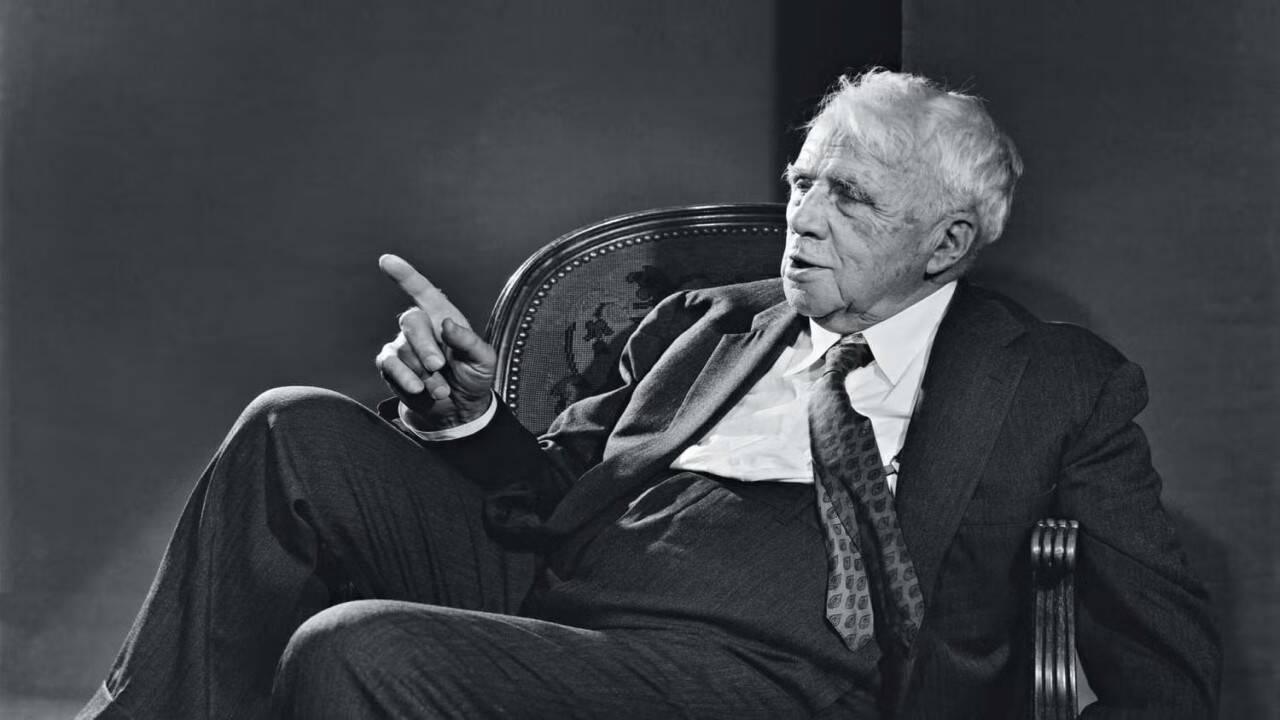
Quote of the day by Robert Frost: ‘Happiness makes up in height for what it lacks in length,’ and how joy is remembered through its depth rather than its duration

“Happiness makes up in height for what it lacks in length.” — Robert Frost

Get breaking news anytime, anywhere. Download the TOI app now!

People rarely remember an entire year as either happy or unhappy. Instead, memory has a habit of preserving moments. A long-awaited reunion at a railway station, an unexpected conversation that changes the course of a friendship, the birth of a child, a hard-earned victory after months of effort or an evening spent laughing with people who matter can remain vivid decades later, even though each lasted only a few minutes or hours. Robert Frost's observation begins with that simple truth. Happiness, he suggests, does not owe its value to its duration. It earns its place in memory through its intensity.

The line appeared in Frost's 1958 collection You Come Too , a body of work written late in the life of one of America's most celebrated poets. Frost spent much of his career exploring ordinary experiences: country roads, stone walls, changing seasons and familiar conversations, to reveal larger truths about human nature. His reflections on happiness follow the same pattern. Rather than imagining joy as a permanent state, he recognised it as something that rises above everyday life, leaving an impression that far exceeds the time it occupies.

The moments that stay with us are not always the longest

Life is filled with routines that are necessary but quickly forgotten. You cannot recall what you ate on an ordinary Tuesday six months ago or what you were doing at a particular hour last month. Memory works differently when emotion is involved. Significant moments become reference points because they carry meaning, not because they occupy large portions of time.

History offers countless examples. Neil Armstrong's first step on the Moon lasted only seconds, yet it became one of the defining images of the twentieth century. Roger Bannister's record-breaking four-minute mile was over almost as soon as it began, but it transformed the limits athletes believed were possible. Even in personal lives, a brief exchange between a teacher and a struggling student, a doctor's reassuring words before surgery or a parent's encouragement at exactly the right moment can shape decisions for years afterwards.

Frost's quotation captures this imbalance between time and significance. Happiness is measured differently from routine. It expands in memory long after the moment itself has passed.

Why joy cannot be scheduled

Modern life sometimes treats happiness as a destination that can be reached through careful planning. Careers, holidays, milestones and possessions are expected to produce lasting satisfaction, yet experience suggests something more complicated. Many of life's happiest moments arrive unexpectedly or emerge from circumstances that seemed entirely ordinary at the time.

Psychologists studying memory have found that emotionally significant experiences are encoded more strongly than neutral ones. The brain naturally gives greater attention to moments associated with joy, surprise or deep connection, making them easier to recall years later. That helps explain why people can remember the exact details of a graduation ceremony or a family celebration while forgetting dozens of ordinary weeks that surrounded them.

Frost's words also remind readers that the value of happiness does not depend on permanence. There is a temptation to dismiss joyful experiences because they end too quickly, as though their brevity somehow reduces their importance. In reality, many of the experiences people treasure most, like a concert, a wedding, a holiday with grandparents, a final conversation with a loved one, are precious precisely because they cannot last forever. Their passing does not diminish them. It sharpens their meaning.

Why the quote continues to resonate

The search for constant happiness has become one of the defining ambitions of modern culture. Social media presents carefully edited glimpses of lives that appear permanently exciting, while self-help advice sometimes suggests that fulfillment should be continuous if only the right choices are made. Frost offers a gentler and perhaps more realistic perspective. He does not promise uninterrupted happiness because he understood that no human life unfolds that way.

Instead, he asks readers to recognise joy for what it is: something measured less by its length than by its ability to lift ordinary life above itself. A single afternoon can outweigh months of routine, just as one conversation can remain meaningful long after countless others have faded. The happiest lives are not necessarily those filled with the greatest number of extraordinary moments. More often, they are the lives that recognise the extraordinary value contained within moments that pass far more quickly than anyone wishes they would.

Sign up to read this article
Read news from 100's of titles, curated specifically for you.
Already a member? Sign in here
Related Stories
Top stories on inkl right now
One subscription that gives you access to news from hundreds of sites
Already a member? Sign in here
Our Picks
Fourteen days free
Download the app
One app. One membership.
100+ trusted global sources.