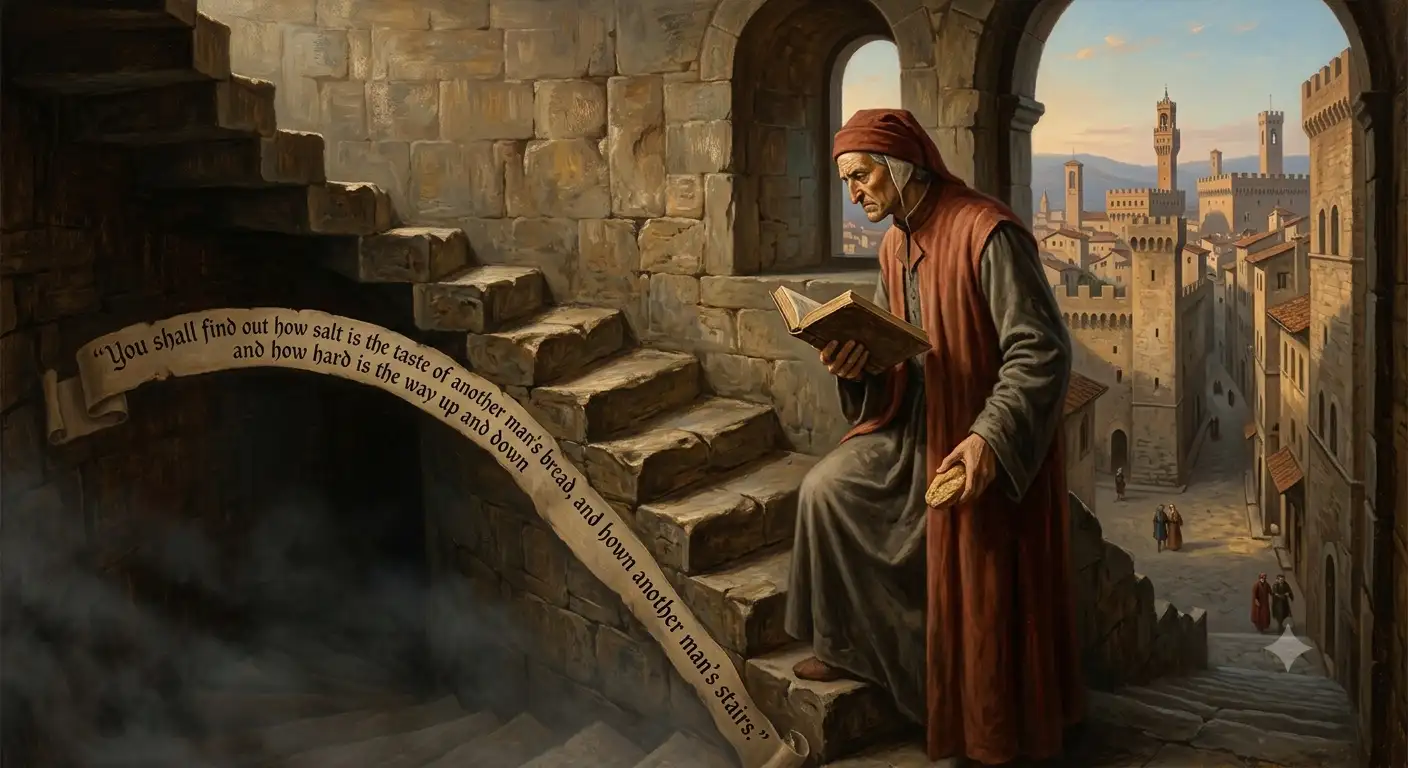
Quote of the day by Dante Alighieri : There are some lessons in life that we cannot truly understand until we experience them ourselves. We may hear about another person's struggles, but it often takes facing challenges of our own to realize how difficult their journey can be. Italian poet Dante Alighieri captured this idea through a powerful reflection on hardship and perspective.

Quote of the Day Today: Dante Alighieri on How Hardships Teach Us Empathy
Dante Alighieri wrote, “ You shall find out how salt is the taste of another man's bread, and how hard is the way up and down another man's stairs ,” as per BrainyQuote.
Dante Alighieri's Quote About Understanding Struggles
Dante's words remind us that comfort can sometimes prevent us from seeing the difficulties others face. When we depend on others or find ourselves in unfamiliar situations, we begin to understand struggles that were once invisible to us.
The quote suggests that personal experiences can teach us compassion in a way that words alone cannot.
What Does The Quote Mean
The phrase about another person's bread and stairs represents the challenges of living through circumstances different from our own.
Dante's message is that hardship can change our perspective. Going through difficult moments can make us more aware of the struggles of others and help us become more understanding.
The Life Lesson Behind Dante Alighieri's Words
The lesson is simple: never assume you fully understand someone else's journey.
Everyone faces challenges that may not be visible from the outside. Showing patience, kindness and empathy can help us connect better with the people around us.
Dante Alighieri: The Poet Behind The Divine Comedy
Dante Alighieri (1265–1321) was an Italian poet, writer, philosopher and political thinker best known for his masterpiece “The Divine Comedy,” one of the greatest works of medieval European literature.
Born in Florence, Italy, Dante changed the course of literature by choosing to write in the Italian vernacular instead of Latin, as per Britannica report. His use of the Tuscan dialect helped shape modern literary Italian and influenced generations of writers.
Dante’s Early Life And Influences
Dante grew up during political conflicts between the Guelfs and Ghibellines in Florence. He studied poetry, philosophy and classical works by writers such as Virgil, Cicero and Boethius. He was also influenced by poets like Guido Cavalcanti and the dolce stil nuovo (“sweet new style”) movement.
His early work, “La vita nuova” (The New Life), explored his love for Beatrice, a figure who later became a symbol of spiritual guidance in his writings.
Dante’s Exile And Political Struggles
Dante became involved in Florentine politics and served as one of the city’s leaders in 1300. However, political conflicts led to his exile in 1302. This experience deeply influenced his writing and became a major theme in “The Divine Comedy,” as per the Britannica report.
The Divine Comedy: Dante’s Greatest Work
Written during his exile, “The Divine Comedy” follows Dante’s journey through three realms:
- Inferno – A journey through Hell
- Purgatorio – A path of purification
- Paradiso – A vision of paradise and spiritual fulfillment
Guided by Virgil and later Beatrice, Dante explores themes of morality, faith, politics and humanity’s search for meaning.
Dante’s Lasting Legacy
Dante’s decision to write in Italian rather than Latin helped establish the language as a major literary tradition. More than 700 years later, “The Divine Comedy” remains one of the most influential works in world literature, and Dante continues to be remembered as the “divine poet,” as per the Britannica report.