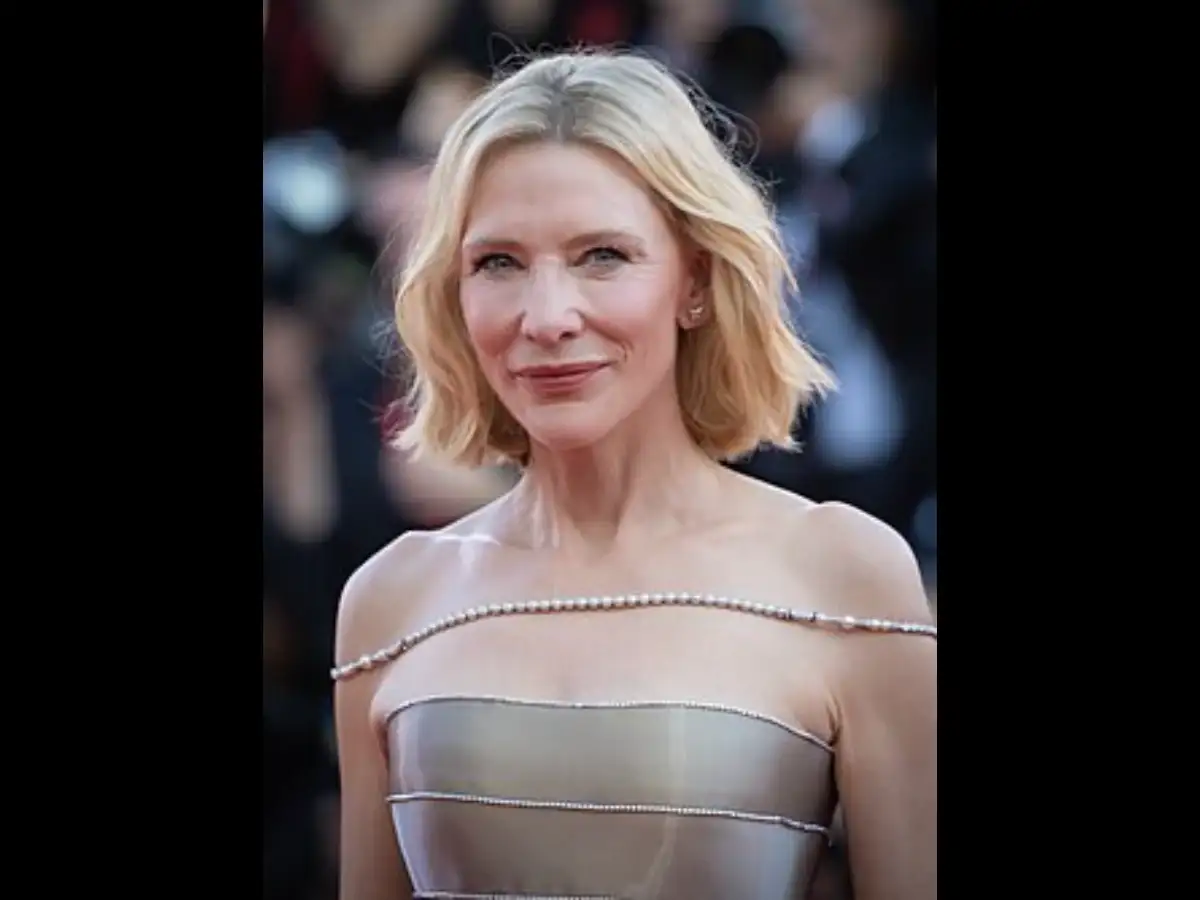
Cate Blanchett's words offer a refreshing perspective on aging in a culture that often treats wrinkles as something to hide or erase. Instead of seeing the signs of age as imperfections, she connects them with the life that created them. Every wrinkle can represent a moment lived, a lesson learned, a hardship survived or a reason to laugh. Her message is ultimately about accepting yourself rather than constantly trying to look like someone you were years ago.
Who Is Cate Blanchett?
Cate Blanchett is an Australian actress known for her remarkable range and ability to take on dramatically different characters.
Born on May 14, 1969, in Melbourne, Australia, Blanchett studied art history before graduating from the National Institute of Dramatic Art in 1992. She began her professional career on the Australian stage before moving into television and film.
Her breakthrough came with Elizabeth in 1998, in which she portrayed the young Queen Elizabeth I. The performance earned her an Academy Award nomination and established her as an international star.
She later appeared in films including The Lord of the Rings trilogy, The Aviator , Blue Jasmine , Carol , Cinderella , Thor: Ragnarok , and Tár .
Blanchett won Academy Awards for her performances in The Aviator and Blue Jasmine , while continuing to take on roles across drama, comedy, fantasy and historical films.
Quote of the Day
“Who would want a face that hasn't seen or lived properly, hasn't got any wrinkles that come with age, experience and laughter? Not me, anyway.” — Cate BlanchettWhat Does the Quote Mean?
At its heart, Blanchett's quote challenges the idea that beauty has to remain frozen in time. A face changes as a person lives. It changes through laughter. It changes through sadness. It changes through relationships, challenges and experiences. Those changes are not necessarily flaws. They can be evidence that someone has actually lived. The quote asks us to reconsider what we call imperfections. A wrinkle may be seen as a sign of ageing, but it can also be a reminder of years filled with memories.
The Inspiring Lesson About Aging
Modern culture often places enormous pressure on people to look young. Advertisements, social media and entertainment can create the impression that youth is something that must be preserved at all costs. Blanchett offers a different way of looking at it. Growing older does not mean losing your value. Experience can bring confidence. Difficult years can bring wisdom.
Laughter can leave its mark. Mistakes can teach lessons that youth cannot provide. Ageing is therefore not simply about getting older. It is about accumulating a life that has meaning.
Why Do We Fear Getting Older?
Much of the fear surrounding ageing comes from the belief that our appearance determines our worth. People may worry about losing their attractiveness, becoming less relevant or no longer looking the way they once did.
But appearance is only one part of who we are. The person we become through our experiences is far more lasting. Someone who has faced disappointment may become more understanding. Someone who has survived hardship may develop greater resilience. Someone who has spent decades learning, loving and laughing carries a depth that cannot be measured by a smooth complexion.
Blanchett's words remind us that a life without visible signs of experience would not necessarily be a better life.
How Can We Apply This Lesson Every Day?
The lesson can begin with the way we speak to ourselves.
- Instead of immediately criticizing a new wrinkle, notice the years behind it.
- Instead of regretting every change in appearance, remember what those years have given you.
- Instead of comparing yourself with younger versions of yourself, ask what you have learned since then.
- We can also apply the same kindness to other people. Everyone ages, and everyone deserves to be valued beyond appearance.
Beauty can change, but character, wisdom and emotional depth can continue to grow.
A Lesson in Self-Acceptance
Blanchett's quote is ultimately about more than wrinkles. It is about refusing to be ashamed of having lived. There is something deeply human about a face that reflects happiness, sadness, exhaustion, laughter and time. Self-acceptance does not mean giving up on yourself. It means recognizing that you do not have to reject every change in order to remain worthy.
Growing older can bring a different kind of confidence, one based less on appearance and more on knowing who you are. That confidence can be far more powerful than trying to remain unchanged.
Cate Blanchett's words turn something many people fear into something worth appreciating. Wrinkles can tell stories. Age can bring perspective. Experience can create wisdom. Laughter can leave beautiful traces behind. The goal of life should not be to reach the end having preserved the face we once had. It should be to reach each new stage knowing that we have genuinely lived. Ageing is not proof that time has taken something from us. Sometimes, it is proof that life has given us something worth showing.