Get all your news in one place.
100's of premium titles.
One app.
Start reading
The Economic Times
The Economic Times
Shreya Biswas

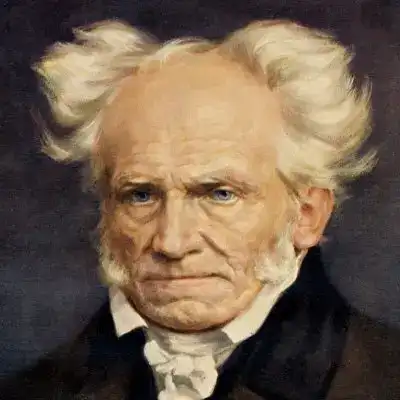
Quote of the day by Arthur Schopenhauer: 'A man's face as a rule says more, and more interesting things, than his mouth, for it is...' - inspiring life lessons on human expression, emotions and how to understand people beyond what they say by philosopher of pessimism

Quote of the day by Arthur Schopenhauer : We often assume that what people say gives us the clearest understanding of who they are. But in reality, human communication is far more complex. Much of what we feel and think is expressed without words, through expressions, silence, and subtle facial changes. Today’s quote of the day from philosopher Arthur Schopenhauer highlights this idea, suggesting that the human face often communicates more than speech ever can.

Quote of the Day Today: Arthur Schopenhauer on Human Expression

Arthur Schopenhauer said, “ A man's face as a rule says more, and more interesting things, than his mouth, for it is a compendium of everything his mouth will ever say, in that it is the monogram of all this man's thoughts and aspirations ,” as per BrainyQuote.

The quote reflects his belief that the face is a deeper and more lasting record of a person’s inner life than spoken language.

Meaning of Arthur Schopenhauer’s Quote

Schopenhauer is pointing out that while words can be carefully chosen, the face often reveals what lies beneath them. Emotions, intentions, and personality traits tend to surface naturally through expression.

By describing the face as a “compendium” and a “monogram” of thoughts and aspirations, he suggests that everything a person thinks and feels eventually becomes visible over time.

READ ALSO: Quote of the day by Mother Teresa: 'If we have no peace, it is because we have forgotten that we belong to...' - inspiring life lessons on peace, unity, compassion and harmony by Nobel Peace Prize and Missionaries of Charity founder

Quote of the Day June 12: Key Lessons From the Arthur Schopenhauer's Message

  • Words are only part of human communication
  • Facial expressions often reveal true emotions
  • People can be understood through careful observation
  • Inner thoughts naturally shape outward appearance
  • Non-verbal cues are as important as speech
READ ALSO: Quote of the day by W. Somerset Maugham: 'It's a funny thing about life, if you refuse to accept anything but...' - inspiring life lessons on growth mindset, chasing big goals and why people who refuse to settle succeed by Human Bondage and The Moon and Sixpence author

Who Was Arthur Schopenhauer

Arthur Schopenhauer (1788-1860) was a German philosopher known for his pessimistic view of life and his influential theory of the “will” as the driving force of human existence. Born in Danzig (now Gdańsk, Poland), he became one of the key critics of Hegelian idealism and influenced later existential philosophy and psychology, as per a Britannica report.

Arthur Schopenhauer's Early Life and Education

Born into a wealthy merchant family, Schopenhauer received a private education before studying medicine at the University of Göttingen. He later shifted to philosophy at the University of Berlin and earned his Ph.D. from the University of Jena in 1813, as per the Britannica report.

READ ALSO: Quote of the day by Leo Tolstoy: 'If so many men, so many minds, certainly so many hearts, so many kinds of...' - thought-provoking life lessons on love, human connections and why every relationship is unique by Anna Karenina and Death of Ivan Ilyich author

Arthur Schopenhauer's Major Philosophy

In The World as Will and Idea (1819), Schopenhauer argued that reality is shaped by human perception and driven by an endless, irrational “will.” He believed life is marked by suffering and struggle, and that relief comes through denying desire, practicing compassion, and engaging with art, especially music.

Arthur Schopenhauer's Career and Recognition

His early academic career failed to gain attention, especially compared to Hegel, leading him to leave university life and settle in Frankfurt. His later essays in Parerga and Paralipomena (1851) finally brought him recognition, as per the Britannica report.

READ ALSO: Quote of the day by Kate Hudson: 'As a woman, and as a working mom trying to get things done, you find yourself...' - actress of How to Lose a Guy in 10 Days, Fool's Gold and Sibling Revelry podcast host reveals hidden struggles of working women and mothers

Sign up to read this article
Read news from 100's of titles, curated specifically for you.
Already a member? Sign in here
Related Stories
Top stories on inkl right now
One subscription that gives you access to news from hundreds of sites
Already a member? Sign in here
Our Picks
Fourteen days free
Download the app
One app. One membership.
100+ trusted global sources.