
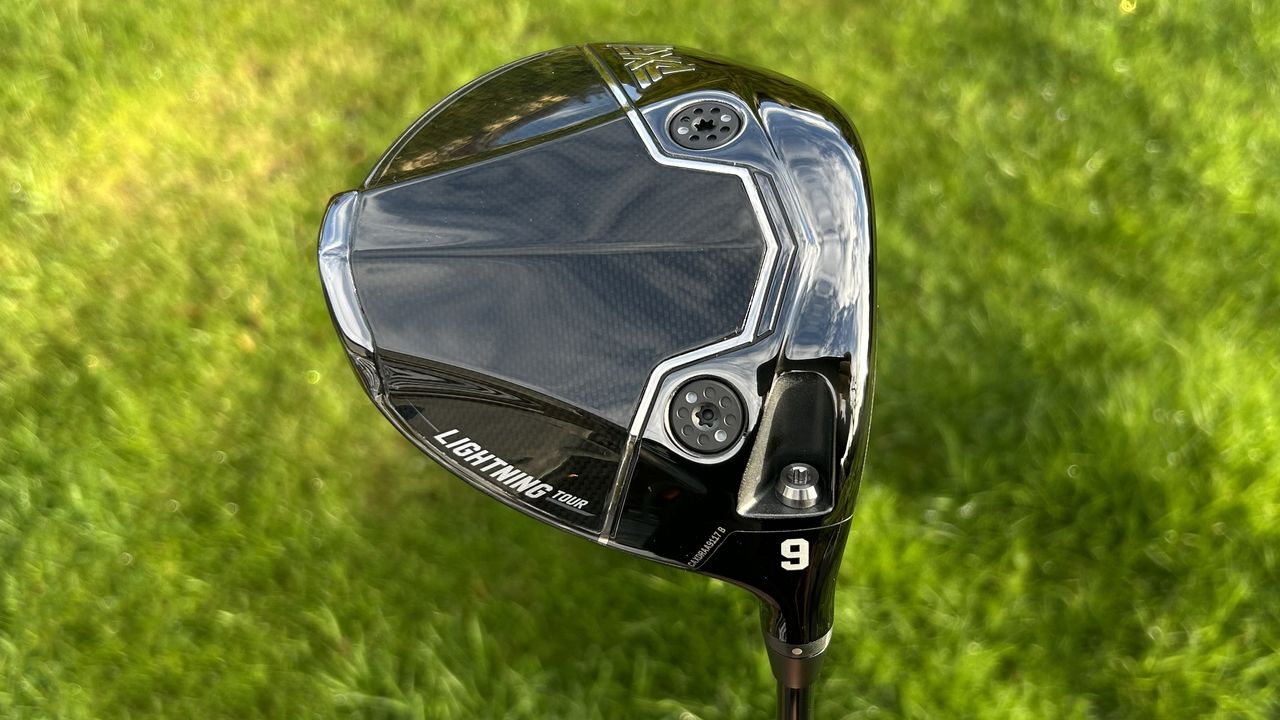
The PXG Lightning Tour Driver is the most aggressive model in terms of spin of the new Lightning family lineup, built for players demanding low spin at high clubhead speeds. I was keen to determine if this new low-spin iteration truly refines the playability of its predecessor, the Black Ops Tour-1. Having rigorously tested this head over the past few weeks, it is time to report my findings and see if the Lightning Tour is one of the best golf drivers of the year.
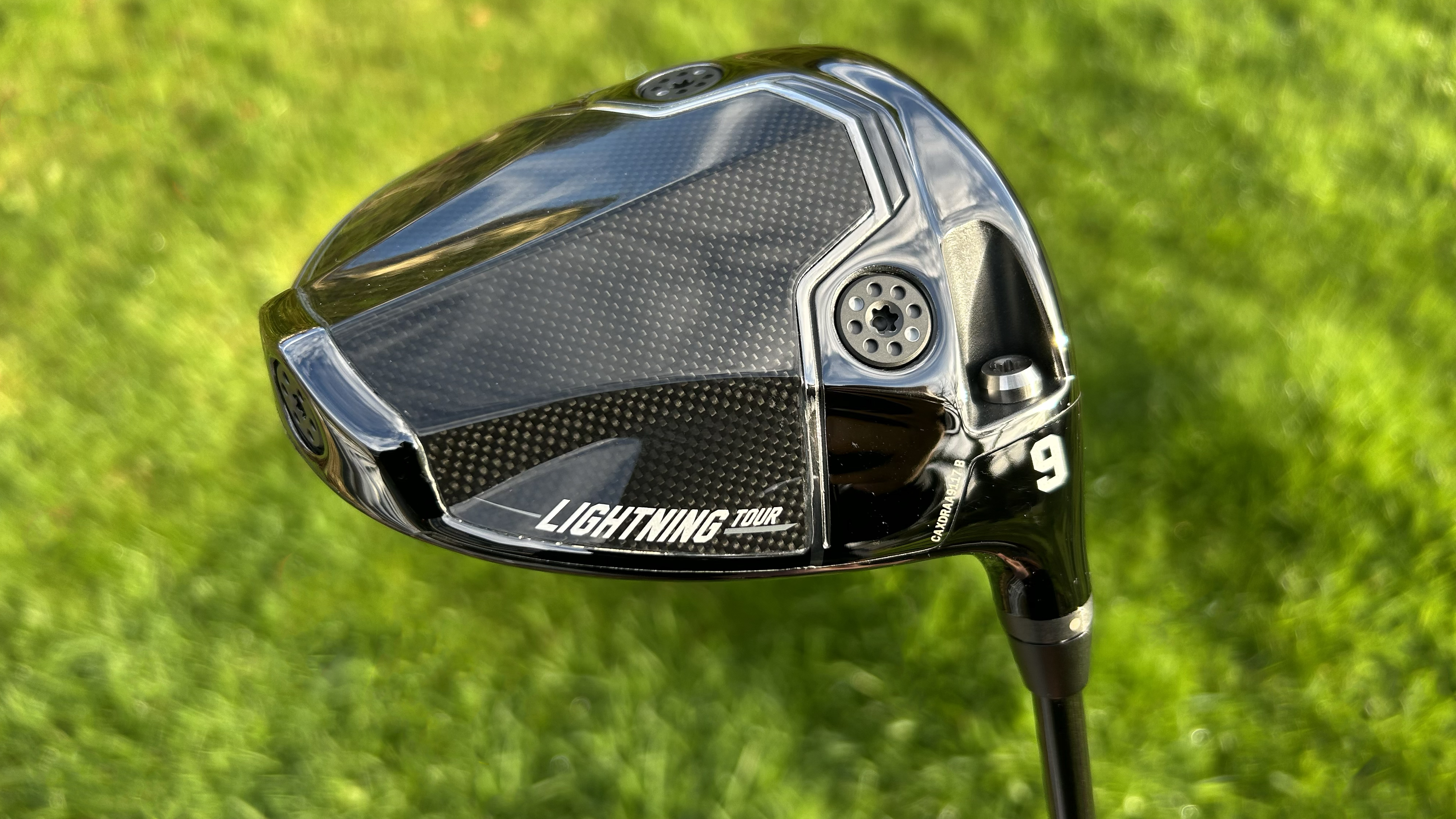
The whole PXG Lightning driver line is built around increasing forgiveness (MOI) and efficiency through its Frequency Tuned Face technology. This core technology aims to align the face’s natural vibrational frequency with the compression of the ball, producing a more efficient transfer of energy. The Lightning Tour specifically serves as the low-spin profile, aimed at high-speed players who need to manage RPMs.
Visually, the Lightning Tour is largely unchanged from the Black Ops Tour-1, maintaining a familiar shape and footprint. It keeps PXG’s signature premium, high-tech aesthetic, driven by extensive carbon fiber usage.
Overall, the club’s build quality and premium materials are evident, right down to the headcover, which is arguably my favorite among all current drop of drivers.

In the playing position, I really like the very straight top line on the Tour model. Many modern drivers show an awful lot of curvature in that area from the bulge of the face, but I have always liked how PXG presents a very neat, straight top edge, as I feel this helps with my alignment, giving me a clear visual path to the target.

Regarding impact feel, the acoustics are excellent; the sound is solid and refined, which is a continuation of the excellent work PXG did with the Black Ops range. However, for some reason, the feel and sound didn't harmonize perfectly for me. I experienced slightly excessive vibration and feedback through my hands on both centered strikes and mis-hits across this family of drivers.
While the impact stops short of being truly harsh, this firmness prevented the Lightning Tour from ranking among the most refined feels in my winter testing. I would also suggest it lacks a certain ‘zip’ off the face of some of its competition, at least in terms of feel.

I gathered all of my data using my Foresight Sports GC3 launch monitor, and the data showed that while it was always an mph or two behind some of its major competition in my testing, it remains a powerful club. Simply put, you aren’t noticing 1 or 2 mph out on the field of play.
The core progress here is in playability. It is slightly less aggressive on spin than last year's Black Ops Tour model, which makes it slightly less volatile in terms of left-to-right dispersion, although it is still very much a low-spinner.

This small concession to playability is crucial. The stability is excellent, benefiting from a 67% larger carbon fiber sole area compared to the Black Ops Tour-1, which dramatically increases forgiveness (MOI-Combined up by 2% to 8,290 g/cm²). This ensures that even when hit slightly off-center, the low-spin nature doesn't result in the ball dropping out of the sky or deviating too far from its launch direction.
The comparative dispersion numbers confirmed this: the Lightning Tour was tighter than the previous Tour-1 model.

I did all my testing and data gathering in a fairly neutral weight setup, but for those looking to fine-tune a ball flight preference, there are three movable weights on the sole to allow you to manage CG location to your liking.
The PXG Lightning Tour is a driver that blends aggression and playability well, and represents progress from the Black Ops Tour-1 in terms of its usability.
It delivers a strong, penetrating ball flight and a low spin profile, exactly as the target player demands. While I am not in love with the feel, and if I were fussy (which I am), I would prefer a tiny bit more speed to match the absolute market leaders, the Lightning Tour enters the market as a formidable, reliable option for high-speed players who need stability and spin control.
The Tour model is available in 8˚, 9˚, and 10.5˚for right right-handed players, and just 9˚ for left-handers. The RRP is $649/£569.